Quotation of the Day

“In a society that overvalues progress, development, and personal achievement, the spiritual life becomes quite easily performance oriented: ‘On what level am I now, and how do I move to the next one?’ ‘When will I reach union with God?’ ‘When will I experience illumination or enlightenment?'”

-Henri Nouwen, Spiritual Formation, xv

A Spiritual Brunch, for Saturday Morning

“Now may the God of peace, who brought back from the dead our Lord Jesus, the great shepherd of the sheep, by the blood of the eternal covenant, make you complete in everything good so that you may do his will, working among us that which is pleasing in his sight, through Jesus Christ, to whom be the glory for ever and ever. Amen.”

-Hebrews 13:20-21

Prayer for Lent

“O God! If I worship You for fear of Hell, burn me in Hell,
and if I worship You in hope of Paradise, exclude me from Paradise.
But if I worship You for Your Own sake, grudge me not Your everlasting Beauty.”

(Rabia al Basri, Sufi mystic)

This Lent, consider the forty-day journey as an experiment in adoration.  Seek not what God can do to or through you; seek God himself.

If you seek God in the wilderness–away from everyday distractions, painkillers, and noise, who might God reveal himself to be this Lent?

giving growth

2014-02-24 15.22.50

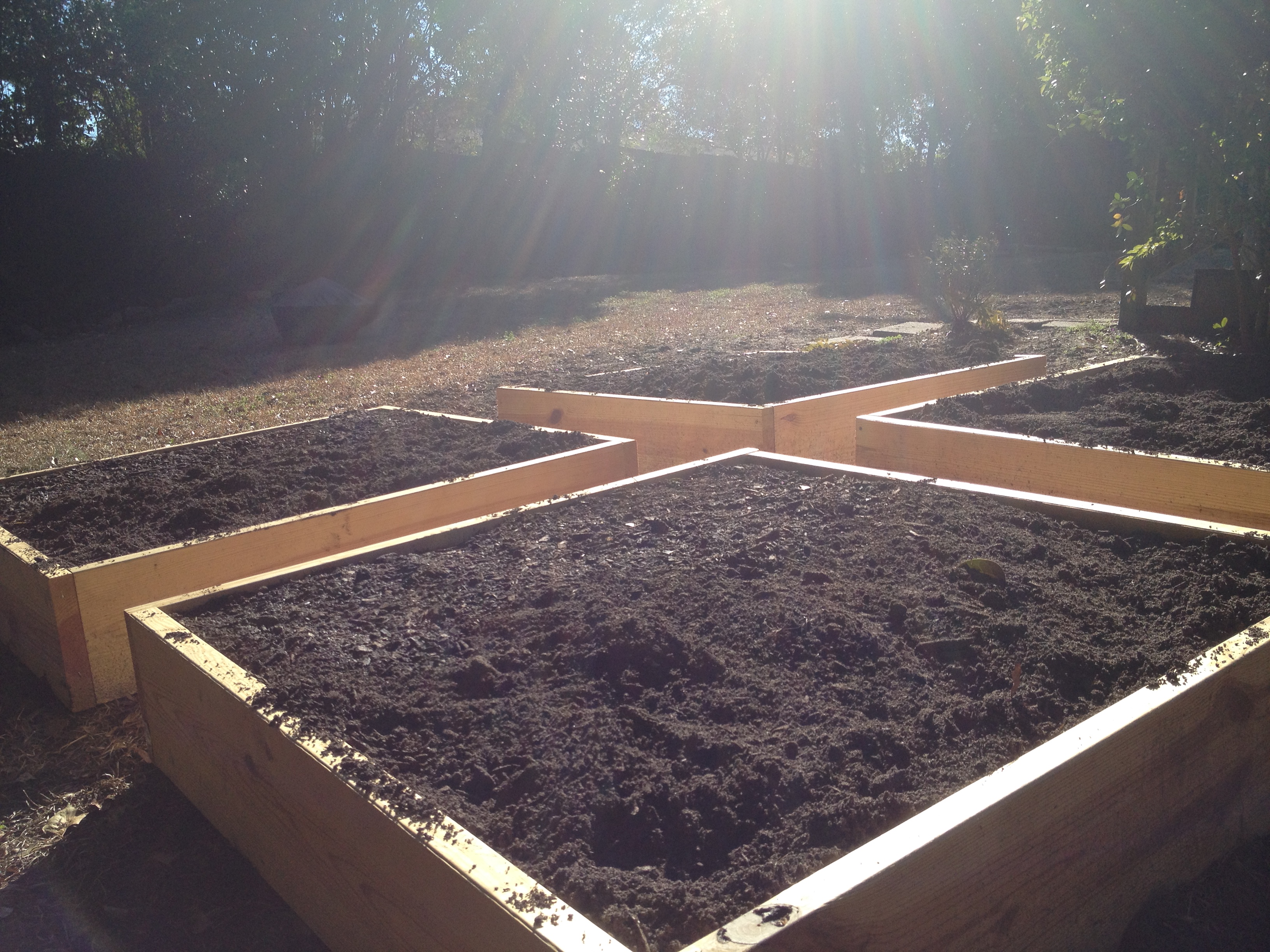
Seeds are such mysterious things.  Here in South Carolina, it’s already time to start planting the hardier stuff–greens, roots, some herbs, so I took advantage of the sunny, warm days over the weekend to fill up my boxes, sprinkle some seeds, and water the soil.  I’m always amazed when I open the little paper packets at how small and wisp-like seeds produce these (comparably) huge, delicious, totally-different-looking fruits and vegetables.  Last week’s lectionary epistle lesson has been bouncing around in my head as I’ve been working the dirt:

“You are still worldly. For since there is jealousy and quarreling among you, are you not worldly? Are you not acting like mere humans? For when one says, “I follow Paul,” and another, “I follow Apollos,” are you not mere human beings? What, after all, is Apollos? And what is Paul? Only servants, through whom you came to believe—as the Lord has assigned to each his task. I planted the seed, Apollos watered it, but God has been making it grow. So neither the one who plants nor the one who waters is anything, but only God, who makes things grow.” 1 Corinthians 3:3-7

Looking around the church (all people who call Jesus their God and Savior, believing in the triune God) these days, it’s hard to ignore the battle lines that crisscross Jesus’ body throughout the world like the scores in a ham.  Screwtape’s words, through C.S. Lewis’ voice, come to mind once more:

“We have quite removed from men’s minds what that pestilent fellow Paul used to teach about food and other unessentials–namely, that the human without scruples should always give in to the human with scruples. You would think they could not fail to see the application. You would expect to find the “low” churchman genuflecting and crossing himself lest the weak conscience of his “high” brother should be moved to irreverence, and the “high” one refraining from these exercises lest he should betray his “low” brother into idolatry. And so it would have been but for our ceaseless labour. Without that, the variety of usage within the Church of England might have become a positive hotbed of charity and humility.”

Of course, part of the trouble is discerning which things are inessential–a literally life-and-death matter which I don’t mean to downplay–but what draws me more this morning  is the solution which Paul offers: God gives the growth.

I can put good soil in my boxes, and plant the seeds, and beg the sun to come and warm up the dark dirt, but all I’m really doing is making room for growth to happen, giving the best environment possible–making room for a miracle to happen.

In our lives, we choose how to use our time–what kind of soil (habits, relationships, mental tape loops) we put in the boxes of our minds, our spirits and our bodies.  We choose the sorts of things we read, watch, eat and ingest–the seeds we plant in our boxes; and we choose how to nurture those seeds with the sunshine and water of prayer, spiritual disciplines, service, and learning.  Then we’ve done all we can–we can’t make growth happen, in our own lives or in the lives of our churches.

We cultivate, plant, and water, but the growth itself is out of our hands; we prepare and we present ourselves–make ourselves open and ready to be transformed.

God, come into the spaces we make and grow us.  Show us how to make room to be open and to be transformed.

the liturgy of our lives

“The horror of the Same Old Thing is one of the most valuable passions we have produced in the human heart–an endless source of heresies in religion, folly in counsel, infidelity in marriage, and inconstancy in friendship.  The humans live in time, and experience reality successively.  To experience much of it, therefore, they must experience many different things; in other words, they must experience change.  And since they need change, the Enemy (being a hedonist at heart) has made change pleasurable to them, just as He has made eating pleasurable.  But since He does not wish them to make change, any more than eating, an end in itself, He has balanced the love of change in them by a love of permanence.  He has contrived to gratify both tastes together in the very world He has made, by that union of change and permanence which we call Rhythm.  He gives them the seasons, each season different yet every year the same, so that spring is always felt as a novelty yet always as the recurrence of an immemorial theme.  He gives them in His Church a spiritual year; they change from a fast to a feast, but it is the same feast as before.”

The Screwtape Letters

Here’s (above) how I ended up Episcopalian.  Just as our days have rhythm–wake up, eat, go to school or work, exercise, eat, socialize, sleep–and our weeks have rhythm, experiencing both new things and The Same Old Thing, so why not our worship, too?  Most every church has a liturgy, whether that’s what they call it or not.  Growing up, I went to a church where we’d gather on folding chairs every Sunday at 10am in an elementary school cafeteria.  We’d join in singing together to the words projected on a video screen (this was new technology–no overheads with copied transparencies for us!).  Afterward, we’d sit, and hear the three-point sermon our pastor had prepared.  We’d pray, and then we’d pack up the cafeteria.  This order of service is a liturgy–it’s what we did every Sunday.  In its basic form, it’s exactly what people who worship God have been doing for centuries–millenia, even–when they gather together to worship the Living God.

Near the end of college, I stumbled into a Roman Catholic Church.  It wasn’t totally foreign, I’d been to plenty of services growing up, but this time was different for another reason–there was something about the prayers we prayed together that made me realize that Christians had been praying that prayer to God for thousands of years.  Far from such a prayer seeming worn out or prosaic, somehow, its age gave it great power.

I wonder if some of its power is because it was The Same Old Thing.

Everybody goes to weddings; and everybody–especially lovers of The Princess Bride–knows the first words that are said, “Dearly Beloved…”–right?  When we hear those words, sometimes they sound worn out, but even when they do, we minds can’t help but jump to other times we’ve heard those same words–when Grandma and Grandpa renewed their vows, 50 years on; when you were a flower girl or ring bearer and noticed that you were at your first wedding; perhaps, when you yourself were married.

It’s almost as if all those different celebrations and different moments stacked up in time one on top of the other, so that in a way, all of them were happening again in your mind’s eye.  I think that’s a little bit of what Screwtape means when he says that humans experience reality successively–we think of those events as having happened on May 17, 1999 ,or April 20, 2004, or July 2, 2011–but in another way, a spiritual way, all those moments when those words align all happen at the same time.  It’s not just the family members at Grandma’s and Grandpa’s renewal of vows, it’s all the people who were there the first time round and all the people who were at their parents’ weddings when those same words were said.

I became part of the Anglican Communion because this messy, passionate group seeks to pray together, not only with each other, but with others around the world and throughout time–that all our prayers may, in a way, stack up on top of each other and allow us to see God more clearly by our communion.