
No Longer a Trickster – Sermon

In honor of the day for tricksters; First preached at Christ Church, Cooperstown NY, around October 2010.

“Then the man* said, ‘You shall no longer be called Jacob, but Israel,* for you have striven with God and with humans,* and have prevailed.’” Genesis 32:28

Names today aren’t quite as socially important as names were in Old Testaments times, but we understand how meaningful it is to name a child after a loved one or to carry a name that holds a particular weight. My middle name is “Rose,” which is also the name of my great-grandmother, who is one of the people most dear to my mother—my great-grandma Rose is still alive, so I take it as good luck that I, too, carry her name. In today’s Old Testament lesson, Jacob’s name is changed after a great struggle.
When Jacob was born, hanging on the heel of his older twin brother Esau, he was named as “the one carried on the heel” which was a figure of speech in ancient times for “supplanter” or “deceiver.” Jacob sure lived up to this name, stealing the blessing meant for the first-born son from his brother by tricking their father, and later, stealthily building up his flocks out of his father-in-law Laban’s animals, agreeing to be paid only in livestock. In ancient literature, and even in some stories today, there’s a character role that Jacob is fulfilling in Genesis—he’s the “trickster.” This sort of character shows up in Greek and Roman myths, in Native American myths, and even in children’s stories. The “trickster” is a rule-breaker, but he does it purposely, to get ahead of the game. A trickster doesn’t have a black-and-white conception of right-and-wrong, but instead tends to judge situations based upon his personal interest at the time. In stories about animals, the fox and the wolf are often cast as tricksters, like in Little Red Riding Hood, where the wolf pretends to be the girl’s sick grandmother. Jacob is part of this family of trickster characters, which makes his name especially appropriate, and which makes his re-naming in our lesson so important. After Jacob outsmarts his father and brother in obtaining the special blessing, he leaves town. That’s the last time he sees his brother before the meeting talked about in the passage this morning.
No wonder Jacob was so nervous. He’d grown up enough in the interim, having been tricked himself by his father-in-law, to understand the import of what he had done to his brother as a young man. Unlike most tricksters in ancient literature, though, Jacob exposes that he has a sense of right and wrong. This is one way that shows how the stories in Genesis are different from classic ancient literature—our trickster has a heart, and struggles with himself. The Bible’s famous trickster isn’t like other tricksters; while this was a story that would have been familiar to ancient people, they would have been able to identify Jacob as the trickster immediately by his behavior, if not just his name, they also would have seen that this wasn’t the way a trickster was supposed to act. A trickster doesn’t ever grow a conscience—the point of being a trickster is to always be a bit of an outsider, albeit a financially successful and very clever one. In this story, we see as we do many times in these patriarch narratives that God uses deeply faulted people—real people. We know that God uses people like us, God uses US, to enact His will in this world.
Let’s look more closely at the re-naming piece now. In verses 22 through 30, Jacob is wrestling. We find out at the end that he’s wrestling with God. This trickster doesn’t want to continue in that life-path, but it’s hard to derail years of clever circumventing of the rules. Jacob is wrestling with getting off that train, so to speak, and setting a new course for the rest of his life, starting with facing his brother again. This intimate look at Jacob’s rough night give us a window into our own struggles—just as Jacob wrestled with God over his knee-jerk tendency to promote himself at other’s expense, we have inner struggles. We tend to have short tempers or tell lies much faster than the truth, or struggle with addiction or faithfulness to our spouses—those habits that we try to hide from others. These trappings of faulted human life are the sort of thing that we might wrestle with God about at night, like Jacob.
In the morning, we see, Jacob is given hope—God not only blesses him, but changes his name. What a startling and freeing step for Jacob—to no longer hear “deceiver” any time his name is spoken, but instead to be reminded that “God strives” each time he’s called. In verse 28, “the man” blesses and re-names him, dubbing him “the one who strives with God.” The newly-minted “fighter” fords the river to face up to his brother, knowing that God has blessed him.
In chapter 33 of Genesis, directly following this story, Esau and Israel come face-to-face. For a moment, let’s think about what Esau must have felt, having been warned the day before that his younger brother was approaching. They hadn’t spoken since decades earlier when wily Jacob had taken Esau’s rightful older-brother-blessing. Indeed, Esau’s last recorded words, in chapter 27 of Genesis, verse 41, were “Now Esau hated Jacob because of the blessing with which his father had blessed him, and Esau said to himself, ‘The days of mourning for my father are approaching; then I will kill my brother Jacob.”” Of course, their mother intervened and Jacob survived and fled, but that had been the tenor of their last interaction. As they approached each other, Esau knew nothing of the night before, he didn’t know that Jacob’s name was no longer “deceiver,” but “the one who strives with God”—the one who, by God’s grace, becomes a man of character.
In chapter 33 of Genesis, verse 4, “Esau ran to meet him, and embraced him, and fell on his neck and kissed him, and they wept.” Esau, though he had known his brother better than anyone as children, knew that during their time apart, Jacob may have changed. Esau let go of his violent, rightly-placed anger during the intervening decades and gave Jacob space to be a new person when they met again. Esau knew that God could change Jacob, just as Esau surely had been changed, and so, when they met again, instead of continuing with the plan he’d had years ago, Esau didn’t assume that he knew Jacob and could predict the way he would behave based on their past. Esau looked to the future and was open to be blessed by the new family member that Jacob, now Israel had become.
Israel teaches us that no one is stuck being a trickster for his entire life, and Esau teaches us that the greatest blessing among friends and family is being given the space to develop from being a trickster to becoming one who reminds us that God strives. Amen.

Soaking It Up

20140324-125736.jpg
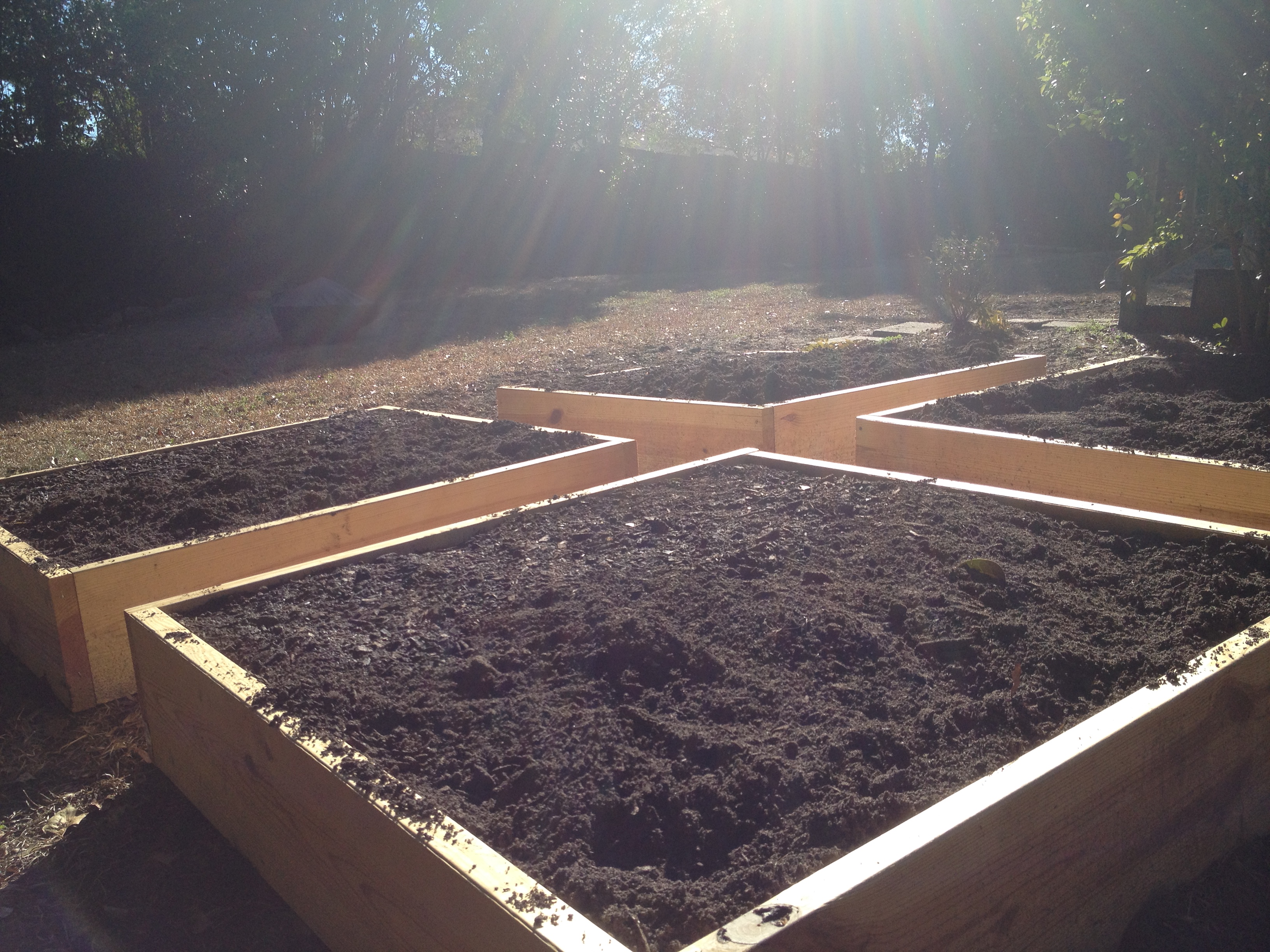
Since the first seeds dove into the soil the end of February, the weather has been rather dramatic.  There are strong, sunny days when heat seems to rise off the dark soil, and I imagine the seeds waking up warm and cozy, opening themselves to the nutrition of the dirt and the affirming warmth of the sunshine.  There are lots of chilly, wet, very cloudy days, when I imagine the seeds soak up the wet, even soggy, nourishment floating around them, loosening the hard seed covers, encouraging the seed’s stretching and growing–like those little sponges that start out as colorful pills but become great animals for bath times.

The little seeds–and me!–don’t get to choose which are sunny days and which are cold, rainy days.  They’ve got to just keep doing their thing, growing and stretching and taking in what they’re offered, using all the resources of the moment to help them grow.

How are you using the resources you’re being offered this very moment to help you grow?

The Israelites, My Bros & Sises

Deuteronomy 5:23-27

23When you [Israelites] heard the voice out of the darkness, while the mountain was burning with fire, you approached me [Moses], all the heads of your tribes and your elders; 24and you said, ‘Look, the Lord our God has shown us his glory and greatness, and we have heard his voice out of the fire. Today we have seen that God may speak to someone and the person may still live. 25So now why should we die? For this great fire will consume us; if we hear the voice of the Lord our God any longer, we shall die. 26For who is there of all flesh that has heard the voice of the living God speaking out of fire, as we have, and remained alive? 27Go near, you yourself, and hear all that the Lord our God will say. Then tell us everything that the Lord our God tells you, and we will listen and do it.’

The people feel like they can’t bear to listen or to be near to God’s voice.  They’ve got a healthy respect–even fear–of God, which is sometimes missing from our modern understanding of the Creator of All That Is.  They’re convinced that God’s presence will consume them, burn them up.

Isn’t that what we should desire?

And yet, I feel just like the Israelites–“let me have my little life in my tent at the bottom of the mountain (Deut 5:30), leave me alone to my regular, everyday stuff; don’t upset everything I know now by the all-consuming flames that are part of experiencing you, God.  My reality right now is bearable, I don’t really want to know what would happen if it was all burned up.  I don’t even really want to know what would happen if it all rose from the ashes again.”

They ask Moses to go and listen for them, so that God’s presence and voice isn’t quite so close, so that they themselves don’t have to go through the agony of truth and transformation–someone else can do it for them.

We see and know from Scripture as well as our daily lives that no one else can transform for us–we’ve got to go through the changes ourselves for them to have any real power in our lives.

Shouldn’t we want God to be near?  Shouldn’t we desperately desire for the transforming heat to melt away the extraneous parts of our lives?

The problem is that when the heat comes close, when God starts burning things away in us, it’s uncomfortable.  Any time something hurts, whether it’s stretching us, or poking us, or singeing us, there’s an opportunity for growth.

Though I want to close my eyes and hum real loud and drown out the invitations to grow, the only way to be close to God, to be transformed, to get out of the little, narrow, grey everyday lives we live, is to let the difficulties wash over us, to let  God come close to change us and to pour his strength into us–that’s what Moses let happen to him.

How to be Holy

“The Lord spoke to Moses, saying: Speak to all the congregation of the people of Israel and say to them: You shall be holy, for I the Lord your God am holy.” Leviticus 19:1-2

Holiness is not something that humans come by themselves; it’s something we as spiritual beings can make room for, but we can’t work up on our own.  We are holy because the Lord our God is holy–it is God’s holiness that covers us, that infuses us, and transforms us into holy people.

This week’s lectionary passage goes on (verses 9-18 of the same chapter–see below) to give some specific guidelines about what holy living looks like; each declaration is ended with the same refrain, “I am the Lord” (vs. 10, 11, 12, 14, 16, 18).  It’s a sort of short hand to remind the people at the end of every law delineated that it isn’t the peoples’ own effort that will bring such generous, respectful, strange and particular living about, but God’s grace and holiness flowing through their lives that will enable such curious actions and lifestyle.

Not just the statutes laid out in Leviticus 19, but all the 600-some laws throughout the Old Testament were established by God not to hem his people in, or to cause them to trip up, but to help the people recognize that they were different.  God had chosen them, put his mark on them, and to the world, these people, the Israelites, were supposed to be so different from all the other people that others would ask why on earth they were so strange.  They were strange–or were supposed to be–because they belonged to God; the Lord our God made them holy by his own holiness.

As we butt up against Lent, preparing to go into the desert with the Israelites and with Jesus, we consider the holiness that God graciously clothes us in through his Son, Jesus–not because of anything we do, or anything we promise that we’ll become, but just because each and every one of us is worth loving.  It’s a world full of curious, wonderful, beloved people–and you’re one!

9 When you reap the harvest of your land, you shall not reap to the very edges of your field, or gather the gleanings of your harvest. 10You shall not strip your vineyard bare, or gather the fallen grapes of your vineyard; you shall leave them for the poor and the alien: I am the Lordyour God.

11 You shall not steal; you shall not deal falsely; and you shall not lie to one another. 12And you shall not swear falsely by my name, profaning the name of your God: I am the Lord.

13 You shall not defraud your neighbour; you shall not steal; and you shall not keep for yourself the wages of a labourer until morning. 14You shall not revile the deaf or put a stumbling-block before the blind; you shall fear your God: I am the Lord.

15 You shall not render an unjust judgement; you shall not be partial to the poor or defer to the great: with justice you shall judge your neighbour. 16You shall not go around as a slanderer among your people, and you shall not profit by the blood of your neighbour: I am the Lord.

17 You shall not hate in your heart anyone of your kin; you shall reprove your neighbour, or you will incur guilt yourself. 18You shall not take vengeance or bear a grudge against any of your people, but you shall love your neighbour as yourself: I am the Lord.

giving growth

2014-02-24 15.22.50

Seeds are such mysterious things.  Here in South Carolina, it’s already time to start planting the hardier stuff–greens, roots, some herbs, so I took advantage of the sunny, warm days over the weekend to fill up my boxes, sprinkle some seeds, and water the soil.  I’m always amazed when I open the little paper packets at how small and wisp-like seeds produce these (comparably) huge, delicious, totally-different-looking fruits and vegetables.  Last week’s lectionary epistle lesson has been bouncing around in my head as I’ve been working the dirt:

“You are still worldly. For since there is jealousy and quarreling among you, are you not worldly? Are you not acting like mere humans? For when one says, “I follow Paul,” and another, “I follow Apollos,” are you not mere human beings? What, after all, is Apollos? And what is Paul? Only servants, through whom you came to believe—as the Lord has assigned to each his task. I planted the seed, Apollos watered it, but God has been making it grow. So neither the one who plants nor the one who waters is anything, but only God, who makes things grow.” 1 Corinthians 3:3-7

Looking around the church (all people who call Jesus their God and Savior, believing in the triune God) these days, it’s hard to ignore the battle lines that crisscross Jesus’ body throughout the world like the scores in a ham.  Screwtape’s words, through C.S. Lewis’ voice, come to mind once more:

“We have quite removed from men’s minds what that pestilent fellow Paul used to teach about food and other unessentials–namely, that the human without scruples should always give in to the human with scruples. You would think they could not fail to see the application. You would expect to find the “low” churchman genuflecting and crossing himself lest the weak conscience of his “high” brother should be moved to irreverence, and the “high” one refraining from these exercises lest he should betray his “low” brother into idolatry. And so it would have been but for our ceaseless labour. Without that, the variety of usage within the Church of England might have become a positive hotbed of charity and humility.”

Of course, part of the trouble is discerning which things are inessential–a literally life-and-death matter which I don’t mean to downplay–but what draws me more this morning  is the solution which Paul offers: God gives the growth.

I can put good soil in my boxes, and plant the seeds, and beg the sun to come and warm up the dark dirt, but all I’m really doing is making room for growth to happen, giving the best environment possible–making room for a miracle to happen.

In our lives, we choose how to use our time–what kind of soil (habits, relationships, mental tape loops) we put in the boxes of our minds, our spirits and our bodies.  We choose the sorts of things we read, watch, eat and ingest–the seeds we plant in our boxes; and we choose how to nurture those seeds with the sunshine and water of prayer, spiritual disciplines, service, and learning.  Then we’ve done all we can–we can’t make growth happen, in our own lives or in the lives of our churches.

We cultivate, plant, and water, but the growth itself is out of our hands; we prepare and we present ourselves–make ourselves open and ready to be transformed.

God, come into the spaces we make and grow us.  Show us how to make room to be open and to be transformed.