the longest night & St. Thomas Day

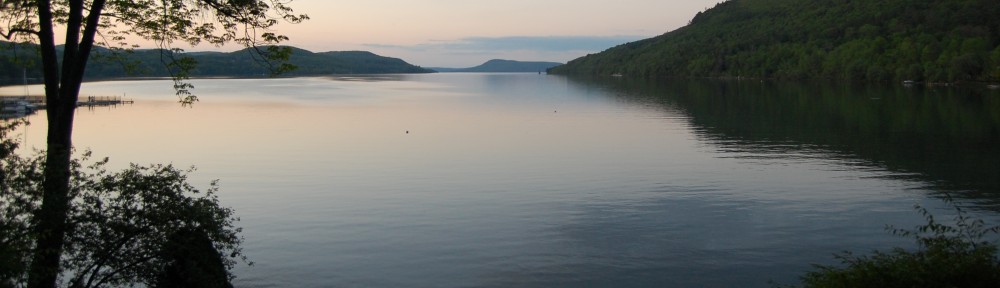
IMG_0849

I’ve come to believe that there are no coincidences in the liturgical calendar.

I awoke early on 22 December, just as light was beginning to streak the sky, having completely forgotten that the night before was the longest span of darkness for the year before and the year to come.  Something made me realize it as I came awake in bed, and I hoped it was a sign that light is starting to break into the ice jam of darkness in my own mind, bringing to an end the exhausting and isolating but yearly phase of grey. Continue reading

Quotation of the Day

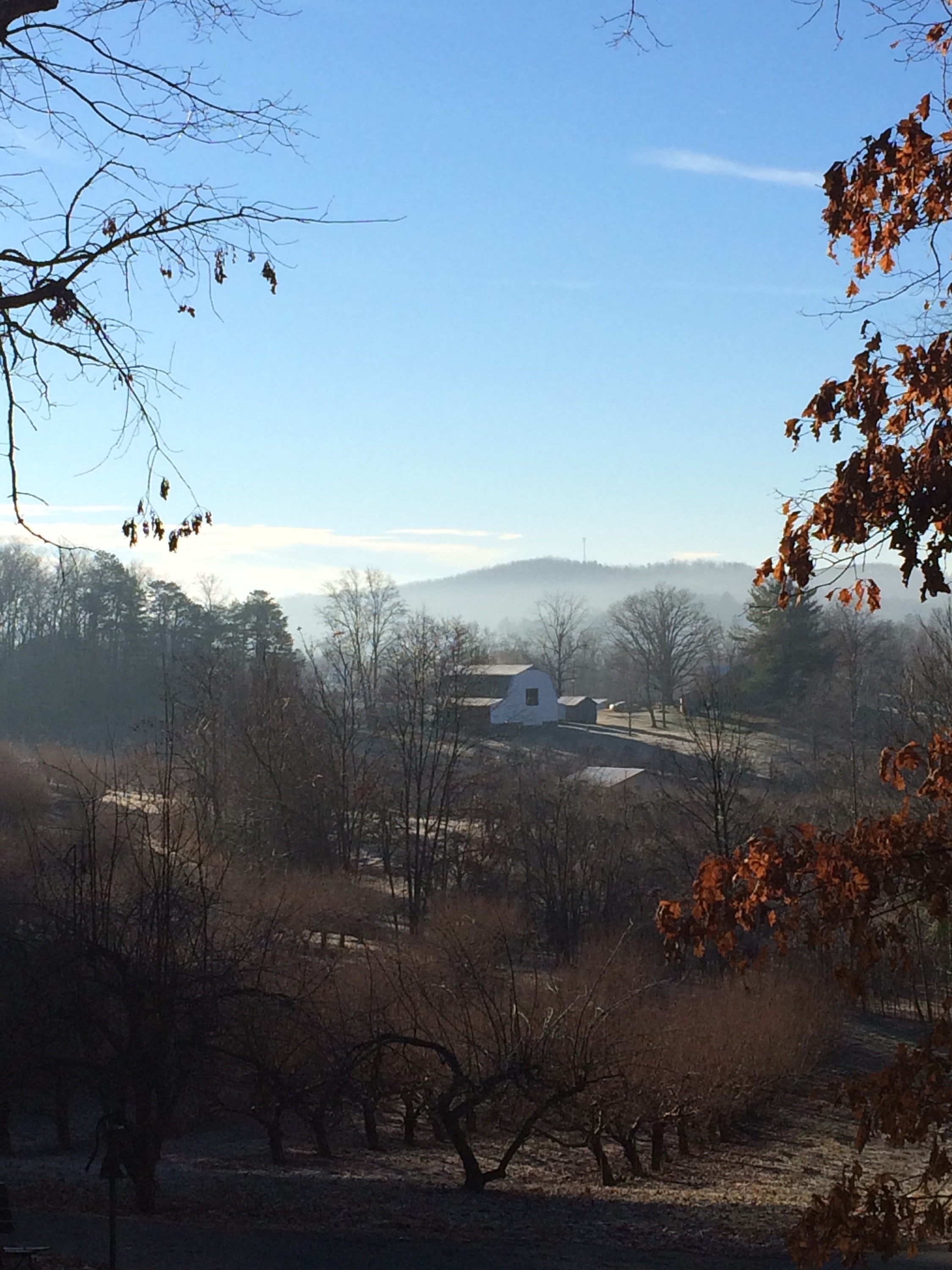
IMG_0595.JPG
God is our refuge and strength,
an ever-present help in trouble.
He says, “Be still, and know that I am God;
I will be exalted among the nations,
I will be exalted in the earth.”

Psalm 46:1, 10

In a phase of frustration & discouragement, this mantra challenges me to put my trust where I’ve bet my life, in God’s hands.

so small – what I learned at Mont Saint-Michel

IMG_2342

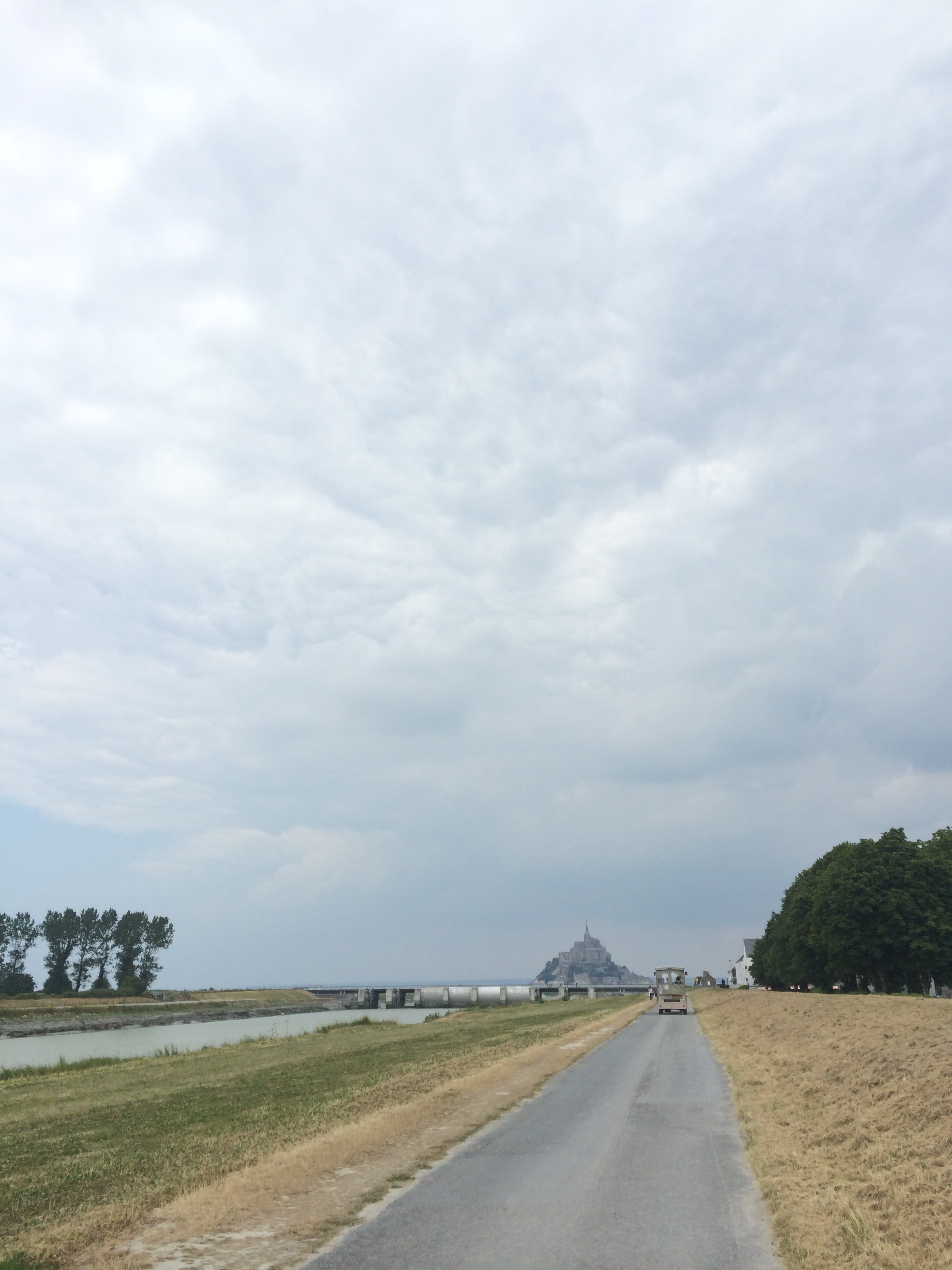
During our northern-France pilgrimage this summer, we went to Mont Saint-Michel.  I’d been maybe 15 years ago, but I experienced it very differently this time, of course.  It’s the most dramatic approach of anywhere I’ve ever been.  First, it’s a little spire in the distance–literally pointing toward heaven, directing all those who see and approach to focus their attention on God.  IMG_2303

It was cloudy, windy, and a bit rainy as we walked the pilgrim’s way toward the Mont (by afternoon, at the top of the post, it’d cleared up beautifully).  When you think you’re almost there, you aren’t–as you pass the dam (above) you’re actually only getting close to the pedestrian-only/official-buses-only section; the pavement ends and those on foot continue on real earth (it was sort of lovely and medieval).

IMG_2307

Then you finally arrive, and crane your neck.  The main tower points like a finger toward the sky, with the smaller spires of the main chapel’s gothic apse joining in, beckoning your attention toward the vast expanse of sky symbolizing the vastness and the glory of God.


IMG_2309

Just below the highest tower (below) much of it is blocked from view–you can see its fullness more clearly from afar.  In the midst of life, often it’s more difficult to contemplate the whole thing; a step back, contemplation, slowness, helps us humans, limited as we are, to take in the greatness of God and of life.

IMG_2343

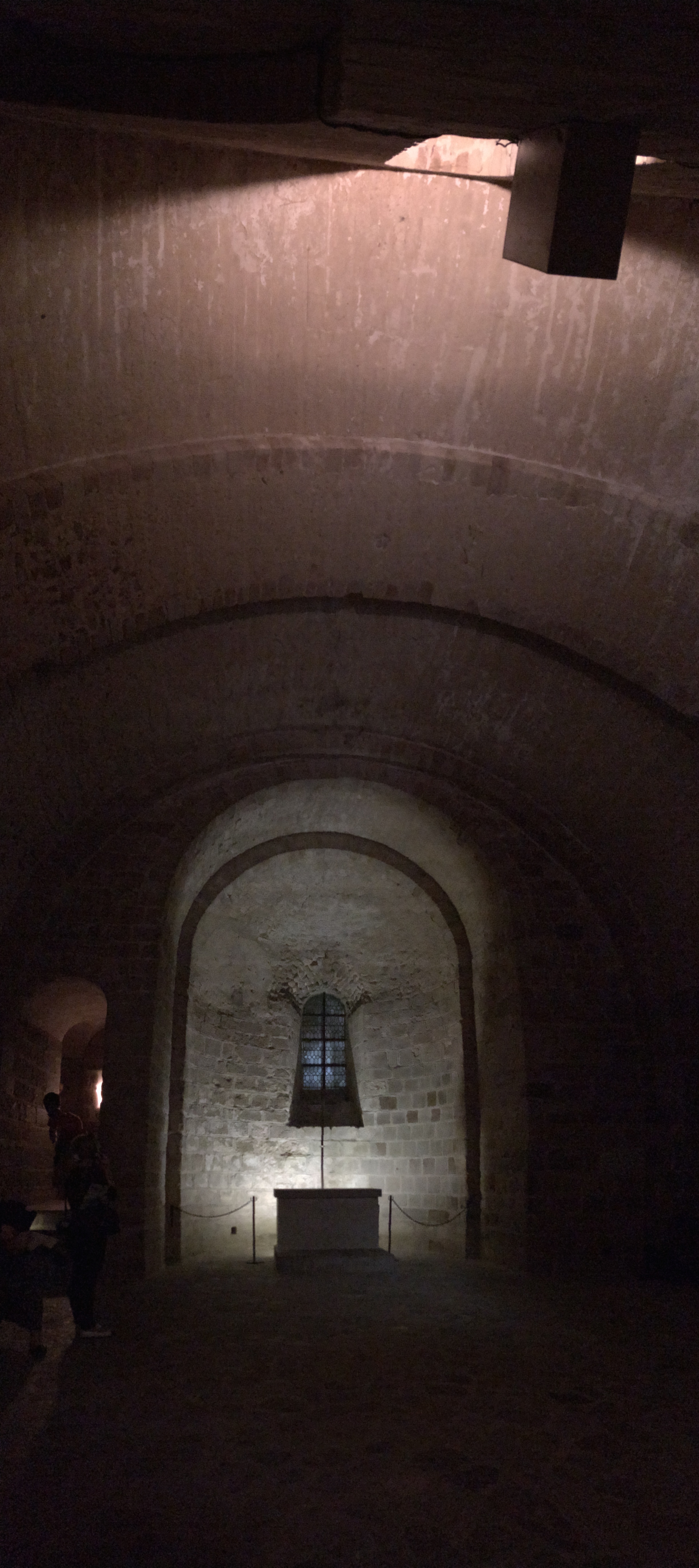
The upper main chapel is extraordinary, as are the rooms in which monks have lived, eaten, prayed, studied, and celebrated for centuries; this time, though, I was deeply affected by the Chapel of St. Martin, built almost exactly a thousand (1000!) years ago.  The automated guide told me, almost apologetically, that it hadn’t been touched much in the intervening millennium.  In classic, understated Romanesque style, this quiet, sparse, dark little room was my favorite moment of the whole day.

IMG_2330

Can you imagine praying where God-seekers have been soaking the walls with prayers for a thousand years?  As far as we are removed for those who built this holy place for prayer and worship to the glory of God, they themselves were removed from Jesus’ time in Galilee.  When I realized that as I sat at the back of this chapel, I started to understand how small I am in the course of history and in the life of the church.

Though our lives matter–the prayers we offer and the virtues we cultivate–each one of us is tiny, miniscule, perhaps even so small as to be statistically irrelevant, in comparison to the Church (all people who have sought after God throughout time and space).  Our significance comes from being part of something much larger than ourselves, a millenia-long heritage.  Being so small is a comfort to me, though; I am not such a linchpin myself that my shoulders need bend and break under the weight.  The little pieces each of us contribute are offerings to this great God of centuries and space.

Fear not!  As pastor Nadia Bolz-Weber said recently, “The Church of Jesus Christ has survived papal corruption, the crusades, sectarianism, and clown ministry. It will survive us too.”

Christians be Crazy

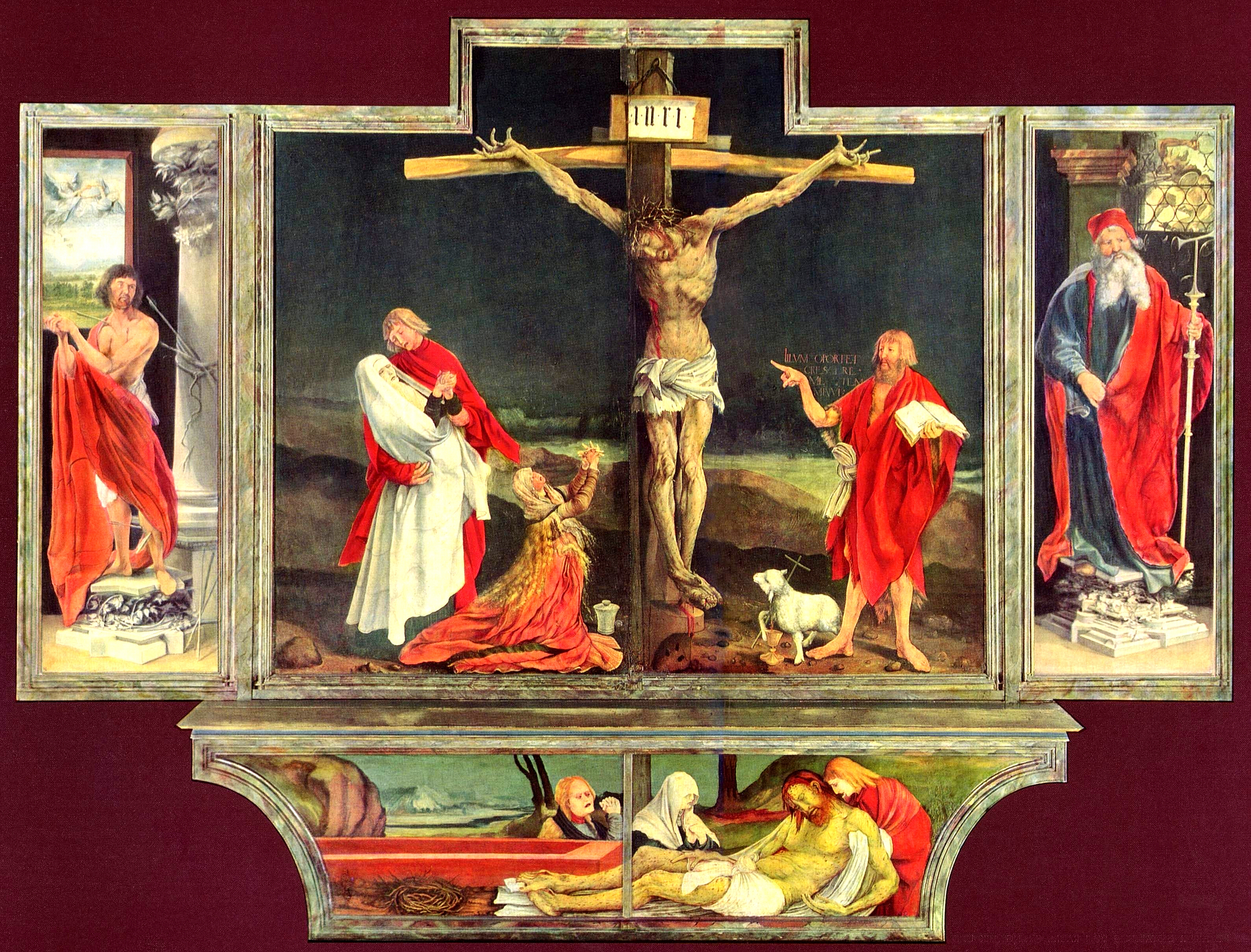
Mathis_Gothart_Grünewald_019

Last Sunday, I got to do one of my favorite things which only happens a few times a year: I gave communion to a member of our parish community who has Downs Syndrome.  Though a faithful attender, with such a large parish, the stars and communion lines don’t often align that I get this honor; it’s always the best moment of the morning for me because, unlike every other member of the congregation, this friend grips my fingers for a solid four or five seconds when I place the wafer in their hands, and looks at me straight in the eyes.

Our tangle of fingers and met gazes are the essence of communion.  Jesus meets me in this parishioner’s body.  This precious person, living with Downs, is a conduit of God’s grace to me; what a gift to be given–I cherish it, knowing that there are many more people with just as precious gifts to be offered, living with various levels of validity in our society (or not even given the opportunity to live in this broken society that would be so blessed by their presence).

“Now the manifestation of the Spirit is given to each one for the profit of all.” (1 Cor. 12:7)

A friend of mine wrote about this same thing in his own life on the Covenant Blog earlier this week, too.

* * *

This counter-cultural value placed on every life reminds me of the story this week of Brittany Maynard, a 29-year-old with terminal brain cancer who is planning her death for November 1st, using Oregon’s option for assisted suicide as a way for her to “die with dignity.”  I read about it first on one of my favorite blogs, Cup of Jo, and I was devastated by Joanna’s closing comment, “I’m so moved.”

In response, another piece has been circling the internets, by another young woman, named Kara, also living with terminal brain cancer.  She writes an open letter to Brittany, asking her to consider another path–to not choose death now.  This path is one that I believe is brimming with dignity (it’s the one Kara has chosen for herself), though it is also full of dependence, weakness, and pain.

Close friends of mine just welcomed their first child–another time of life full of dependence, weakness, and pain.  I imagine they’re spending their lives with dirty diapers, spilled milk, big black circles under their eyes, and a mewling infant–where’s the dignity in that?

When we’re faced with circumstances in our lives that threaten our control, we can shut down and batten down the hatches and strong-arm control out of the rock-and-hard-place, or we can open ourselves up to the circumstances that throw us out of control; we can open our arms, we can kneel–or even fall on the earth if we need to, we can continue to breathe deeply and let the circumstances change us.  We can let ourselves be made into something new–something with a different kind of dignity (which doesn’t depend on an illusion of control and independence), the kind of dignity that may be full of spilled milk (or spilled-other-bodily-fluids), and stinky diapers (whether at the beginning or end of life), and sleepless nights (tending the fragile light of life in another person’s body).

Dignity doesn’t have to do with being independent, or avoiding any way in which you might burden someone else.  Dignity has to do with openness, peace, and love without regard for circumstances.  Indeed, dependency is a beautiful form of dignity–knowing that your essence is not mangled by being out of control of your body, or by pain which you suffer, but that the essence of each human being is the Image of God, which cancer, and age, and infirmity can never hope to touch.