Prayer as Second-Nature

Was thinking about this post yesterday when conversing about prayer, familiarity, change, and growth…

Emily's avatarhope of things not seen

Back in June, when I made my first voyage back to my hometown* (Durham), about ten minutes out from my best friend’s home, I realized that we NEEDED cheese for our Sunday night repast. Flipping my brain quickly into cheese-emergency mode, I thought, “Must get to Whole Foods (only cheesey place open on Sunday nights). Where am I now? How to get there fast?” And my brain then did a very funny thing. It shut off. I exited the interstate, and my arms felt like they were moving themselves, turning the wheel; my foot had a mind of its own, pressing the brake and the gas. And then, I turned up in the Whole Foods parking lot–presto! What a strange thing to happen, I thought, that my brain wouldn’t do the think-through-the-map-you-keep-stashed-in-your-mind, calculating distances and times and the length of stoplights…

It dawned on me: my brain had done that…

View original post 733 more words

brave people make intimidating congregations

Over coffee this morning, shop-talking with my colleague, Dane, I thought of this ole post. May the 26 y.o. Emily speak to you as she’s spoken to me–demanding courage to speak the truth at all times and in all places.

Emily's avatarhope of things not seen

Often, while sermon-writing, words come slowly, and when they come, they seem like little clods of dirt that break apart into dust the moment you try to grasp them. This exercise sends me running through my cycle of google reader-facebook-twitter.  Having just completed the circuit a few minutes before, there was nothing new on my reader, but when i typed in “fac” in my browser bar (the fewest letters necessary to bring up my worn “facebook.com” link) and arrived at the top of my newsfeed, a new photo had been posted by my sister:

She wore a white sundress, her blonde hair was down, and the big white posterboard she held up read, “Shh… just go back to sleep.”  It was a photo taken for Project Unbreakable, a website dedicated to survivors of sexual assault.  I’d known about the event she referred to for a few months, but seeing…

View original post 147 more words

the morning after

when I woke up the first morning as Mrs. Hylden, the morning after our wedding, I came to a discouraging realization: I am still the same person I was yesterday.

I had this strange, unexpressed expectation that when I got married, I’d change–overnight.  I’d become a grownup and I’d brim with that patience and generosity and perspective that I’d always struggled to cultivate.

IMG_0265.JPG
The morning of May 30th, I got up with an extra band of gold on my finger, a new name and a new commitment, but I didn’t really feel any different, and I surely was not magically oozing fruits of the Spirit.

Yesterday, I tried making gluten-free gnocchi for the first time.  Longer than forming the dough, rolling and cutting the individual gnocchi(s?), was the shopping–three grocery stores later, I only had to make one (not super effective) substitution.  As I was chasing down new ingredients and throwing myself into the deep end of gluten-free substitutions (having mastered gluten-ed substitutions awhile ago), I fought my frustration at the glacial pace and inefficiency of the whole process.  Scouring shelves, rereading recipes and searching google on my phone to find “substitutions for sweet white rice flour,” made me realize the same thing I’d learned when I woke up May 30th, 2011: Life takes time.

Earlier this year, a dear colleague from the cathedral took a new job; at a party, a parishioner asked her about the new work.  Reflecting on the joys and challenges of inhabiting a position with both promise and little preconceived shape, she said of change, “It keeps you honest.”  Rather than being lulled into complacency by certainty and repetition, changing circumstances encourage us to grow in uncomfortable but transforming ways.  We never wake up one morning having arrived, we (or at least I) rarely complete our to-do lists in one day, and no one–ourselves or others–change as quickly as we hope they would.  Life takes time.

Time to adjust to a new lifestyle–job, diet, exercise regimen, environment.

Time to heal from wounds–relational or physical.

Time to change our habits, learn new skills, be transformed into new people.

“Be present, O merciful God, and protect us through the hours of this night; so that we who are wearied by the changes and chances of this life may rest in your eternal changelessness; through Jesus Christ our Lord(Collect for Compline, BCP page 132)

shavasana in life

I used to think that shavasna was a cop-out pose, the liturgical lie-down at the end of a yoga session that was for the old ladies who really didn’t have the physical acuity left in them anymore.

Maybe I’m one of those old ladies now, but I’ve discovered shavasna to truly be not only the most important yoga pose, but a truly vital life-pose as well.

Part of the point of yoga (part of the point of liturgy!) is to mimic parts of our everyday lives, that our bodies, minds, and spirits might learn to respond differently when faced with stressors or with joys.  My body gets itchy for downward dog and plank when in the midst of a rough day at the office (I’m notorious for popping down onto the carpet for some relief).

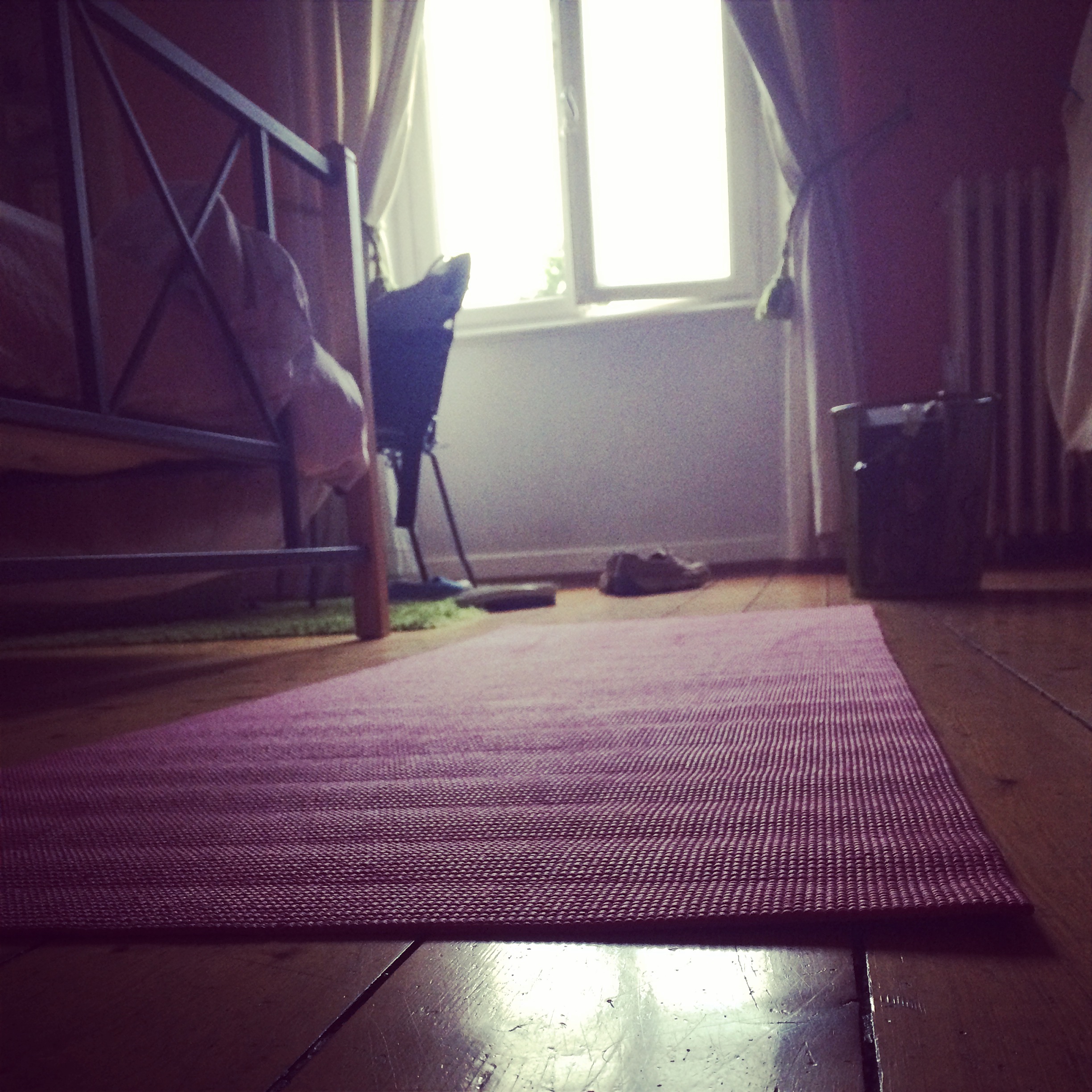
2014-07-02 07.03.26

Shavasna, in English–corpse pose, lying on your back with arms and legs extended naturally, is the end of every yoga sequence and the time when the body absorbs all the energy, air, life, strength, and stretching that you’ve been pushing around in it for the last hour or so.  I imagine it like a tres leche cake–the spongy cake soaking up all the milk and cream that is poured over it.  Our bodies are like spongy cake, letting the goodness we’ve cultivated through stretching our bodies fill up our bodies and stick around our souls.

“Reflection upon experiences is when wisdom comes.”  Instead of just grabbing and gathering experiences–stuffing them into our life-rucksacks, we need to sit down and process them both consciously and unconsciously before we can really benefit from the thing we’ve been through.

In less-grand parlance, taking a few minutes to gather thoughts after a meeting, or to think back through a day to the emails you’d promised and the epiphanies you’d had, can both keep your life on track and serve as a great boost–remembering all those things that your day entailed, accomplished, and surprised you with.

Too often, I tell myself I’ll recap later, I’ll remember later, and I’ll consider it later.  You won’t be surprised to hear: I don’t.

Mostly, I don’t remember the details and nuances of the meeting or lunch, sometimes I just don’t remember anything at all.  These moments are given to us as a gift, and to devote even more time to them–just a few minutes at the end of a day–gives them honor, cements the good in our mind, and perhaps even makes us better at replying to emails and keeping our promises.

Shavasna is our body’s reflection on its hard work; our minds, hearts, and souls deserve and demand the same–in our work and in our lives.

I’m not prayed-up enough yet.

There’s this apocryphal story from the high school I attended, TCS, wherein our faithful and frightening (maybe just to me–her expectations and deadlines helped me through college, but were so intimidating as a 17-year-old) Senior English teacher, Mrs. Markwood, agreed to a lunchtime meeting with one of our more challenging fellow students…

According to the legend, the student darkened the classroom doorway–Mrs. Markwood’s desk being located in the opposite corner of the room–and our beloved teacher, having not quite caught her breath from the last class, exclaimed, “Oh dear… Wait there a minute–I’m not prayed up enough to meet with you yet.”  Reportedly, she returned to her desk chair, bowed her head for a solid five minutes, and then ushered the student in for their meeting.

I suspect the story was shared later that afternoon as a point of amusement on the student’s part–how could someone be so earnest as to chew up meeting time with prayer time?

Now (doesn’t that always happen when we grow up and look back?), I find myself enlisting Mrs. Markwood’s phrase–I haven’t had the courage to say it to any parishioners yet–but I have started sometimes carving out a few intentional minutes of prayer before meetings which I do not relish attending (and even meetings I *do* relish attending).

In the phrase is the admission that it is not on my own patience and strength and graciousness that I deal with people–only through power, resolve, energy that comes from somewhere else is anyone able to live and behave with patience and compassion and joy.

Prayer is truly one of the most important things I learned from my teachers at Toledo Christian; acknowledging our need for peace beyond what we can white-knuckle for ourselves, and seeking out the source of that energy, peace, patience, and joy.