Are you being fed?

from my colleague, the Rev. Dane Boston, on hunger and Jesus

The Rev'd Dane E. Boston's avatarThat Blessed Dependancy

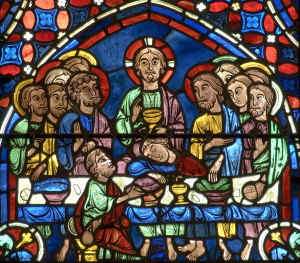
Chartres_Bay_00_Apostles_Panel_25

A Sermon Preached on the Twelfth Sunday after Pentecost, August 16, 2015

By the Rev’d Canon Dane E. Boston, Trinity Cathedral, Columbia, South Carolina

Texts: Proverbs 9:1-6; Ephesians 5:15-20; John 6:51-58

“My flesh is true food, and my blood is true drink.”

May I speak in the Name of God the Father, God the Son, and God the Holy Ghost. Amen.

Are you being fed?

The Church has been called a hospital for sinners. In light of this morning’s Scripture lessons, couldn’t we also call it a food bank for starving souls?

And so the question is: Are you being fed?

I suppose I should make clear that that question has nothing to do with Andrella and her wonderful team of kitchen volunteers, or with the covered dish luncheon that we are all invited to enjoy in the Trinity Center after the service. Feasting and feeding together are things that…

View original post 1,058 more words

Errant Posts

IMG_1578Clearly, the heat of August in Columbia has gotten to me!  Many posts have jumped up on this site before I’ve finished writing them, with unfinished and undeveloped thoughts.

As writer, curator, and webmaster (and all that as a hobby!), I have gotten ahead of myself.  Here’s to hoping I can manage a bit more organization and meaningfully-published pieces in the coming weeks!

Thank you for bearing with me!

An Offering in Celebration of Our Sacred Lady

an icon for today via a dear friend:

Paul Nicholson's avatarINTER ALIA

Picasso mother-and-child

“Mother and Child” (1901) Pablo Picasso

On this morning of the Feast of Saint Mary the Virgin I offer up a painting by Pablo Picasso entitled “Mother and Child” , painted in 1901, as a way of celebrating and lifting up the special nature of the Virgin Mary, the Mother of God, the “Theotokos,” .  As a naïve young lad I always found Picasso a bit “trite” and wondered what all the fuss was about.  However, as I have aged and been guided by some very knowledgeable friends, and one of my priests and artist son-in law in particular,  I have come to see the deep symbolism in his work as possessing great religious connotation.  This painting comes from what is referred to as Picasso’s “blue period”.  During this period the artist rendered everything in blue. In a way this painting is reminiscent of the baroque period artists who used blue…

View original post 308 more words

Friday Icon

  
image via
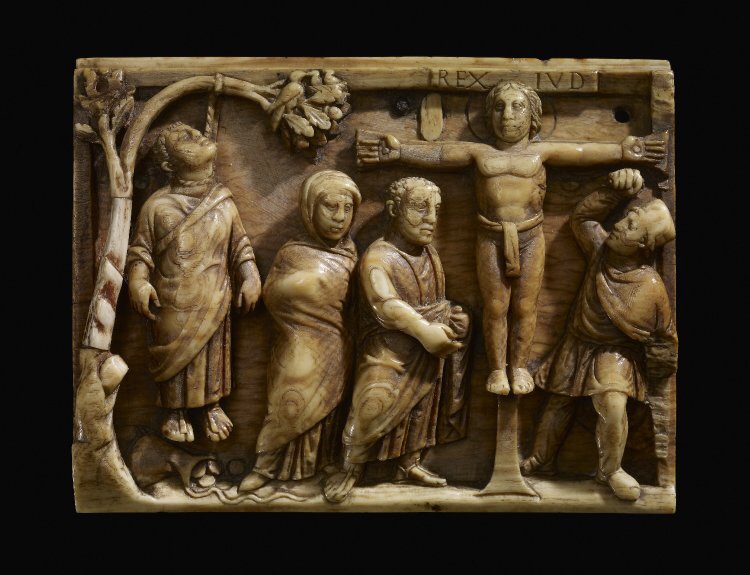
This is the earliest representation of Jesus on the cross (420-430 CE). It took 400 years for Christians to be bold enough to make a visual image of Jesus’ death. Crucifixion was so full of shame in the culture–a death for slaves and really disgusting crimes, Jesus’ own method of demise may have been downplayed in Christianity’s early years (gold cross necklace, anyone?). 

How ridiculous to worship someone who was nailed to a tree. May we remember–or imagine–the horror of Jesus’ death, not just the victory of his resurrection.