Nature as a Metaphor

IMG_0312
This week, the Daily Office Lectionary (the schedule that takes pray-ers and read-ers through most of the Bible in the course of two years, found in the back of any Book of Common Prayer, and online in various locations, like this) has been taking us through Isaiah.  This prophet’s words are major faves for Messianic imagery and promise–Isaiah’s are the words ones Jesus quotes most during his ministry as recorded in the Gospels.  They’ve been fertilizing my heart the last few weeks (and months–in our women’s Bible Study); here are a few thoughts on two verses from Isaiah 43, part of the Lectionary’s reading in the last week.

“When you pass through the water, I will be with you; and through the rivers, they shall not overwhelm you; when you walk through fire you shall not be burned, and the flame shall not consume you.” Isaiah 43:2

We have, we do, we will face rivers and fires–storms of relationships and financial stability and physical/mental health–there is no promise God ever makes that we will be shielded or that we can avoid trials and pain in our lives.  The promise made to us here is that when we face pain and trials, because we will, we won’t be drowned or choked or suffocated or burned or consumed–we won’t be killed.  When we face pain, we have an opportunity to grow and learn and to become stronger through the trouble we’re encountering.  If we stick stubbornly to God, like a burr on a dog’s coat, our trials become moments that we can learn trust, and we can come out the other side stronger and happier and closer to God than before.IMG_2303

“I am about to do a new thing; now it springs forth, do you not perceive it?  I will make a way in the wilderness and rivers in the desert.” Isaiah 43:19

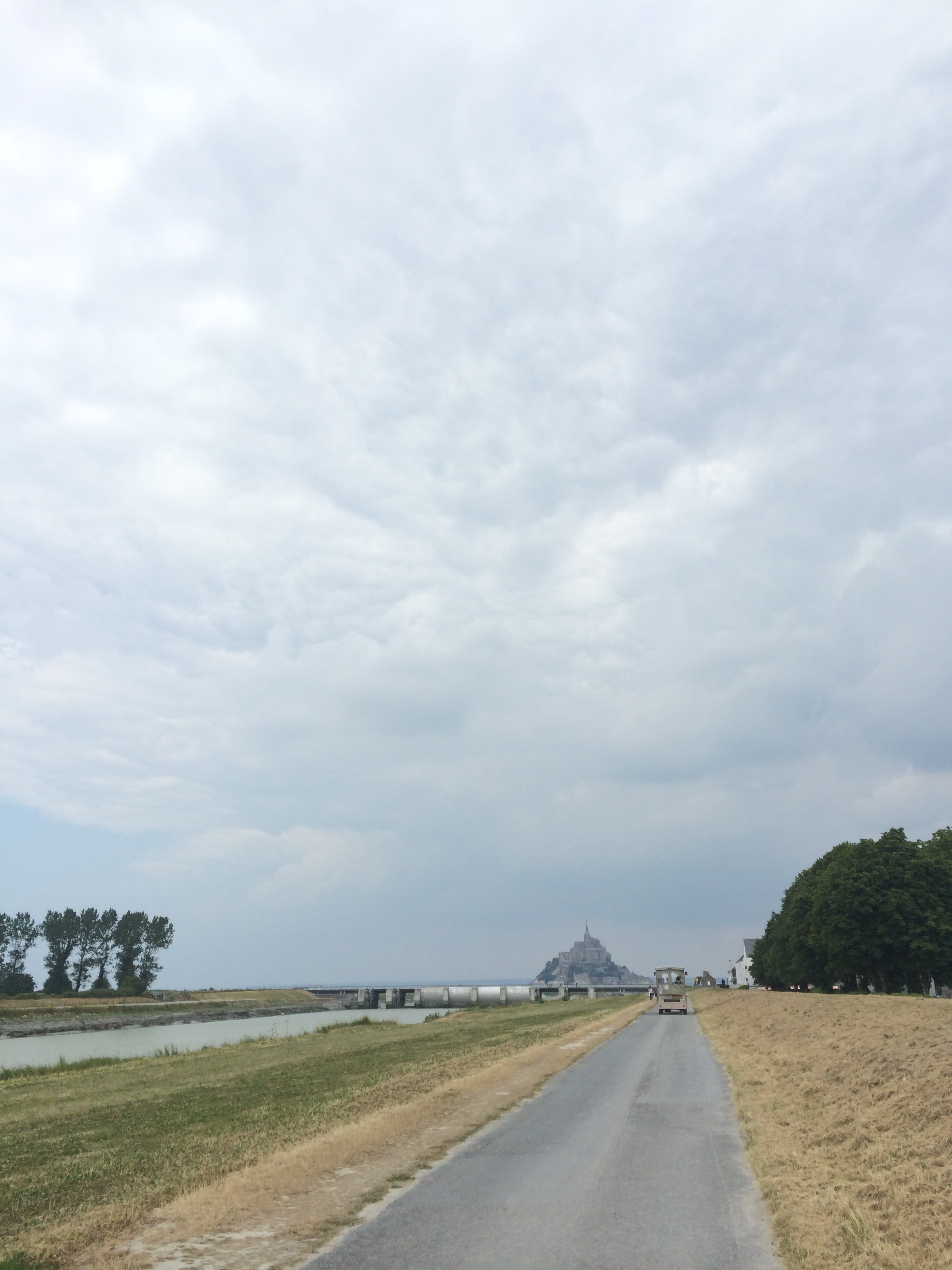
We don’t experience much physical wilderness in our day & age–there aren’t any places on the earth that haven’t at least been mapped, if not overrun with people and paths and conveniences (especially in the US)–but perhaps you can imagine what it might be like to stand on the edge of a desert, or at the end of the road leading into the nature preserve (if that’s the closest we can imagine to “wilderness”!), and try to conceive a way through the uncharted space to wherever it is we’re supposed to go.  Even if it’s like a park, and there are paths running through this “wilderness,” such ready-made paths never seem to go quite the right direction.  Though we face areas of wilderness in our lives–relationships that are stuck and have no clear direction out of the mud, medical or financial or other problems that have only walls and uncertainty–God will guide your path (the one for just you–not a pre-made, well-worn path, perhaps).

Bible Study Notes (Isaiah 13:1-16)

On Mondays, a women’s Bible Study meets at my home; we’ve been winding our way through Isaiah this year, taking as much time as we can to turn the Word over in our hearts and dig into this prophet’s message for our own day.  Here are some of our gathered thoughts from this week:

The LORD declares war on the tyrants and oppressors, raising his own army to fight them (v.3,11); God is angry and fierce and full of wrath (v.9).  How does this jibe with the God we know whose “property is always to have mercy”?  (BCP 337)  We know that God is holy (this is one of the main themes of Isaiah), and so to look at this passage through God’s property of holiness, we may find that his “property” is holiness, and when holiness comes into contact–“reacts” (to use chemical jargon)–with sin and evil, the result is anger and wrath.  We throw ourselves on God’s mercy, knowing we are unworthy, depending fervently on Christ’s sacrifice to reconcile us to God.

What of the violent language used?  “war” and “armies” and “tyrants” and “fighting”?  How is this the same God who we know through Jesus Christ, who told us to put down our swords?  A clever woman amongst us (not me!) mused that this was the sort of language, the sort of bluff-calling, that was necessary to communicate effectively with Isaiah’s audience.  The tyrants and oppressors–the kings being addressed–say, “I have great armies and strong bulwarks, no one can touch me!  I am like god!”  God replies to them, “No no no–‘I myself have… summoned my warriors (v.3).’  Don’t be mistaken, there’s only one God, and it’s not you.”  Perhaps God earns respect with the kings by playing tough–speaking the truth in language prideful tyrants will understand.

Isaiah isn’t so cut-and-dry that we see those (pointing fingers) evil tyrants over there, and we are the holy people trusting in God over here.  We’re exempt.  We each have bits of hardness in us, no matter how much we love and trust God.  We’ll never stop being sinners, and we come to God again and again with our hardness and limitations–especially in our weakness and self-deception (which are times when we don’t come to God at all!).

The thing is, we live in America, we (attendees, and probably most readers…) are white and upper-middle class, we are educated and we have voices that “matter.”  We wield a staggering amount of power in our society, mostly because of our socio-economic status and because of our degree of education.  What is it that we’re doing or not doing with our power that may be making us tyrants?


Epiphany – Following the Light

We’ve been living for a few weeks in the in-between times.  In between the half-seasons of television shows, I mean.  Since the beginning of December, most series have taken a hiatus, and this next week, the dramas and comedies return in full force.  Not least—Downton Abbey Season Three starts on this side of the pond tomorrow night/tonight at 9pm.  Our recording devices will return to their usual, almost-full-to-capacity status, and our ache to find out if the hero will return from his coma will, hopefully, be sated.  We are desperate to discover whether the heroine will ever find true love, we despair along with the couple who seek an adoption, but keep falling into heart-breaking loopholes.  Of course, this could be more than just television; we could be facing these sorts of hopes and tensions in our real lives, too.

These stories, great and small, deep and vapid, true and fictional, speak to our need for a narrative of a love so extraordinary as to change everything it touches.

This is, perhaps, something of what the wise men sought as recounted in our Gospel passage today.  Matthew tells us they packed up their camels and trekked across a continent to meet this new baby King.  These wealthy, busy men didn’t send a messenger, or even have Babies ‘R Us ship a gift to Jesus.  These studiers of the heavens had seen something big—this light in the heavens—and whatever it was that caused the light had to be seen in person.  They were desperate understand and to be near the event that had made even the predictable skies look new.

They rushed to Jerusalem to congratulate Herod on this great event that had taken place in his backyard; they were eager to get directions from Herod about where exactly to find this child-king.  Imagine these impressive, imposing men standing on your front porch, knocking on your door.  They’re wild-eyed and overcome—bursting with joy for the adventure they’ve undertaken.  Herod opens the door in his bathrobe, having been roused from the couch watching reruns on TV, and stares at these men blankly.  What are you doing here?  What do you want?

They practically bulldoze him, rushing through the rooms of the house, tearing down the hallways, spouting their research and the prophecy they had found as they hunt desperately for the person they desire.  It quickly becomes clear that Herod hadn’t been paying attention to the lights in the sky and the signs around him.  He pulls his bathrobe around himself a bit tighter, and a cloud forms over his eyebrows.  He narrows his eyes in thought, “it’s not bad enough that I’m living in the Roman Boondocks,” he says to himself, “now there’s a rival that everyone knows about except me.”  As soon as the wise men stumble off to Bethlehem, he returns to the couch to brood and to cook up a scheme to unseat this new king.

The wise men troop down the Jerusalem hill, out into the countryside.  They’re on edge, they know they must be close to the place where the world has been changed, the place the light has been leading them on their long expedition.  They arrive in Bethlehem, on the main street.  The light keeps alluding them, they duck behind buildings and then stretch high on their camels to keep an eye on the light.  As they get closer and closer to the light, they realize they’re in a shady part of town.  There’s the coughing of illness, the stench of poor plumbing, probably a few ladies of the night in some doorways.  The tension is incredible—where are they going to end up?  What’s going on that the light is leading them to this kind of place?

Suddenly, almost imperceptibly, the light halts—they were, perhaps, confused, but as St. Matthew puts it, they were absolutely “overwhelmed with joy.”  They stood on another front porch, much less-grand than the last one, still seeking a king.  I imagine this greeting was very different from the grumpy ruler they’d left in the big city.  Joseph and Mary were still in the throes of sleep-deprived early-parenthood, and to make matters more stressful, they’d both been having dreams and it was becoming clear that their reality—the quiet life they’d envisioned, raising a happy little family in Nazareth—was not the way that things were going to play out.  Now, foreigners showed up on their doorstep, and they begged to see the newborn.

Can you imagine the scene?  Joseph and Mary, bleary-eyed, but trying to be hospitable, the travelers, dusty and exhausted, but rapturous finally to be in the same room as this child of promise.  Each of them were stretched to their absolute limit—emotionally wasted and physically spent.  The light had led each of them to this place—the very edge of survival; and it was here that they found Jesus.

Are you there this morning?  Perhaps the holidays were especially hard this year—so much changed in the last twelve months, and 2013 stretches as far as the eye can see.  A long trip, even a cross-continent, trek on a camel, sounds like a dream-like escape.  Overwhelming joy would be a lovely feeling to experience, but there’s so much evil in the world and so many broken relationships in your life that “joy” doesn’t seem like a state of mind meant for you.  I wonder what it was that made the wise men overwhelmed with joy—if it was their aching feet, or their home-sick hearts, or some other force quite outside themselves.

In Jane Austen’s novel, Emma, the young heroine is satisfied with her unmarried life, contentedly spending her time matchmaking others.  Throughout the novel, she is plagued by her brother-in-law, Mr. Knightly—his much-more-pleasant brother had married her sister.  At the climax, Emma has realized, by his absence, that she is desperately in the love with him and must marry him, and he returns, she thinks, to admit his love for her best friend.  Her despair turns quickly to joy when he says that his trip to his brother’s house in London was no comfort—that her sister reminded him daily of his feelings, and that he returned to the country just to be near her again.  He says, “I rushed back, anxious for your feelings, I came to be near you.  I rode through the rain, but I’d ride through worse than that if I could only hear your voice telling me that I might at least have some chance to win you.”

Jesus went on a very long journey in order to arrive in Bethlehem.  The Son of God was with God from the very beginning—even before time, as the Gospel passage from John told us last week.  And after the creation of the world, after centuries of time passed and after God developed relationships with Abraham and Isaac and Jacob and Moses; he wooed the Hebrew people and showed his love for humanity by telling us how to follow his light and how to thrive in relationship with him.  Finally, the Son of God came to earth, as the most extraordinary act of love ever known.  He ended up in Mary’s womb, where he grew for nine months, he got crowded in there and made the long, dangerous trek that we all do into the big, wide world.  In response to this incredible odyssey Jesus Christ undertook, the wise men thought that the least they could do was to take a trip to see him for themselves.  The light came to them and they responded.  They traversed the wilderness to witness the miracle of the greatest love the world has ever known—God himself coming just to be near us.


The Feast of the Holy Innocents – In Remembrance of the Children of Sandy Hook Elementary School – The Church of St. Michael & St. George

On Monday, we gathered in this very room with our families and with dressy clothes and candles and a great glorious noise to celebrate the coming of God to dwell among us as a human.  This is the miracle of our faith.  Here we are, four days later, still in the midst of the Christmas season—you can see the flowers and the festive hangings—remembering the slaughter of infants in Bethlehem for the sake of Jesus Christ.  We also remember tonight all innocent children who have been killed throughout time, especially those babes at Sandy Hook Elementary School.  In this world, there is grief in the midst of rejoicing.  Our God is not afraid of our grief, nor does he shrink from our questioning and doubt.

In grief and fear, we have choices about how to respond in our questioning.  As we wonder about power and love and God, we can try to shore up our power and leverage it for other’s fear, which is as close to love as you can get when you want to keep ahold of your power.  We can also try to use our love to leverage power—we can try to legislate love into others’ lives, demanding that they behave lovingly, or else!  Finally, we can try to love without inflicting power, which is easiest when we have none, but possible when we have a lot of it, too.  Let me tell you stories that might illustrate these three approaches for you.

There was a man who wanted to have a lot of power.  In reality, he was not very powerful, people didn’t listen to him the way he thought they should, and this made him very angry.  He was isolated and this made him lonely, and it made him resent the attention that others received when he thought people should be paying attention to him.  To deal with his pain and with his powerlessness, he realized he must silence those who were stealing attention from him.  His loneliness obscured the truth that there is plenty of attention—that is, plenty of love—for us all.  He grasped at the little scraps of power that he had and he threw them as hard and as cruelly as he could at the object of his hatred—those who had love, though they had no power at all.  Babies.  This man’s name was Herod.

Another man, knowing that power alone would not solve the problem, turned to love.  He was certain that if we just loved each other harder, we could solve all the problems.  The real answer, this man, Lawrence Krauss, argued on cnn.com,[1] was to provide better mental health care and gun control.  This scoffer-legislator, a professor at Arizona State, dredged up self-righteous religious commentary to expose the inadequacy of the other side, as he saw it.  Why do people turn to religion, he asked, it is full of halfway love, emasculated love.  For example, our president himself said, “‘let the little children come to me,’ Jesus said, ‘and do not hinder them. For such belongs to the kingdom of Heaven.’ God has called them all home. For those of us who remain, let us find the strength to carry on.” I think he meant to be comforting, but both professor Krauss and me take umbrage with the sort of God who would choose to gather up young children into his kingdom by subjecting them to brutal murder in their first grade classrooms.  Dr. Krauss doesn’t stop there, though, he bolsters his interpretation of the Judeo-Christian God by invoking Mike Huckabee’s recent comment on Fox News, “We ask why there is violence in our schools, but we have systematically removed God from our schools.  Should we be so surprised that schools would become a place of carnage?”[2]  These statements both enrage Dr. Krauss, and lead him to mourn the situation in which non-religious people find themselves—being told that some all-powerful deity visited judgment on their children because of the state of society.  Angry at the injustice he sees and the inadequacy of this God’s supposed love, Dr. Krauss declares the only solution: jettison the illusory God and take love into our own hands.  We must work tirelessly for policy that provides emotional and communal support for grieving families, and fight for better mental health care and gun control.

God has survived thousands of years of humanity misinterpreting and maligning his name, and he surely does not need a diminutive twenty-six-year-old woman defending his honor.  The God who calls little children home is not the God I know.  He’s not the God whose character is revealed to us in the Bible.  We know the Bible’s stories and the loving, righteous, just nature of our Lord.  He asked the children to come to him unhindered because their parents were embarrassed at their offspring’s exuberance.  He accepted a prostitute’s kisses and care, knowing that she recognized him as God and desired to express with all her being the regret she felt and the love she had for him, her Savior.

A third man happens to have a lot of power in his situation, but chooses not to wield it at all.  He surrenders his options and chooses the hardest thing—to love. In Leo Tolstoy’s Anna Karenina, the heroine’s husband, Count Karenin, a prominent member of the government and a very wealthy man, accepts into his home and lovingly raises the child his wife conceives with her lover, Count Vronsky.  Karenin surely didn’t joyfully call for this child to be created—“oh please, dear wife, be unfaithful.  Be so fully and repeatedly unfaithful that even in your twilight years of fertility, you bring forth a child with another man!”  But once this child has entered his house under less-than-ideal circumstances, Karenin welcomes her warmly, with open arms, and treats her as his own.  Even after Anna dies, and no one is around to hold him accountable for his actions toward the daughter of this extra-marital liaison, Karenin gratefully and gracefully accepts the results of others’ sins, loving both the sinners and the children they affect.

Amen.

Christmas Day – Joy to the World! – The Church of St. Michael & St. George

“The hills are alive with the sound of music!”

Perhaps that’s not the song you came to church to hear today, but that’s what we just sang in the psalm together.  “Let the hills ring out with joy before the Lord.”

What is joy?  When do we experience joy in our daily lives?  Novelist Zadie Smith argues in a recent essay in the New York Review of Books that though we humans often experience pleasure—perhaps over a great tumbler of whiskey or a dog’s sweet companionship, joy is a much more rare and complicated emotion that is necessarily overwhelming and entangled with fear.  It is the sort of thing that we could not bear to experience often, but when we do, we laugh and cry and can’t catch our breath and whether or not the event or its results are sustained, our lives are forever different for having experienced it.

What a miracle happened on Christmas!  As we glimpse the enormity of this moment—just as when the shepherds saw the whole sky filled with bright angels—we burst forth with shouts of joy.  In this moment, a joyful song we’ve sung before doesn’t fit—we need a whole new way of communicating to try to express this new age of God’s rule.  This marvelous thing so unlike anything that’s happened before, we need a new song, a fresh account of God’s deliverance.  Even the past looks different now that we know that God is here, in this place.  Now.

There’s little else we can do with our joy but to sing, even the hills and seas are alive with the Promise that God fulfilled in becoming human on Christmas Day.  After centuries of oppression, exile, and dispersion, The Promise has come to fruition.  God has come to earth, he’s come into the middle of the mass of humanity and become human himself.  God has made himself as close to us as he possibly can.  It’s like how doctors treat pre-mature babies in the hospital—they’re administered skin-to-skin contact from their parents as if it was medicine.  Resting on their father’s chest, or feeling their mother’s hands on their back, is as powerful as any manufactured pharmaceutical we have devised.  God’s touch, his own hand and arm, as the psalm tells us, brought forth this miracle for our sake.  God came in Jesus to heal us.

God has made good on his Promise now—today—Christmas.  We are so precious to God that, given the choice to exist in peace and quiet and perfection for eternity, which, after Christmas morning with little kids, might sound pretty good, or to exist with and among humanity, he chose us.  God has chosen never to be except to be in relationship with us.

Joy isn’t the only thing we feel today, nor is it the only thing that Mary, Joseph, the shepherds and others at Jesus’ birth felt.  Just as they had questions about what life would mean and look like in light of this new reality, we do too.  God’s companionship is the only answer to all the questions.  Why can’t a brother and sister acknowledge the brokenness between them and reconcile on Christmas?  Why can’t parents and grandparents set aside their pride and stubbornness and entrust their son and grandson to God’s capable hands?  Why are children shot and spouses beaten and people starving?  Our only answer to evil is that despite its presence in the world, God’s presence is with us too, and God’s love is more powerful than brokenness and death and destruction.  The Promise God made to Abraham and to his descendants, the Israelites, is the same promise we can now claim as humans, because Jesus came as a human to save all people.  God gave us Jesus out of his love, and Jesus is the touch that allows us to survive.  He is the image of the invisible God.  Jesus is God-with-us.

This truth, this joy that is revealed to us in Christ’s birth, this is the steadfast love that God is showing us.  God has remembered his mercy and truth toward the house of Israel, he’s fulfilled his promise this morning.  We sing a new song because a new thing has happened—something incomparable to all other experiences we’ve ever had.  God reaches out and touches us.

To offer back to God our joy and thanksgiving at this marvelous gift, we gather together our harps, our trumpets, our organs, and pianos, and violins, and flutes.  But even with these and with our own voices, the effort is paltry in comparison to the new thing God has done.  Let us gather up the noise of the whole world—the roaring sea with its clapping waves and the ringing music of the mountains—all oriented to shout praise to God for this great gift he has given to humanity and to all creation.

Joy to the world!