how to make: blueberry treats

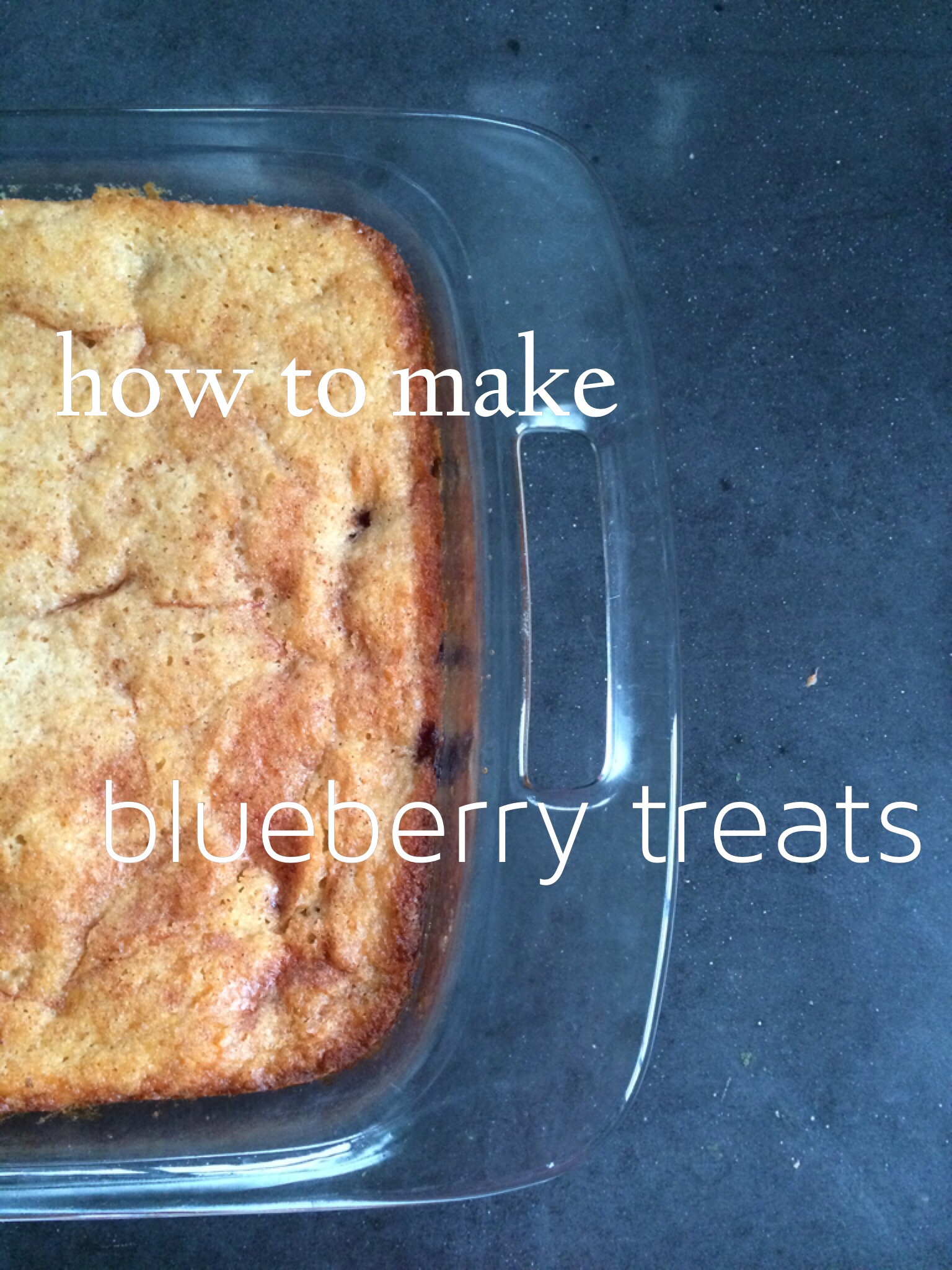
20140723-165548-60948313.jpg It’s July.  They’re lots of blueberries bopping around.  For myself, I was taken in by an enormous $7 carton last week.  When I looked in the fridge over the weekend and saw a mostly-full container of almost-shrively little berries staring back at me, I grabbed flour, sugar, eggs, and my favorite blueberry recipes to take matters into my own hands (literally!  ha ha). Continue reading

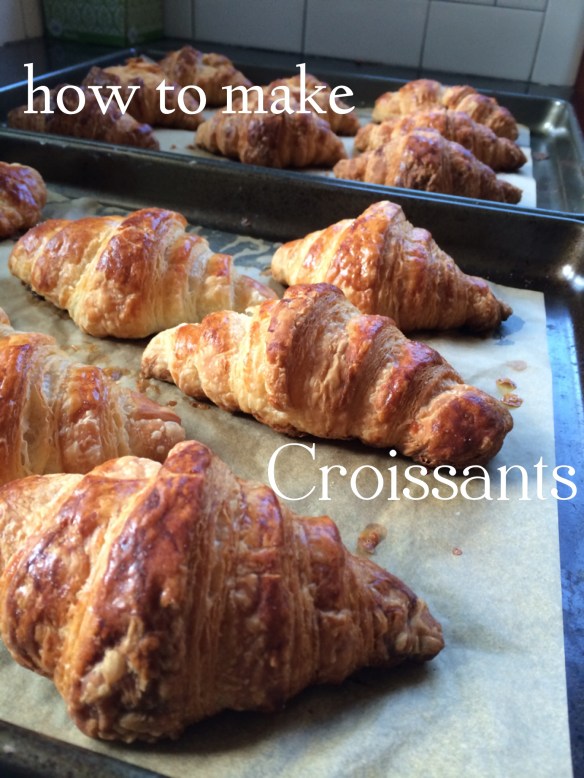
how to make: croissants

photo 1

After returning from France, I was desperate to continue many of the delicious culinary habits I’d learned, one of which was a steady diet of croissant and coffee in the morning (okay, not every day, but at least with regularity!).  It will not surprise you that Columbia, South Carolina, is not a haven of French patisseries.  So the self-described intrepid baked set out to recreate the dream herself.  From scratch.

There’s no way (that I’ve found) around the three-day process, but the time is worth the reward.  No one day demands very much time–the first day is easiest by far (the mixer does all the work!)–and each day’s activity, while unique, is meditative.  The entire process is both mystical and deeply calming (yes, making croissants is starting to sound like a spiritual experience.  I wouldn’t deny it).

I found and followed this recipe, with much success.  However–as aforementioned, I was making the delicate bread in an especially hot and humid climate, things which significantly affect the moisture of dough, the activity of yeast, and therefore, the finished product.

So, I started again, adjusting the recipe’s ingredients to account for a significantly warmer and moister environment:

1 lb. 2 oz. (4 cups) unbleached all-purpose flour; more for rolling
4 oz. (1/2 cup) cold water
5 oz. (1/2 cup plus 2 Tbs.) cold heavy whipping cream
2 oz. (1/4 cup plus 2 Tbs.) granulated sugar
2 Tbs. soft unsalted butter
1 scant Tbs. active dry yeast
2-1/4 tsp. table salt

For the butter layer
10 oz. (1-1/4 cups) cold unsalted butter

For the egg wash
1 large egg

All the directions are the same, but the liquid amounts vary from the original recipe from Fine Cooking; below is the quick-and dirty narration–do consult the real original recipe for actually attempting croissants!

Day One: assemble dough, cover and refrigerate.

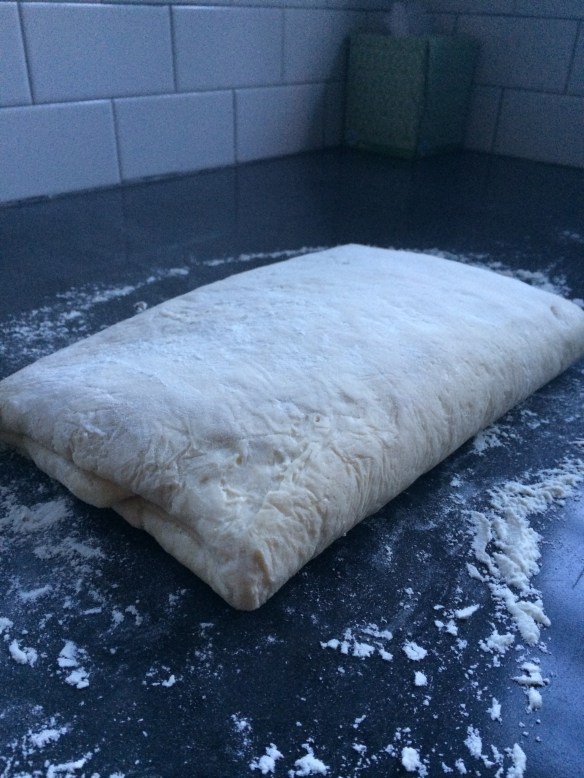
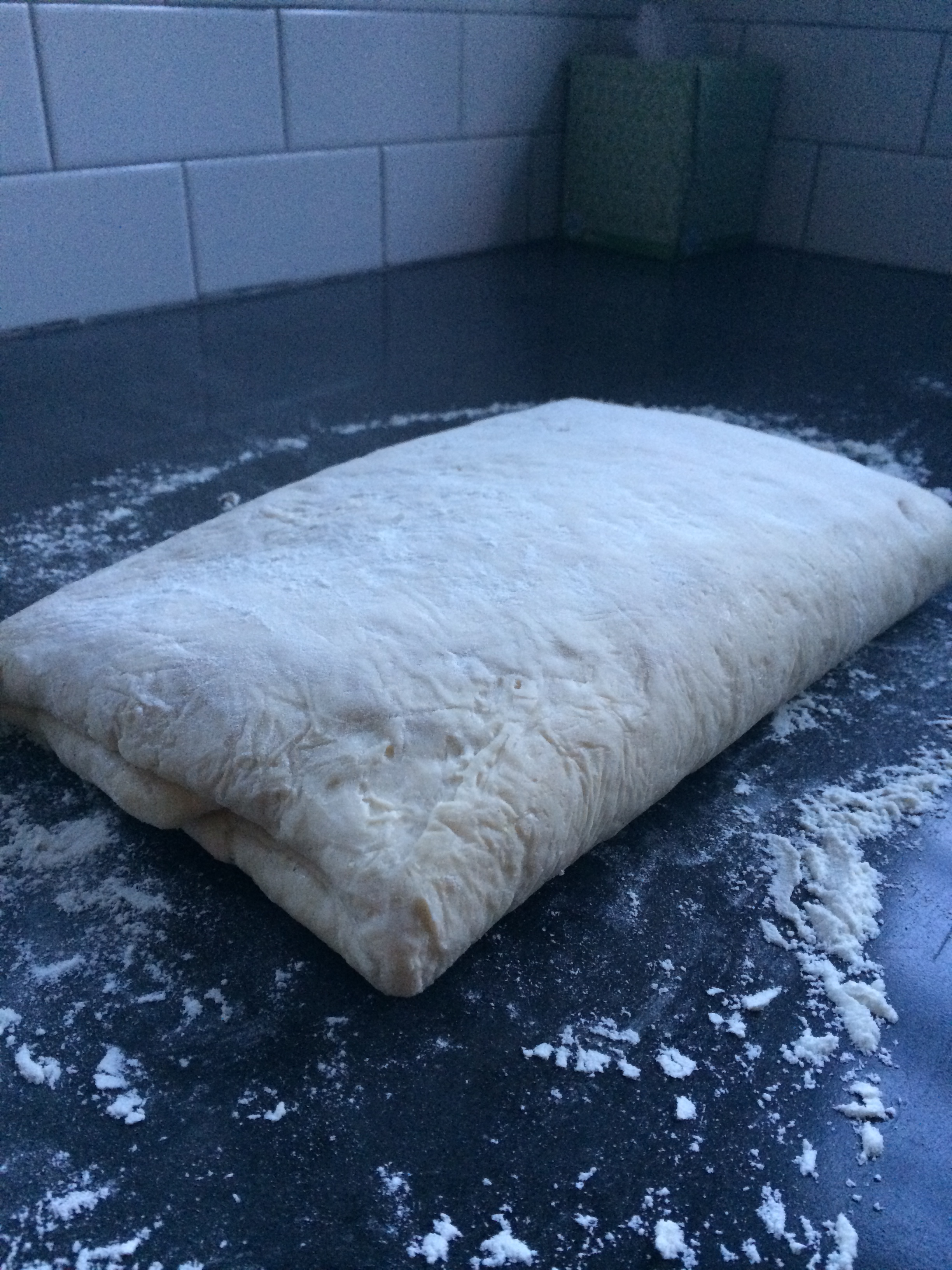
Day Two: Make “butter layer,” fold up in the dough like an envelope, and roll…

photo 5 photo 3


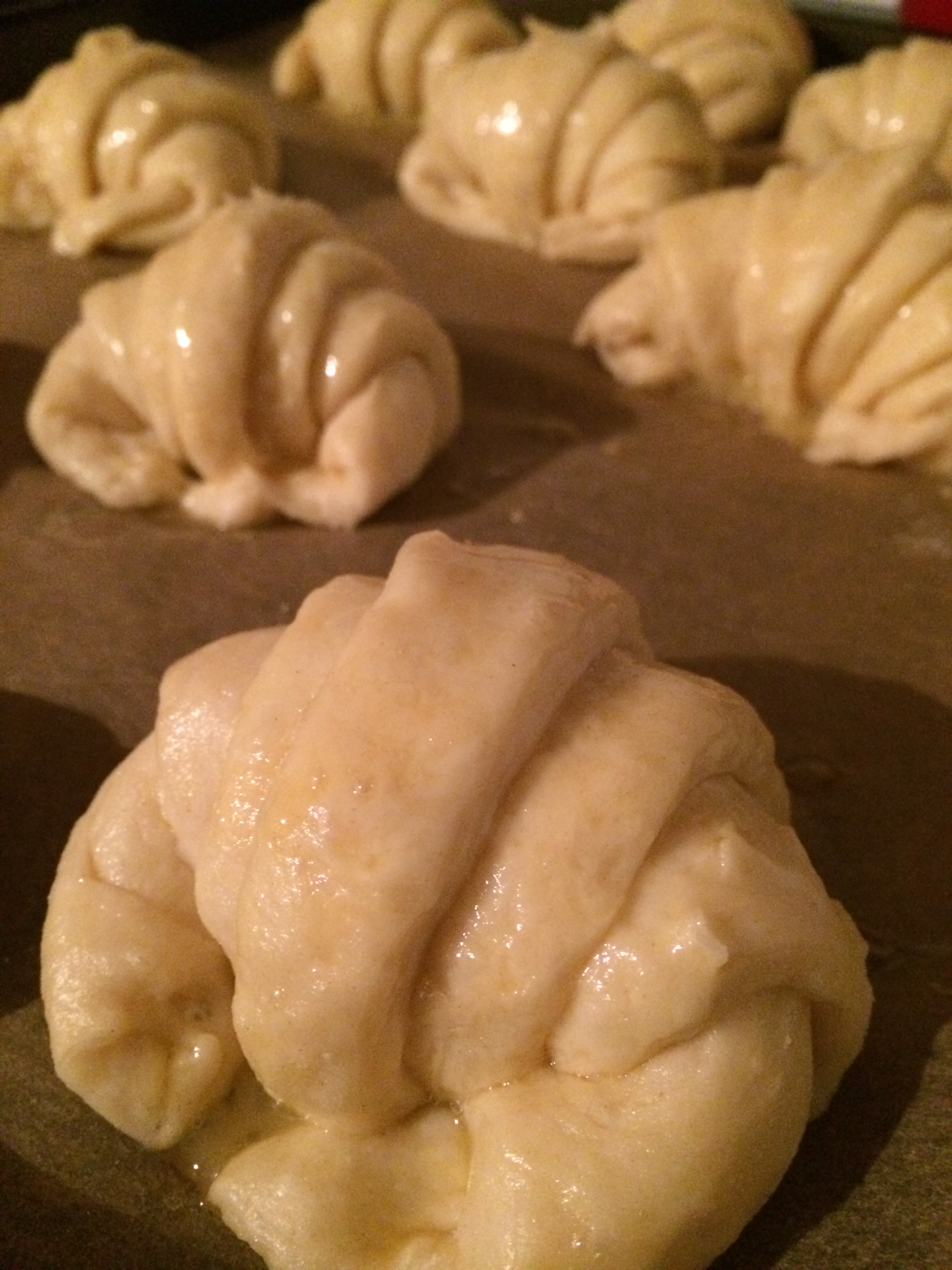
Day 3: Roll again, cut, form, proof…
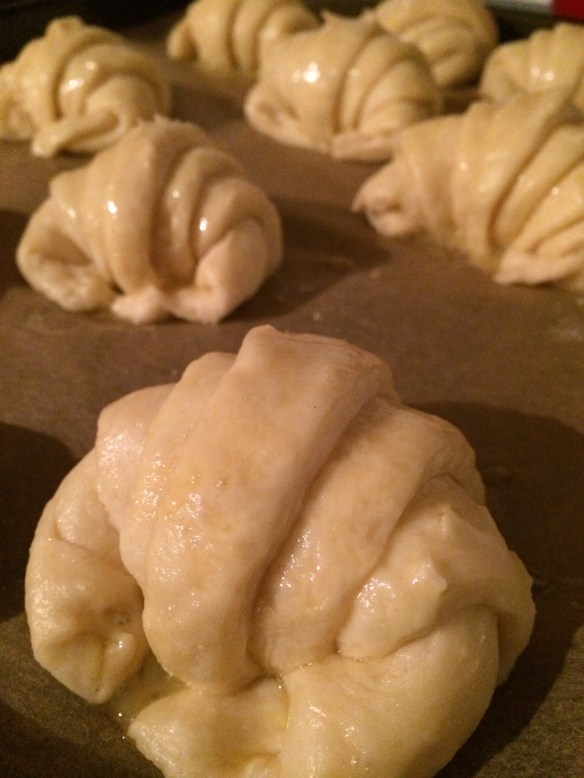
photo 4

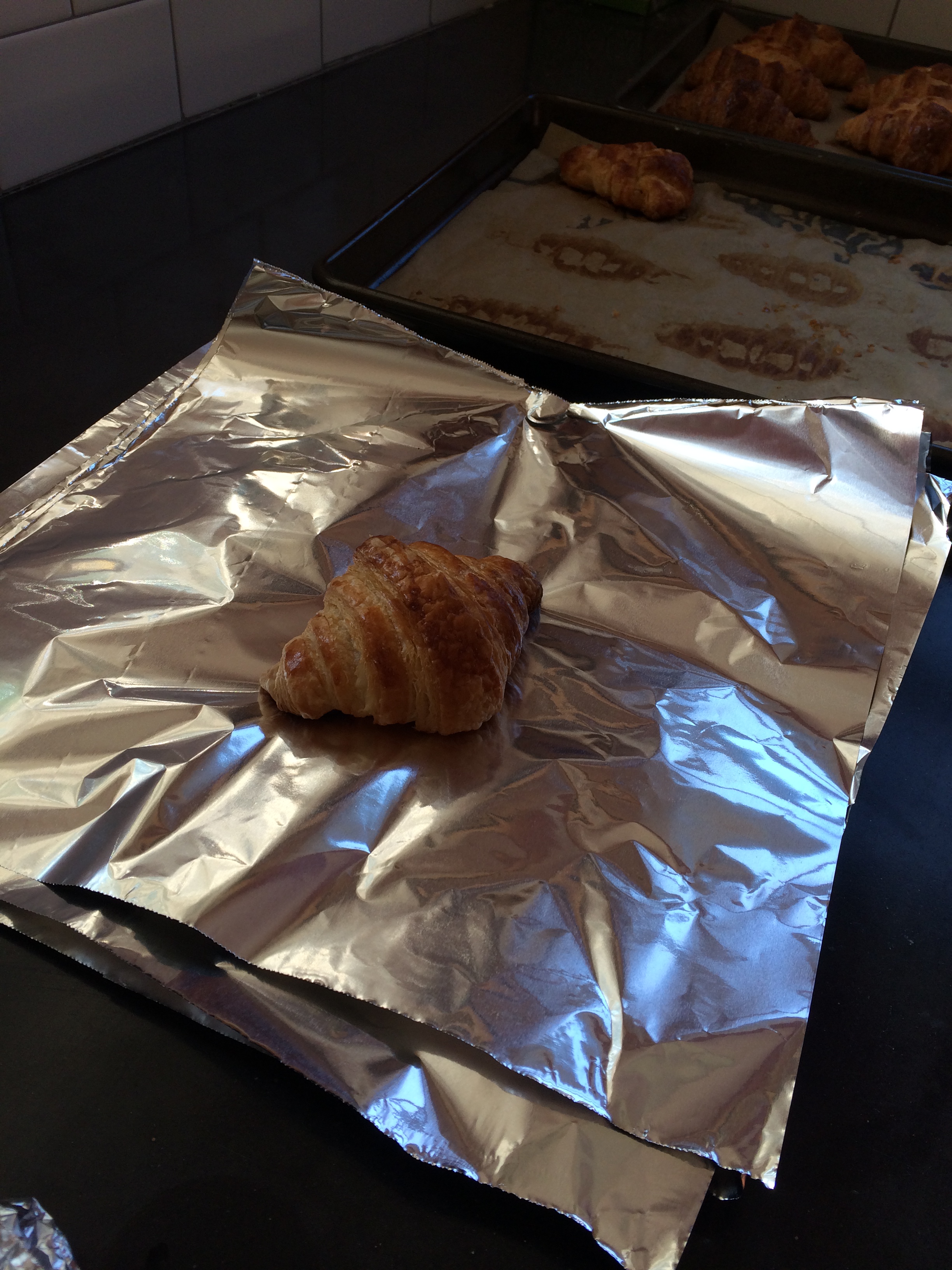
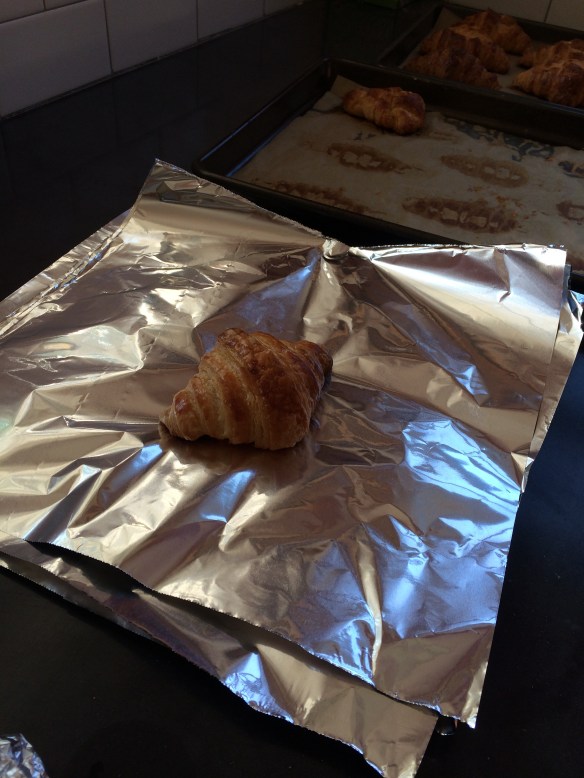
Bake–and if you’re not eating them ALL immediately, wrap ’em up in foil for the freezer (highly recommended!  Each one I’ve eaten out of the freezer–heated at 350 degrees for 10 minutes exactly–has been absolutely perfect).photo 2
writing in the walls

While in France, more than just my cell phone taught me to look up and look out.

IMG_2174

Sainte-Chappelle’s windows pointed my eyes heavenward, illustrating stories from Scripture (the very stones which line the windows are arranged in such a way as to make arrows–do you see?)

IMG_2319

Mont Saint Michel–a monastery which itself points upward, perched on a rock at the Atlantic shore–boasts a Gothic church, encouraging the pilgrim to continually remember the source of life and strength.

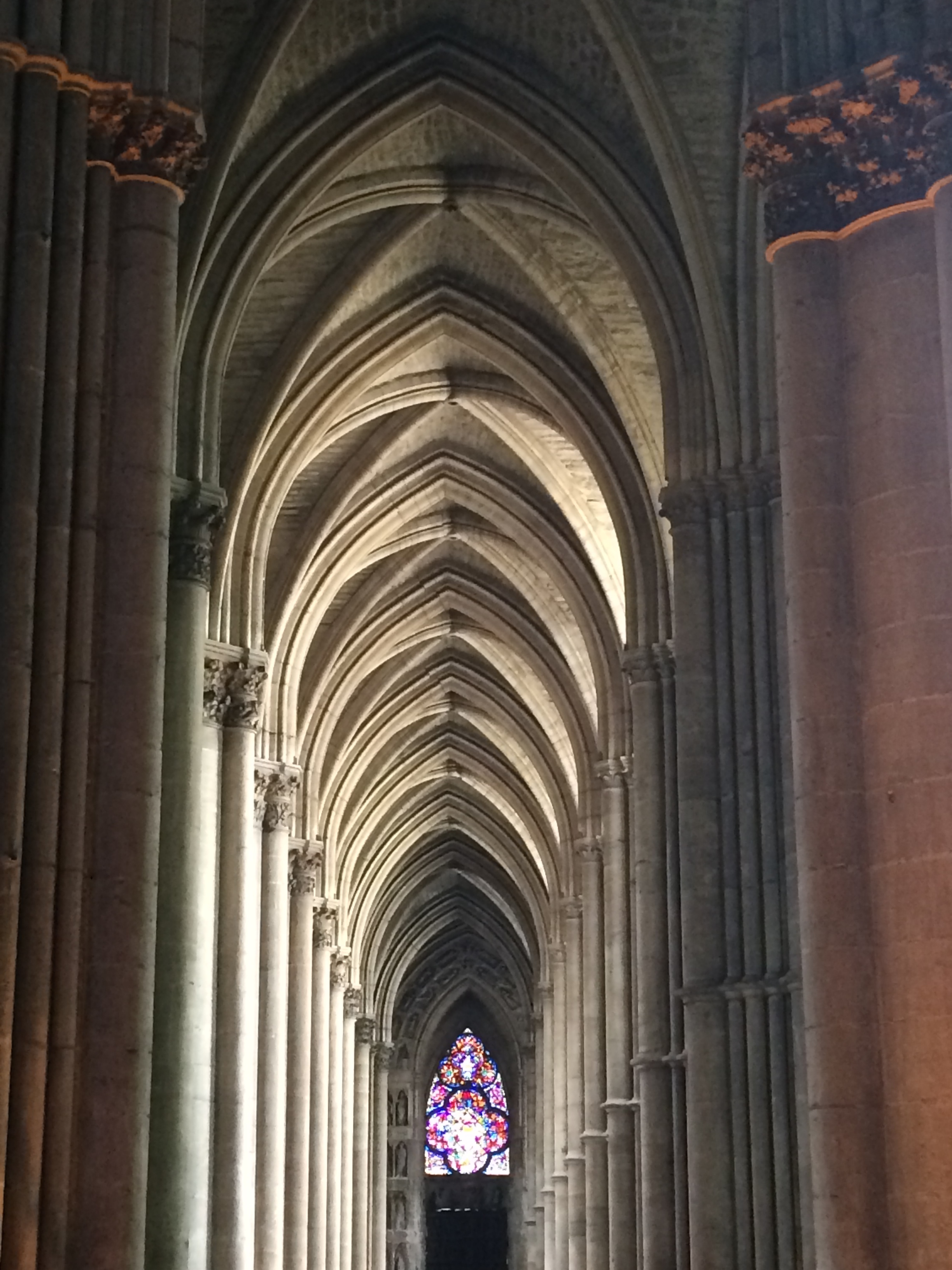
IMG_2420

Arrows abound in the aisle at Reims.

IMG_2466

All is oriented upward on the West facade in Strasbourg.

Our necks hurt the first few days that we spent in cathedrals, but soon we got used to paying more attention to what was above and around us than what was below us or what was associated with our own individual experiences (I cannot recall which cathedrals were most-busy, or most-noisy, or too cold, or too warm, or too expensive).

I wonder if our lives should be a bit more about paying attention to who God reveals himself to be (those things, “above”), to God’s work in others’ lives and in the world (what’s around us).

This message is finding its way into all kinds of outlets recently–here are a few I’ve noticed:

Relevant Magazine

Huffington Post

What do you think?  How have sacred spaces challenged you to look differently at life?

Look up, Look out!

In preparation for my trip to France, my dad suggested we spring for an international plan–just in case we really needed to make a call or use our phones while we were abroad–it’d be better to pay a little up front instead of footing the bill if we needed the service but hadn’t paid for it beforehand.

I didn’t listen to him.

Thankfully–as you can safely assume from my recent glowing updates about my trip–we didn’t encounter any emergency that required use of our cellphones as phones (though you’ve already seen much evidence of our use of our cellphones as cameras!).  I learned something important from not having my phone’s “smart” capability accessible most of the time, though–I learned to look up.

Sitting with my husband at lunch, waiting for the food to arrive, walking down city streets, waiting in line at a museum or (yet another!) church–I had no excuse not to look up, to look out at the people passing on the street, to look at the architecture, to look at the sky.  All this looking at other things not only helped me to keep my mind attentive to what was in front of me–which was no small change!–but it also kept me from looking down, looking at myself–navel gazing.

When we look down at our phones, we’re not only missing the world around us, but we’re teaching ourselves to do something strange with our bodies.  Our necks are cranked down–not the way we’re made–and our bodies are hunched over, literally curling in ourselves.  What kind of patterns are we teaching our minds and hearts through our bodies if we’re curved in on ourselves all the time?  We’re not just missing the world around us, but we’re becoming the only thing that we see–and it’s not a particularly attractive angle at that.

When we hold our bodies so that our eyes and faces are looking out and up, do you know what happens to our hearts?  Our hearts are opened, as our backs are held up straight–as if our very souls are ready to shine and share with others.  If we look down, it’s not only ourselves who are missing something; everyone else around you can’t see you and your beautiful heart–we’re robbing ourselves, and others, of the great beauty that all the world possesses.

I got into this work (being a priest) because there’s nothing I love more than seeing God at work in people’s lives.  Sometimes I lose sight of that love, and the work gets to be onerous.  In France, I was made to look at the beauty of people, of buildings, and of nature all the time.  It helped me remember that there is beauty everywhere, all the time.  We need only to look for it–and looking out and up is one of the best ways.

(super short approximation of sermon delivered 6 July, Trinity Episcopal Cathedral.  Original version had a lot more about Gothic architecture in it; see another entry soon…)

Pilgrim’s Reward

When I reached the top of the cathedrals in Chartres and Strasbourg, gorgeous, expansive views awaited.  But in each place, it wasn’t just the long distance vision that greeted me, but deeper revelations which wouldn’t have been so clear from the ground.

IMG_2281

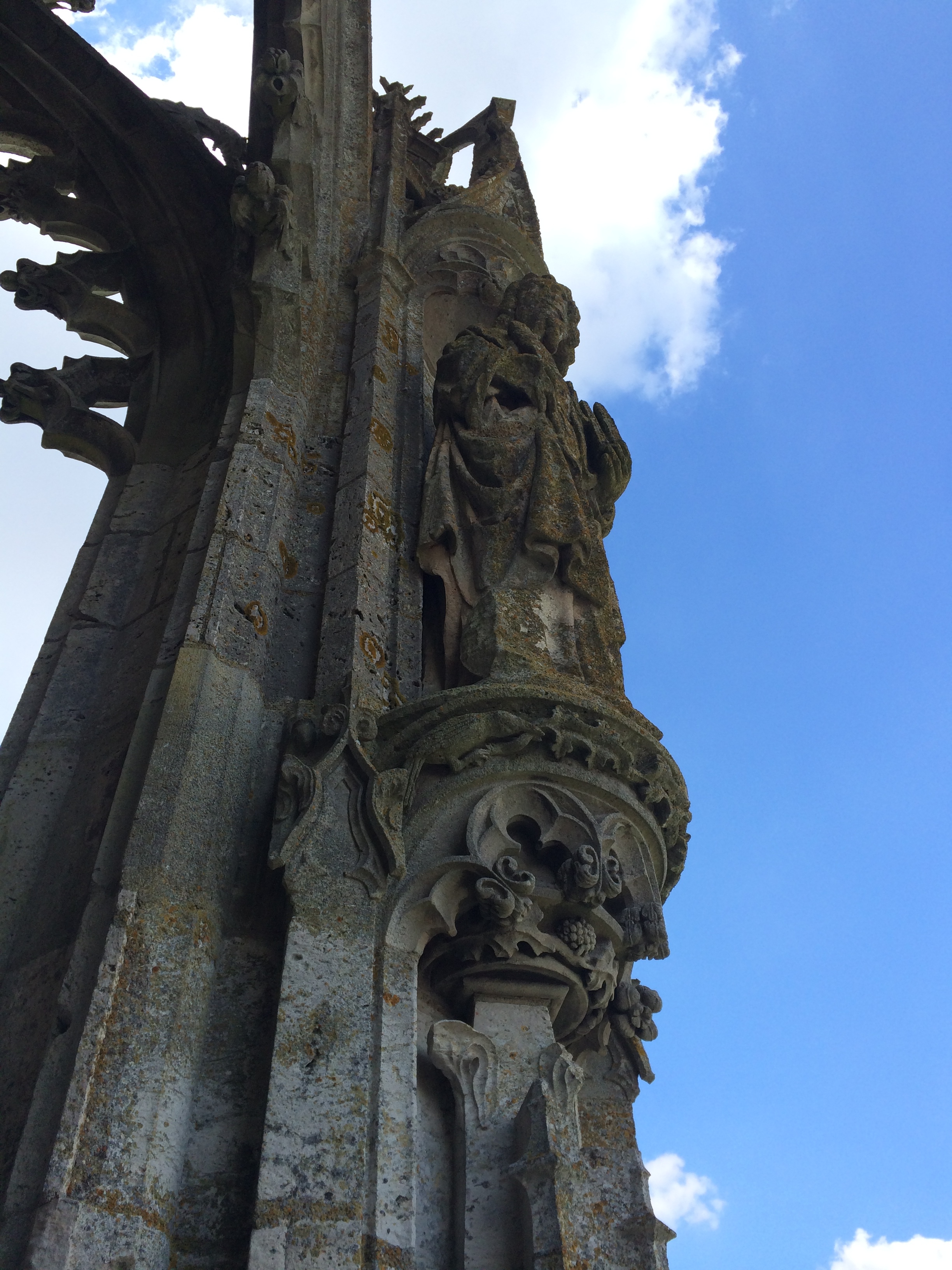
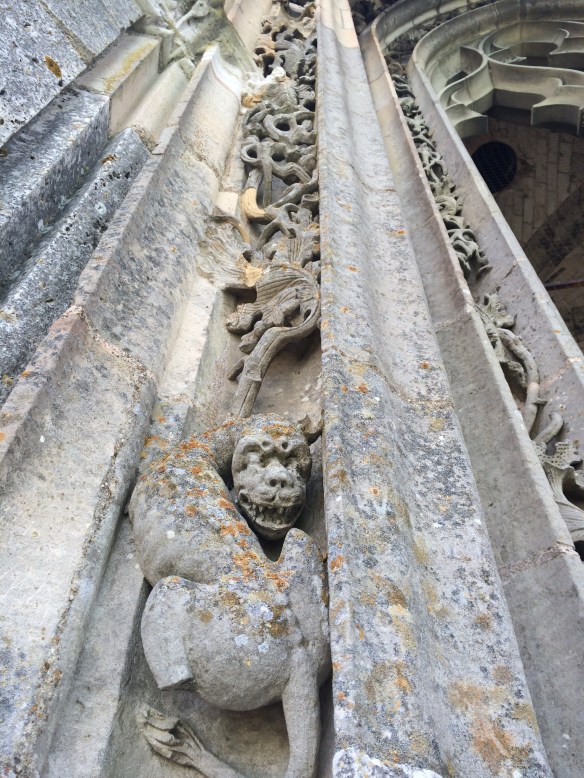
In Chartres, there were life-sized statues, intricate gargoyles, and mischievous little creatures crawling (in stone) all over the upper reaches of the Gothic spire.  What good did they do up there, completely hidden from the ground?  Even in the cathedral’s heyday, how many people scaled the tower and once up top, noticed the intricate stonework?  They were made and fitted up there because the stone workers knew that God could always see their work; their efforts were for God’s glory and God’s delight–not primarily for fellow humans to enjoy.

IMG_2282

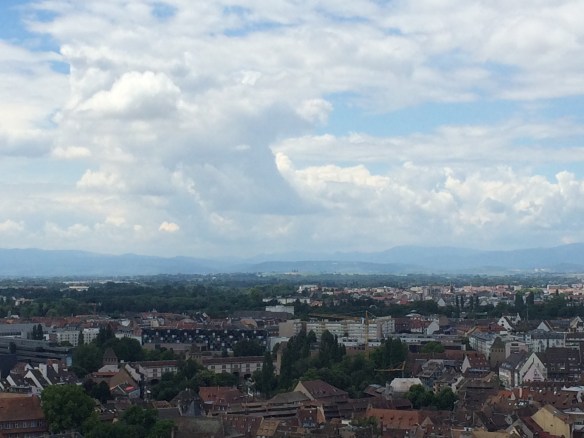
At Strasbourg, going up to the spire landing allowed a view of the surrounding mountains, land where my ancestral family had lived for years before immigrating to the US in the mid-1800s.  Seeing the land that is, in a way, in my bones and my being helped me understand why I’d so fallen in love with the Blue Ridge mountains back home in North Carolina–where I’ve come from, and maybe a bit of who I am.

IMG_2498