The Glory of These Forty Days

May we join our brothers and sisters throughout time and space in the holy journey of Lent, inspired, perhaps, by this poem composed by our great brother, Gregory:

The glory of these forty days
We celebrate with songs of praise;
For Christ, by Whom all things were made,
Himself has fasted and has prayed.

Alone and fasting Moses saw
The loving God Who gave the law;
And to Elijah, fasting, came
The steeds and chariots of flame.

So Daniel trained his mystic sight,
Delivered from the lions’ might;
And John, the Bridegroom’s friend, became
The herald of Messiah’s Name.

Then grant us, Lord, like them to be
Full oft in fast and prayer with Thee;
Our spirits strengthen with Thy grace,
And give us joy to see Thy face.

O Father, Son, and Spirit blest,
To thee be every prayer addressed,
Who art in threefold Name adored,
From age to age, the only Lord.

– Gregory the Great, 6th Century

Hymnal 1982, number 143; (http://cyberhymnal.org/htm/g/l/gloryt40.htm)


Prayer for Lent

“O God! If I worship You for fear of Hell, burn me in Hell,
and if I worship You in hope of Paradise, exclude me from Paradise.
But if I worship You for Your Own sake, grudge me not Your everlasting Beauty.”

(Rabia al Basri, Sufi mystic)

This Lent, consider the forty-day journey as an experiment in adoration.  Seek not what God can do to or through you; seek God himself.

If you seek God in the wilderness–away from everyday distractions, painkillers, and noise, who might God reveal himself to be this Lent?

giving growth

2014-02-24 15.22.50

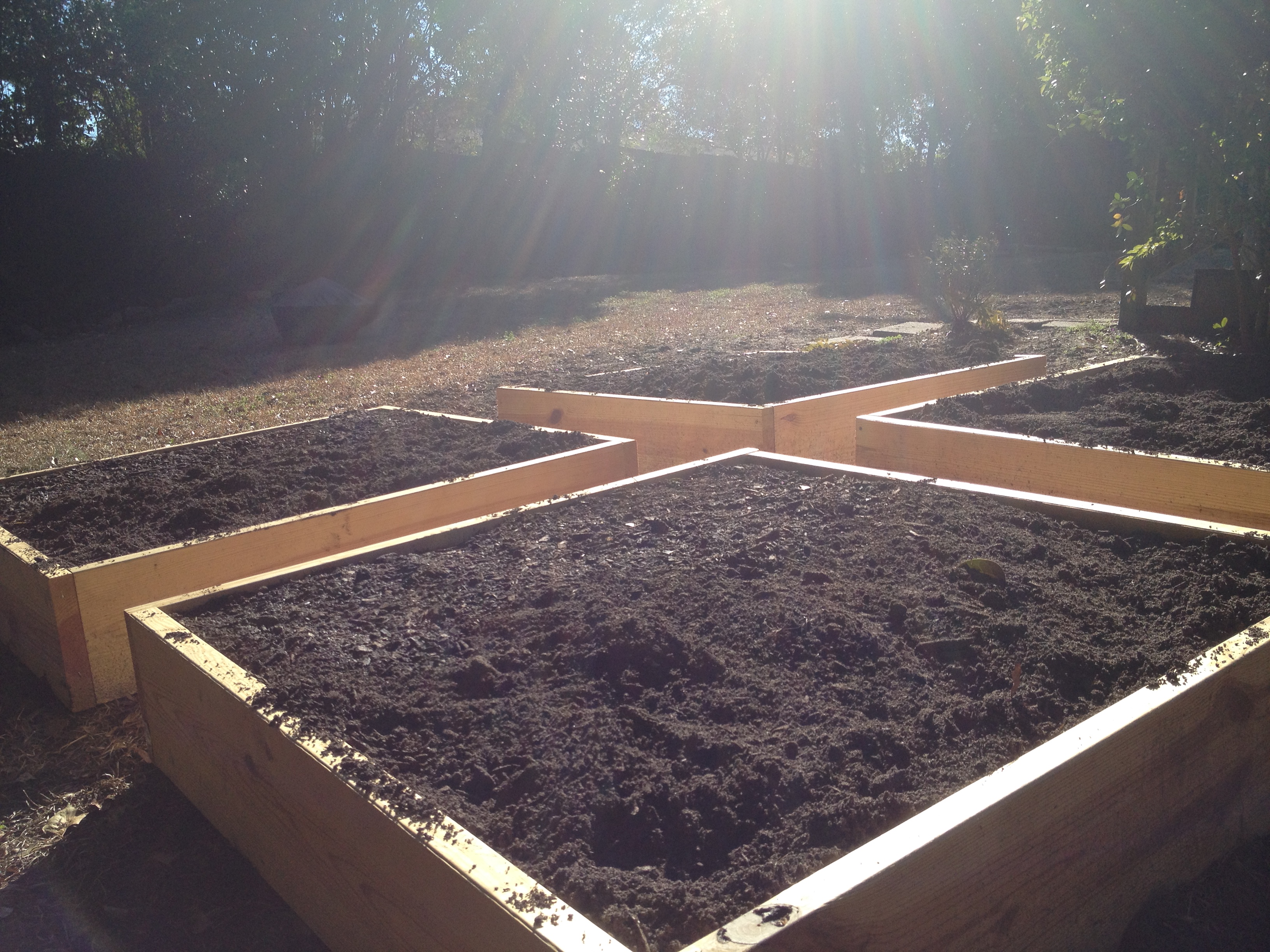
Seeds are such mysterious things.  Here in South Carolina, it’s already time to start planting the hardier stuff–greens, roots, some herbs, so I took advantage of the sunny, warm days over the weekend to fill up my boxes, sprinkle some seeds, and water the soil.  I’m always amazed when I open the little paper packets at how small and wisp-like seeds produce these (comparably) huge, delicious, totally-different-looking fruits and vegetables.  Last week’s lectionary epistle lesson has been bouncing around in my head as I’ve been working the dirt:

“You are still worldly. For since there is jealousy and quarreling among you, are you not worldly? Are you not acting like mere humans? For when one says, “I follow Paul,” and another, “I follow Apollos,” are you not mere human beings? What, after all, is Apollos? And what is Paul? Only servants, through whom you came to believe—as the Lord has assigned to each his task. I planted the seed, Apollos watered it, but God has been making it grow. So neither the one who plants nor the one who waters is anything, but only God, who makes things grow.” 1 Corinthians 3:3-7

Looking around the church (all people who call Jesus their God and Savior, believing in the triune God) these days, it’s hard to ignore the battle lines that crisscross Jesus’ body throughout the world like the scores in a ham.  Screwtape’s words, through C.S. Lewis’ voice, come to mind once more:

“We have quite removed from men’s minds what that pestilent fellow Paul used to teach about food and other unessentials–namely, that the human without scruples should always give in to the human with scruples. You would think they could not fail to see the application. You would expect to find the “low” churchman genuflecting and crossing himself lest the weak conscience of his “high” brother should be moved to irreverence, and the “high” one refraining from these exercises lest he should betray his “low” brother into idolatry. And so it would have been but for our ceaseless labour. Without that, the variety of usage within the Church of England might have become a positive hotbed of charity and humility.”

Of course, part of the trouble is discerning which things are inessential–a literally life-and-death matter which I don’t mean to downplay–but what draws me more this morning  is the solution which Paul offers: God gives the growth.

I can put good soil in my boxes, and plant the seeds, and beg the sun to come and warm up the dark dirt, but all I’m really doing is making room for growth to happen, giving the best environment possible–making room for a miracle to happen.

In our lives, we choose how to use our time–what kind of soil (habits, relationships, mental tape loops) we put in the boxes of our minds, our spirits and our bodies.  We choose the sorts of things we read, watch, eat and ingest–the seeds we plant in our boxes; and we choose how to nurture those seeds with the sunshine and water of prayer, spiritual disciplines, service, and learning.  Then we’ve done all we can–we can’t make growth happen, in our own lives or in the lives of our churches.

We cultivate, plant, and water, but the growth itself is out of our hands; we prepare and we present ourselves–make ourselves open and ready to be transformed.

God, come into the spaces we make and grow us.  Show us how to make room to be open and to be transformed.

holding breath

There’s a reason that holding your breath kills you.

Out in the garden over the weekend, I filled up boxes with compost-y soil.  It was hard work, but that was just what I needed–I’d been too static (stagnant) the last few days and needed some inner stirring up and re-settling.

Having learned in yoga practice to breath through the difficult parts, I noticed how my body hadn’t quite learned to carry that practice to yard work yet.  When I heaved a shovel full of soil into the wheel barrow, I held my breath.  My breath was shallow and short.  As I lifted my shovel and moved the wheel barrow, I constantly reminded myself to take long, deep breaths.

It’s the breath that stirs things up and helps the body re-settle anyway.  “Exercise is all about the breath,” I was told once–we don’t get the same benefit from a work out or a yoga session or yard work if we aren’t letting the breath in and out like bellows, stoking our inner fire, burning off the grumpiness that comes from stagnation.

When we hold our breath to get through a difficult moment, we’re refusing the healing and energizing power of the breath.  When we put our heads down, give up our regular prayer lives, slack on our exercise regimen, stop responding to our friends’ calls,–just to get through a week or a season of busy difficulty–we’re holding our “breath,” refusing the healing and energizing power that God offers us through the Holy Spirit in prayer, in each other, in our own bodies, and in worship.

Whatever happens–especially in difficult, put-your-head-down, hauling soil kind of times, keep breathing.

The Wisdom of Solomon

(for The Simple Way women–I’m sorry to miss you!)

1 Kings 3:5-12 (NRSV)

“5At Gibeon the Lord appeared to Solomon in a dream by night; and God said, ‘Ask what I should give you.’ 6And Solomon said, ‘You have shown great and steadfast love to your servant my father David, because he walked before you in faithfulness, in righteousness, and in uprightness of heart towards you; and you have kept for him this great and steadfast love, and have given him a son to sit on his throne today. 7And now, O Lord my God, you have made your servant king in place of my father David, although I am only a little child; I do not know how to go out or come in. 8And your servant is in the midst of the people whom you have chosen, a great people, so numerous they cannot be numbered or counted. 9Give your servant therefore an understanding mind to govern your people, able to discern between good and evil; for who can govern this your great people?’

10 It pleased the Lord that Solomon had asked this. 11God said to him, ‘Because you have asked this, and have not asked for yourself long life or riches, or for the life of your enemies, but have asked for yourself understanding to discern what is right, 12I now do according to your word. Indeed I give you a wise and discerning mind; no one like you has been before you and no one like you shall arise after you.”

Solomon ended up being the last ruler of the undivided kingdom of Israel, he had a wandering eye (to put it very, very mildly), but as a young man, he had his head on straight, and because of his humility, he is still remembered today as the wisest man who ever lived.

May we follow in Solomon’s footsteps, being bold enough to ask God for things we want and need, and being humble enough to ask God for wisdom and discernment to help us to live faithfully.

For a fun Solomon/wisdom story, check out 1 Kings 3:16-28 🙂