
How I Became Episcopalian, Part 2

There’s an Episcopalian joke I like to tell: some parishioners went to their rector and said, “Father, we want to do a Bible study.  What book should we start with?”  Their rector, taken aback, but quite pleased, suggested they start with the Psalms; he showed them where it was, near the middle of the Bible, and told them to come back in six weeks and tell him what they’d learned.  Six weeks passed, and they came back to his office, rather upset.  “Father!” They exclaimed, “The Bible has stolen its material from the Book of Common Prayer!”

Last week one day, the Daily Office Lectionary assigned Philippians 4:1-9; a passage with 3 or 4 separate highlighter marks in my trusty hard-backed NIV Bible from high school.

The passage epitomizes why I became Episcopalian.  As I read, or listen to, these words, I hear memory verses in verses 4, 5, 6, and 8—sentences I committed to memory as an elementary or high school student:
“4 Rejoice in the Lord always; again I will say, Rejoice. 5Let your gentleness be known to everyone. The Lord is near. 6Do not worry about anything, but in everything by prayer and supplication with thanksgiving let your requests be made known to God.
8 Finally, beloved, whatever is true, whatever is honourable, whatever is just, whatever is pure, whatever is pleasing, whatever is commendable, if there is any excellence and if there is anything worthy of praise, think about these things.”

In verse 4 I hear the lyric to a children’s song I learned more than twenty years ago at home.

Verse 7 is the common blessing offered during Ordinary Time at the end of a Eucharist service:
“And the peace of God, which surpasses all understanding, will guard your hearts and your minds in Christ Jesus.”

When verse 8 is read, I hear part of a prayer said during the service in the Book of Common Prayer called, “Thanksgiving for the Birth of a Child”—a service I relish offering at hospitals when I visit the newest members of my congregation.

The psalms have become the same kind of patchwork quilt for me—snippets and echoes of other Scripture passages pop up in the psalms all the time, and in turn, the psalms are woven throughout our Book of Common Prayer.
The little red (or black) book that guides Christians of the Anglican tradition in their prayer, worship, and study with God is a puree of Scripture, set to rhythm and mashed up to show through its very being how the God of the Old and New Testaments is made man in Jesus Christ.
How to be Holy

“The Lord spoke to Moses, saying: Speak to all the congregation of the people of Israel and say to them: You shall be holy, for I the Lord your God am holy.” Leviticus 19:1-2

Holiness is not something that humans come by themselves; it’s something we as spiritual beings can make room for, but we can’t work up on our own.  We are holy because the Lord our God is holy–it is God’s holiness that covers us, that infuses us, and transforms us into holy people.

This week’s lectionary passage goes on (verses 9-18 of the same chapter–see below) to give some specific guidelines about what holy living looks like; each declaration is ended with the same refrain, “I am the Lord” (vs. 10, 11, 12, 14, 16, 18).  It’s a sort of short hand to remind the people at the end of every law delineated that it isn’t the peoples’ own effort that will bring such generous, respectful, strange and particular living about, but God’s grace and holiness flowing through their lives that will enable such curious actions and lifestyle.

Not just the statutes laid out in Leviticus 19, but all the 600-some laws throughout the Old Testament were established by God not to hem his people in, or to cause them to trip up, but to help the people recognize that they were different.  God had chosen them, put his mark on them, and to the world, these people, the Israelites, were supposed to be so different from all the other people that others would ask why on earth they were so strange.  They were strange–or were supposed to be–because they belonged to God; the Lord our God made them holy by his own holiness.

As we butt up against Lent, preparing to go into the desert with the Israelites and with Jesus, we consider the holiness that God graciously clothes us in through his Son, Jesus–not because of anything we do, or anything we promise that we’ll become, but just because each and every one of us is worth loving.  It’s a world full of curious, wonderful, beloved people–and you’re one!

9 When you reap the harvest of your land, you shall not reap to the very edges of your field, or gather the gleanings of your harvest. 10You shall not strip your vineyard bare, or gather the fallen grapes of your vineyard; you shall leave them for the poor and the alien: I am the Lordyour God.

11 You shall not steal; you shall not deal falsely; and you shall not lie to one another. 12And you shall not swear falsely by my name, profaning the name of your God: I am the Lord.

13 You shall not defraud your neighbour; you shall not steal; and you shall not keep for yourself the wages of a labourer until morning. 14You shall not revile the deaf or put a stumbling-block before the blind; you shall fear your God: I am the Lord.

15 You shall not render an unjust judgement; you shall not be partial to the poor or defer to the great: with justice you shall judge your neighbour. 16You shall not go around as a slanderer among your people, and you shall not profit by the blood of your neighbour: I am the Lord.

17 You shall not hate in your heart anyone of your kin; you shall reprove your neighbour, or you will incur guilt yourself. 18You shall not take vengeance or bear a grudge against any of your people, but you shall love your neighbour as yourself: I am the Lord.

No Rights

Today we celebrate the feast of Florence Li Tim-Oi, the first woman ordained priest in the Anglican Communion; she served during World War II during a time of duress in Asia.  Because of the controversy of her ordination, she resigned her license after the end of the war.  I want to consider why our church ordains women and what that means for who we believe God to be, and what we believe to be the vocation–or job–of every Christian.

Having been raised–theologically-speaking–in the house of Stanley Hauerwas at Duke, “rights” language makes me very uncomfortable.  It’s not that women have a “right” to serve just like men do, as priests–none of us, as followers of Jesus, has a right to do anything, so the argument goes.  What I mean to say is that when we were drowned in the waters of baptism and raised up out of them by the grace of God, all our rights were washed away–the only claim that any baptized person has is our belonging to God in Christ–we follow the lifestyle that leads to the cross.  It’s not about us as individuals anymore, it’s about what’s best for God’s kingdom and God’s people.  Our only right is to pick up our cross and walk in Jesus’ footsteps.

Looked at this way, women ought to be ordained and to serve as priests, bishops, and whatever else in the church because God gifts both women and men with the sorts of talents that are useful for church leadership, development, evangelism, and the like.  Part of my frustration growing up was that my parents told me that I should use the gifts God had given me–which were pretty clearly gifts for leadership, teaching, and speaking in public–and my church was telling me that I couldn’t do those sorts of things because I was a girl.  An early Christian and theologian said, “that which God has not assumed, God cannot redeem”–what was important about Jesus–God in the flesh–was not that he was male, but that he was human.  God assumed humanity, became a person, not God-became-male.

So if God doesn’t care if you are a man or a woman, as the passage in Galatians says today (3:23-28), I wonder if God cares if you are ordained or not.  In the Gospel (Luke 10:1-9) lesson, Jesus sends out 70 of the people–probably all men–who had been following him around, instructing them to try out this ministry-and-evangelism thing.  Perhaps they were like itinerant preachers, or circuit-riders, the way that Methodism spread in the United States, but I suspect they may have been more like immigrant workers, or bi-vocational evangelists–people who did “normal” work, but who shared their faith in the God who became a person because of his love for each human.

My uncle was visiting this week, and one morning he told me about his work at a major home-improvement store.  He talked about how he builds relationships with customers, whether they are regulars or someone he just interacts with for 30 seconds or a few minutes.  When someone is looking for a realtor key holder (those cases that have a code to punch in that holds the key–i don’t know what those are called otherwise!), he shows them where they are, but if they seem open to it, he asks them what it’s for, and as they start to have a conversation, he helps them think through the implications of the change they’re making to their home (whether it’s for security, or convenience, or whatever).  Even though he’s just a “normal” worker, he reaches out to the people he comes in contact with and walks with them in their lives, if only for a few minutes, to help them know they’re not alone, to offer his expertise and wisdom, and to help them to make the best decision for their project.

Every Christian in every job is called to this kind of work.  God came to earth in Jesus to prove how much he wants to know each of us; Jesus didn’t run away even from being murdered on a cross to show us that he loves us more than he loves anything else, even life; God raised Jesus from the dead to reveal that he is the most powerful force in the universe.

As baptized Christians, we come forward to receive the Eucharist in order to be healed and be filled with that same power; when we allow God to be active in our lives–giving up our “rights,” he does more through us than we could know or imagine on our own.  God has called each and every one of us to be missionaries for the sake of his kingdom and his people, to go out as sheep in the midst of wolves, trusting in his will.  We are primarily identified by our status as Christians, not as men or women or as priests.  We’ve all been given a vocation in baptism, and that is to grow in relationship with God through Jesus Christ, and to introduce others to Him.  Amen.

Weak Coffee & Steeping

20140123-103826.jpgO everlasting God, you revealed your truth to your servant Phillips Brooks, and so formed and molded his mind and heart that he was able to mediate that truth with grace and power: Grant, we pray, that all whom you call to preach the Gospel may steep themselves in your Word, and conform their lives to your will; through Jesus Christ our Lord, who lives and reigns with you and the Holy Spirit, one God, for ever and ever.  Amen.

(Collect for the feast of Phillips Brooks, Bishop of Massachusetts, 1893)

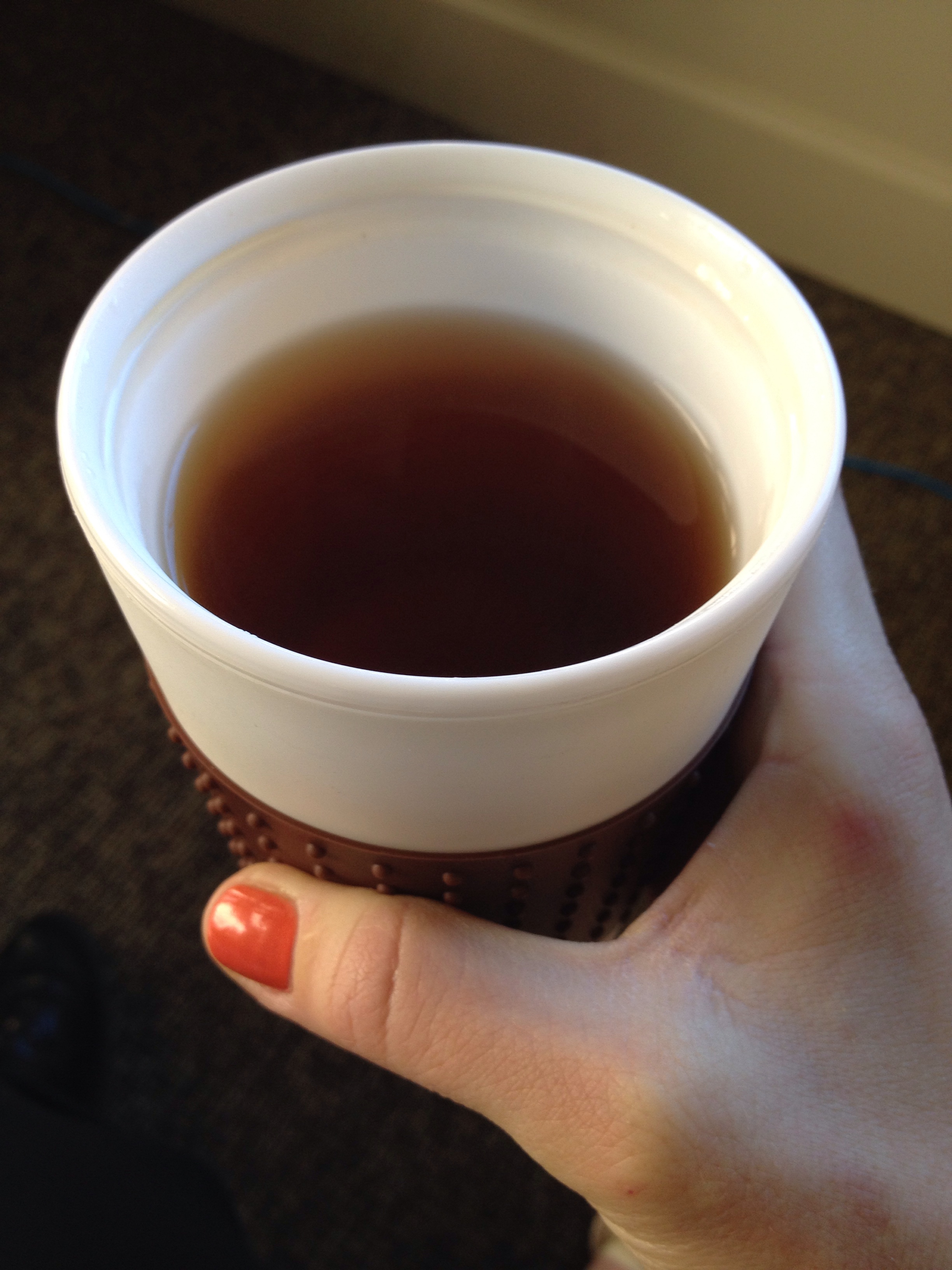
My husband Jordan and I are fortunate to agree on the most important things–religion, politics, and how many coffee beans constitutes a decent cup of coffee.  I’m not sure where he developed this sensibility, though, because my in-laws have a disturbingly divergent understanding of hot coffee.  Whereas 1-2 tablespoons-per-cup is the norm at our house, and we admit it might be a little excessive, up in the North Dakotan Hylden house, 2 tablespoons is enough for an entire pot.  We all joke when we’re up there for holidays, we call it “coffee water” and we speak about experiencing “the idea of coffee” when we partake of the morning brew.  To be honest, it’s got less color than my afternoon cuppa Earl Grey.

I think Phillips Brooks is something like the coffee us younger Hyldens drink.

The collect written and prayed to remember this fellow disciple speaks of us being “steeped” in God’s Word, and it is clear from his many sermons which still instruct and inspire today that Phillips Brooks was a stellar example of a life steeped in Scripture, worship, and prayer.

It’s as if God, in the forms of Father, Son, and Holy Spirit, are the coffee grounds, through which our lives–water–is poured.  The most potent brews are those which use lots of finely-ground beans.  The water is transformed, it’s hardly recognizable as water anymore, but becomes a different sort of liquid.  For one thing, instead of being hydrating water, strong coffee, on the whole, is a dehydrating beverage; steeping in coffee grounds completely reverses the effect that the water has on our bodies.  Studying Scripture, praying, and attending worship can have the same powerful result in our lives.

As Episcopalians, we believe that worshiping together is the most powerful sort of brewing to which we can subject ourselves.  Do you know Drip Coffee, downtown, or in Five Points?  They don’t make pots of coffee from a coffeemaker like we have on our kitchen counters; they grind each serving of beans individually, tap them into a single-serving filter, and use an expert method to slowly pour the hot water over the grounds, so that the water takes on the beans’ aroma, taste, and caffeine in a special and intense way.  Episcopalians,and Anglicans throughout the centuries, have believed that worship is that kind of steeping.  It’s when we’re together, seeking God as a community, that God is most clearly with us–we need each other to know God best.

To carry the analogy a little further–maybe too far, but here I go!–often, when I go into Drip, I ask them which coffee I should get.  Is the Peruvian best?  Or does Kenya have a great taste this week?  The baristas are quick to explain the differences between the kinds of beans that week–which ones are more chocolatey, or have more fruit in them.  In order to know those sorts of things off the top of their heads, the baristas do a lot of tasting and reading and studying of their beans.  Phillips Brooks, for one, and many other fellow saints in the history of our church, and today, have spent a lot of time steeping in Scripture, studying, tasting, reading, and meditating on God’s Word–getting to know the God revealed in Scripture through the Father, Son, and Holy Spirit.  By becoming very familiar with the way that God often talks and acts, Bishop Brooks could more easily point out God’s work to his churches, and bring them along in knowing and recognizing and growing with God all the more.

When we show up to worship, if we’ve been reading, studying, and praying Scripture, we’re much more attuned to God’s voice, and we can hear in our hearts what God wants to say much more clearly.  May we hide God’s Word in our hearts through study and prayer, that we may become ever more deeply steeped in the particular coffee grounds which are the only living and almighty God.  Amen.


Visceral Reactions to Music (and other things)

Sunday mornings are rough.  Getting the kids up, fed, dressed, hair-combed, and out the door (or, if you don’t have kids, doing the same thing for yourself, after your Saturday night…).  When you get to church, don’t you just want to park it in a seat?  Why do these cruel Episcopalians and Roman Catholics (and others) make you stand, and then sit, and then kneel, and then stand again, and then kneel again?  Add in crossing yourself and bowing–if you’re the CrossFit type–and it’s practically a full-fledged work out before noon on a weekend!

Firday night, I visited our girls’ choir rehearsal.  It’s been almost 15 years since I attended one of my junior high choir rehearsals, but when the choirmaster gave the command to prepare to sing and poised his fingers above the keys, my spine involuntarily straightened and my lungs filled with air–and then I reminded my body that I wasn’t part of the choir.  I’ve been out of a choir longer than I’d ever been in one, and yet, dear Mr. Johns, our music teacher, had so drilled into his students–at least me!–the importance of posture in singing, that when my body was put in the same kind of environment again (not in a physical sense, as we were in the cathedral and not an old high school great room; but in a psychological–and spiritual–sense), it still responded the same way.

Early Friday morning, I’d taught a Men’s Bible Study (the new priest gets invited to visit everywhere, without regard for gender!) on the Psalms.  Explaining the five-book structure of the psalms, we turned to the end of 72:

18 Blessed be the Lord God, the God of Israel,
Who only does wondrous things!
19 And blessed be His glorious name forever!
And let the whole earth be filled with His glory.
Amen and Amen.

20 The prayers of David the son of Jesse are ended.

When I started reading verse 18, my right hand had an insatiable urge to reach up to my forehead.  What I mean to say is that I had said and heard “Blessed be the Lord God, the God of Israel” at the beginning of the song of Zechariah (Luke 1:68) so many times (it’s used at the service of Morning Prayer in the Book of Common Prayer) that my body, and a piece of my mind, forgot that wasn’t the same environment–in Morning Prayer, when we begin to say Zechariah’s song together, we cross ourselves, because it is a New Testament canticle (song/psalm).  My body is learning the same involuntary response to God’s Word that it learned in response to the prepare-to-start-singing command from junior high.

Episcopalian (or Roman Catholic, or other) gymnastics trains our bodies, minds, and souls to have a particular response when holy things happen–when holy words are said, when we ask the Holy Spirit to come into us afresh, when we admit that we’re sinners dependent on God’s mercy.  These actions, which are the most important things we do all week, train us to recognize those moments and to respond to them appropriately–with reverence, with fear, with joy, with attention.