Whose Children Are They?

“That which we have heard and known, and what our forefathers have told us, we will not hide from their children.” (Ps. 78:3, BCP 694)

A few years ago, while in seminary, a friend of mine and his wife welcomed their first child.  In a facebook status post soon after the birth, he said something to the effect of, “God has entrusted this child to us–he is God’s child, not ours.”  It’s stuck with me, and the sentiment in the psalm appointed for Morning Prayer today echoes my friend’s wisdom.

The speaker in this verse sounds like the generation caught in the middle, the generation of parents is very much keeping the children they bear in trust for their own elders.  Children belong not to their individual parents, but to the tribe in which they were born.  It’s not even up to the parents whether they pass along the faith and truth with which they’ve been entrusted–to teach the young about God is simply what parents owe to their own parents and forebears.

Have you ever thought of your children (or siblings, or kids at your church, or elsewhere in your life) as simply being entrusted to you by God or by your whole lineage of ancestors?  The world feels a lot more like a family when we think about our children collectively.
Nature as a Metaphor

IMG_0312
This week, the Daily Office Lectionary (the schedule that takes pray-ers and read-ers through most of the Bible in the course of two years, found in the back of any Book of Common Prayer, and online in various locations, like this) has been taking us through Isaiah.  This prophet’s words are major faves for Messianic imagery and promise–Isaiah’s are the words ones Jesus quotes most during his ministry as recorded in the Gospels.  They’ve been fertilizing my heart the last few weeks (and months–in our women’s Bible Study); here are a few thoughts on two verses from Isaiah 43, part of the Lectionary’s reading in the last week.

“When you pass through the water, I will be with you; and through the rivers, they shall not overwhelm you; when you walk through fire you shall not be burned, and the flame shall not consume you.” Isaiah 43:2

We have, we do, we will face rivers and fires–storms of relationships and financial stability and physical/mental health–there is no promise God ever makes that we will be shielded or that we can avoid trials and pain in our lives.  The promise made to us here is that when we face pain and trials, because we will, we won’t be drowned or choked or suffocated or burned or consumed–we won’t be killed.  When we face pain, we have an opportunity to grow and learn and to become stronger through the trouble we’re encountering.  If we stick stubbornly to God, like a burr on a dog’s coat, our trials become moments that we can learn trust, and we can come out the other side stronger and happier and closer to God than before.IMG_2303

“I am about to do a new thing; now it springs forth, do you not perceive it?  I will make a way in the wilderness and rivers in the desert.” Isaiah 43:19

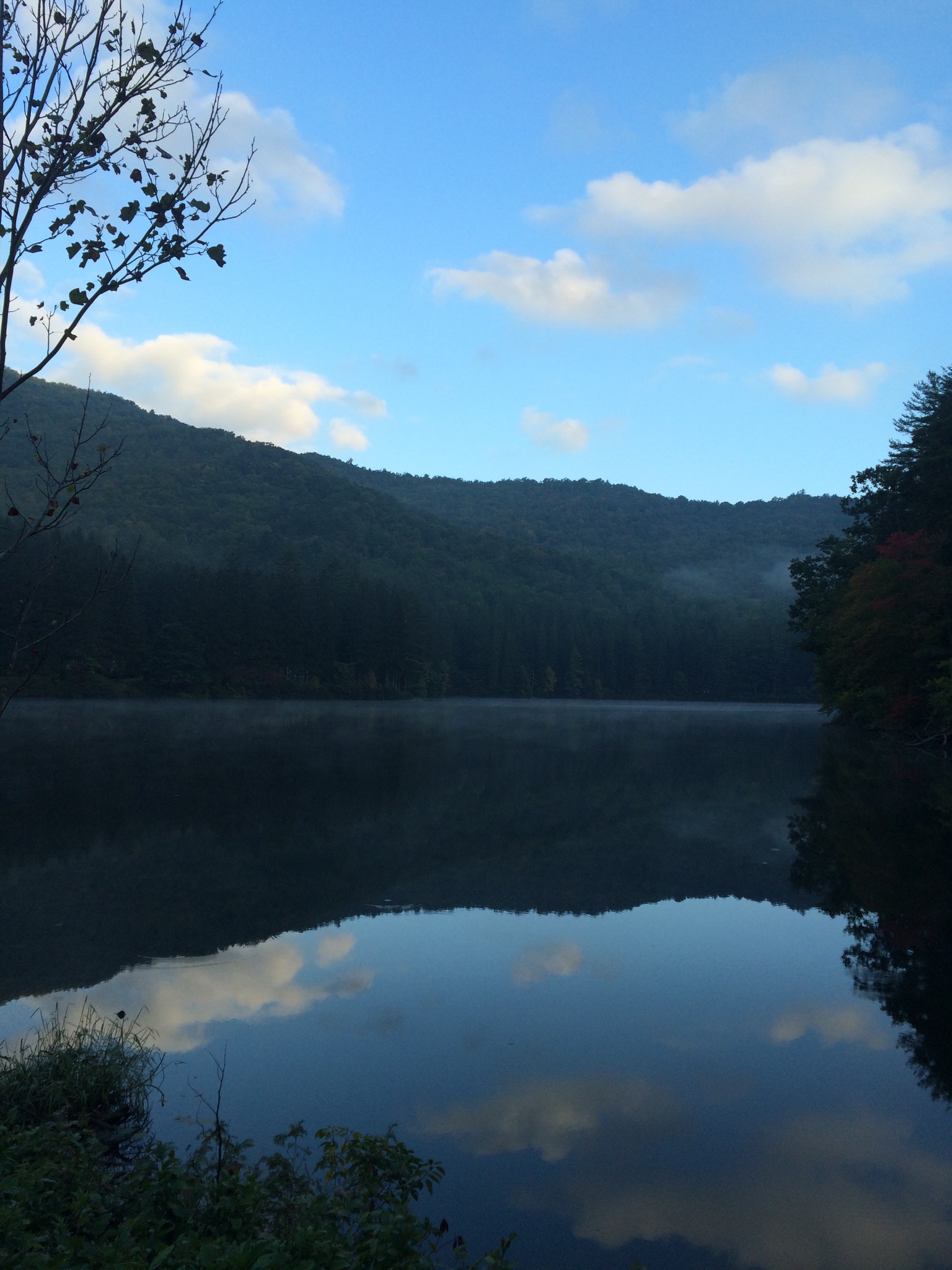
We don’t experience much physical wilderness in our day & age–there aren’t any places on the earth that haven’t at least been mapped, if not overrun with people and paths and conveniences (especially in the US)–but perhaps you can imagine what it might be like to stand on the edge of a desert, or at the end of the road leading into the nature preserve (if that’s the closest we can imagine to “wilderness”!), and try to conceive a way through the uncharted space to wherever it is we’re supposed to go.  Even if it’s like a park, and there are paths running through this “wilderness,” such ready-made paths never seem to go quite the right direction.  Though we face areas of wilderness in our lives–relationships that are stuck and have no clear direction out of the mud, medical or financial or other problems that have only walls and uncertainty–God will guide your path (the one for just you–not a pre-made, well-worn path, perhaps).

Book love: “A Homemade Life”

right now, i should be reading Bartolome de Las Casas’ “The Only Way,” about how to convert the Native Americans, who the Spanish had just “discovered” back in the early 16th century, when Las Casas does his thinking.

instead, i am wandering around my mind, inspired by the book i just finished, thinking, “hey, i could do that!” for about the twenty-second time, reading the author’s old blog posts, then clicking through gmail-facebook-twitter, in the too-familiar sequence of the wired-in tic every internet addict (most of us, these days) must have.

i wonder where my “voice” is, i wonder if my writing sounds like “me.”  I rarely think it does.  i wonder what my “style” is.  instead of these really inane wonderings, i shall write a bit about this book.  this is not a “review”–notice–this is just “love.”

For one, Molly‘s prose.  It’s the first book in years that I’ve read chunks out loud to whoever happens to be nearby, just because the wording is so fantastic.  how does one do that? (i’ve been told, “practice.”)  As i read, and even more now, i turn over in my mind one of the little sentences of praise that’s on the back or on the front, it says, “every story tells a recipe.”  I thought it was a little bit trite when i first read the phrase, how clever the reviewer must have thought him/her-self, but as i gulped down the book, he/she was right.  and here lies my one qualm: each chapter, a few pages of story, a page or two of recipe, gets its title inspiration from the story, not the recipe.  So how am i to find one recipe when i want it?  I want to go back to the braised cabbage (we’re starting a winter CSA next week, and i’m eager to know what to do with what i’m sure will be lots of winter cabbage) and the chocolate cake that they used for their wedding and the cornmeal cake that’s eaten with maple syrup and the stewed prunes…  clearly, it’s a varietous collection, and now that she’s on to her second book, a similar style, it seems, about birthing a restaurant, i’m eager for more (but will have to wait till early 2013, according to her website).

what book has been so good that you read bits out loud?