And again, the Kingdom of Heaven is like The Devil Wears Prada.

A sixth parable: In the movie The Devil Wears Prada, Meryl Streep depicts fashion mogul and long-time Vogue editor Anna Wintour–though her character has a different name in the film, of course (the real-life parallels are too blaring to be ignored).  A young, idealistic journalist, Andy (played by Anne Hathaway), desperate to get an “in” anywhere in the writing world, takes a job as an assistant to Miranda Priestly–Meryl Streep’s character.

Early in the film, there’s a scene in which the staff is agonizing over which turquoise belt to use in a shoot; witnessing the turmoil, Andy scoffs.  Ms. Streep turns her venomous tongue on Andy, delivering a powerful monologue tracing the history of the frumpy sweater which Andy proudly sports as a sort of anti-fashion statement.

So it is in the Kingdom of God. (see yesterday’s Gospel lesson: Matthew 13:31-33 & 44-52)

Sometimes we mistakenly think that it is our accomplishments or our self-made worthiness that elicits God’s response in becoming incarnate and eventually dying to stay with us.  It is not because there is something intrinsically superior about me, or you; it is because Jesus chose us.

Our worth comes from the price which has been paid for each of us–every person has a market value that is equivalent to Jesus’ life–our deepest identity is that we are loved by God.  We are really not such impressive, fantastic people; how exhausting it is to pretend that we are–how frustrating and tiresome to always try to work yourself up to perform and behave relying on your own steam and goodness!

If, however, our energy, our hope, our “steam” comes from finding ourselves only in what God has told us, we are free from being impressive, trying to achieve God’s love, or others’ acceptance.

We are both the cerulean sweater, and Andy, the idealistic journalist.  There’s nothing intrinsically better or more impressive about cerulean versus navy or lapis or even kelly green–the only thing that sets the cerulean sweater apart is that Miranda Priestly chose it.  The only thing that sets any one of us apart, that makes any one of us special, is that Jesus chose each of us–not that any one is particularly exceptional in and of themselves.  And we’re like Andy because we often think we’re in control of our own fashion–or our own image, or lives!–but really, we aren’t.  If we stake our image, our understanding of ourselves on anything other than being God’s child, being the one for whom Jesus sacrificed himself, then we won’t ever be at peace.

Matthew 13:44: “‘The kingdom of heaven is like treasure hidden in a field, which someone found and hid; then in his joy he goes and sells all that he has and buys that field.”

The Good News is that looking at ourselves honestly, rightly, allows us to see our shortcomings, admit to them, own up to our sinfulness, and to still know that we are the field, the pile of dirt, that Jesus has joyfully bought with everything that he has.  I think it’s not a coincidence that a field, a pile of dirt, doesn’t do anyone much good unless life is put in it somehow–if someone plants it (as many of the parables surrounding this verse describe), or if, as in Genesis 1, God’s own breath–ruah–is blown into the pile of dirt, animating it, making it live (making it into us, into humanity).  Without God’s breath, God’s spirit, God’s energy and hope, we are just piles of dirt, but with God, because of God’s sacrifice of love for us, we are made free and alive and full of color.

May we be free from the expectations and achievements which this world–and we ourselves!–puts on us, knowing that our life, our worth, our very breath, comes only from God.
Prophet Daniel & the Leather Oxfords – a sermon.

In May, I was in NYC for my brother’s graduation from college, and while I was there, I wanted to find the right kind of walking shoe for the summer. I started looking through shoe stores in SoHo for the slip-on tennis shoe I had in mind, but by the time I walked into the second store on Broadway, I had given up my crush on ked-look-alikes and moved on to a leather oxford with a bit of a heel. Where did that desire come from? I’d never spent a moment looking at them online before my trip, or in any stores once I’d arrived; I hadn’t even noticed that there were any pairs that style in stores, but suddenly, I was overcome with this burning desire for oxfords. I moved from store to store, in pursuit of the perfect pair.

Many of you are aware I’d been taken in by the ubiquitous advertising of the fashion world—leather oxfords with a small heel are all the rage for spring. After a few days of walking around in New York City, seeing the shoes on women on the street, on billboards on buildings and in the subway, and on manequins in store windows, the image had lodged itself in my head, and I had no idea it was weaseling itself in there until I had a sudden and unquenchable thirst for these classic leather shoes.

In today’s Scripture lesson (Daniel 1:8-15), Daniel just isn’t refusing Babylonian biscuits and gravy, or turning down a grass-fed filet. By “not defiling himself with the portion of the king’s delicacies,” Daniel is standing up to the lie that Babylon is trying to pass off on him. Daniel knows the truth—life is found in no one else, there is no other god or person or philosophy or lifestyle on earth that gives the kind of life that following the God of Abraham, Isaac, and Jacob does.

Actually, our language has done us a great favor— “Babylon” continues to be a label used to describe those things in our world that are corrupt and evil. We are called to be Daniel here, today, in 2014 in Columbia, South Carolina. We are called to reject Babylon, to purpose in our hearts to not defile ourselves with the portion of the king’s delicacies. We are called instead to eat fruits and vegetables, those things which will truly build us up, give us the energy we need in order to live good, joyful lives, attuned to God and to each other.

Just like Jesus’ temptation in the wilderness, as the Tempter offers Jesus bread, and the ruling of kingdoms, and the service of angels, there’s nothing inherently evil about bread or being a world leader or about angels’ help. There’s nothing wrong with wearing beautiful clothes, or watching television, or enjoying grass-fed filet mignon.

How many more malicious desires and ideas take root in our minds and hearts when we’re not looking? Television like the Real Housewives might be one—have you ever noticed what happens to you after you watch shows like that? I’ve found that I’m usually crankier, more tired, and most discontented with my life than I was before I sat down on the couch, even though my purpose in sitting down to some mindless TV was to relax. I’m less-relaxed, less-calm, less-rejuvenated when I finish Millionaire Matchmaker or Scandal. These shows lull me into new expectations about how exciting and shiny and sexy my life should be; my little bungalow with its husband, and garden, and German Shepherd in South Carolina suddenly looks very, very dull—and it happens without me realizing it.   I snap at my husband and I roll my eyes at vacuuming; surely the Real Housewives don’t have to deal with dog hair or with ironing.

How about Don Draper? We are desensitized to advertising all over and around our lives. Just like suddenly developing an urge for those oxfords, it’s a given matter of course that the ads on the edges of our pages while we surf the web are related to the shopping sites we visited earlier in the day, and the emails we receive in our inboxes are tailored to appeal to our particular weaknesses and consumer habits.

It is a lie to believe that what we ingest doesn’t matter. Our culture is becoming very aware of the importance of the sorts of things we eat, but by the same token, our culture tries to tell us that what we watch and read and talk about and worry about and focus on doesn’t matter, it doesn’t shape us nearly as much as the food we put in our mouths. This is the lie of Babylon that Daniel identified and purposed in his heart to resist.

We’re being lulled to sleep, thinking that what really matters is whether we are eating ethical shrimp or fair-trade zucchini. Though ethical food and fair-trade practices are vitally important to our lives as Christians and citizens of this created world, we ought to spend at least as much time considering the kinds of influences we allow in our own lives and in the lives of our families. Are we ingesting the kinds of television shows, music, radio programs, novels, movies, and conversations that help us to stay awake, or do the lull us to sleep?

It’s not a coincidence that we read Daniel wanted to eat vegetables—celery and kale do not make you want to take a nap. They keep you alert. Babylon wants to make you fall asleep; to not realize what is happening to you until it’s too late. We are the proverbial lobsters or frogs in the pot on the stovetop. Just a little bit of discontentment sneaks in to start with, we repeat the same annoying story about our spouse or best friend, and after a few times, we start to believe it. The water starts to warm up, and we start to believe the lie that others’ lives are naturally more glamorous and peaceful than ours. Soon, the water is boiling and we’re cooked—we didn’t even notice it.

This is what happened to Walter White in Breaking Bad—a timid high school chemistry teacher is diagnosed with stage 4 lung cancer without having smoked a day in his life. He eased up next to evil under the guise of providing for his family by starting to cook and sell very pure, very cheap meth. A few seasons later, he’s a drug kingpin in the Southwest.

My friends, we live in Babylon. We are strangers in a strange land. We are offered all sorts of shiny delicacies by the king every day. As we notice all the moments that shove tempting, sleep-inducing food beneath your nostrils, let us remember Paul’s words: “Do not be conformed to this world, but be transformed by the renewing of your mind, that you may prove what is that good and acceptable and perfect will of God.”

A version of this sermon was preached at Downtown Church in Columbia, SC, on July 20th, 2014.

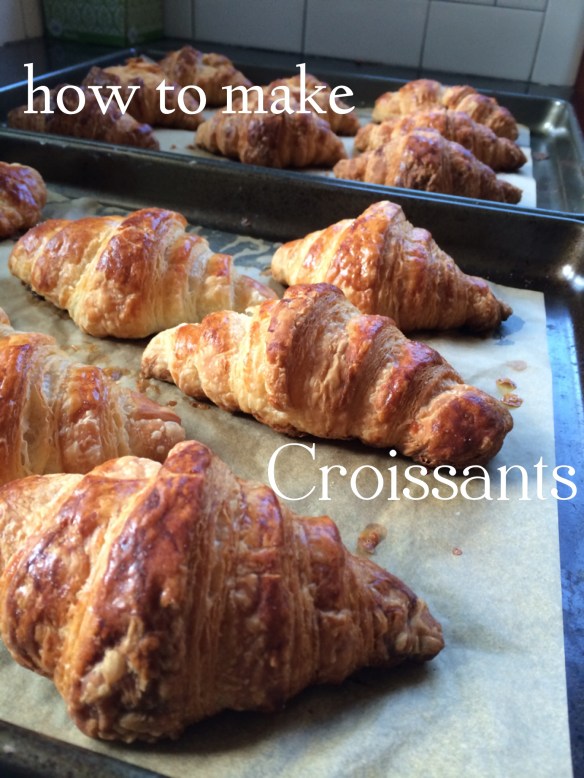
how to make: croissants

photo 1

After returning from France, I was desperate to continue many of the delicious culinary habits I’d learned, one of which was a steady diet of croissant and coffee in the morning (okay, not every day, but at least with regularity!).  It will not surprise you that Columbia, South Carolina, is not a haven of French patisseries.  So the self-described intrepid baked set out to recreate the dream herself.  From scratch.

There’s no way (that I’ve found) around the three-day process, but the time is worth the reward.  No one day demands very much time–the first day is easiest by far (the mixer does all the work!)–and each day’s activity, while unique, is meditative.  The entire process is both mystical and deeply calming (yes, making croissants is starting to sound like a spiritual experience.  I wouldn’t deny it).

I found and followed this recipe, with much success.  However–as aforementioned, I was making the delicate bread in an especially hot and humid climate, things which significantly affect the moisture of dough, the activity of yeast, and therefore, the finished product.

So, I started again, adjusting the recipe’s ingredients to account for a significantly warmer and moister environment:

1 lb. 2 oz. (4 cups) unbleached all-purpose flour; more for rolling
4 oz. (1/2 cup) cold water
5 oz. (1/2 cup plus 2 Tbs.) cold heavy whipping cream
2 oz. (1/4 cup plus 2 Tbs.) granulated sugar
2 Tbs. soft unsalted butter
1 scant Tbs. active dry yeast
2-1/4 tsp. table salt

For the butter layer
10 oz. (1-1/4 cups) cold unsalted butter

For the egg wash
1 large egg

All the directions are the same, but the liquid amounts vary from the original recipe from Fine Cooking; below is the quick-and dirty narration–do consult the real original recipe for actually attempting croissants!

Day One: assemble dough, cover and refrigerate.

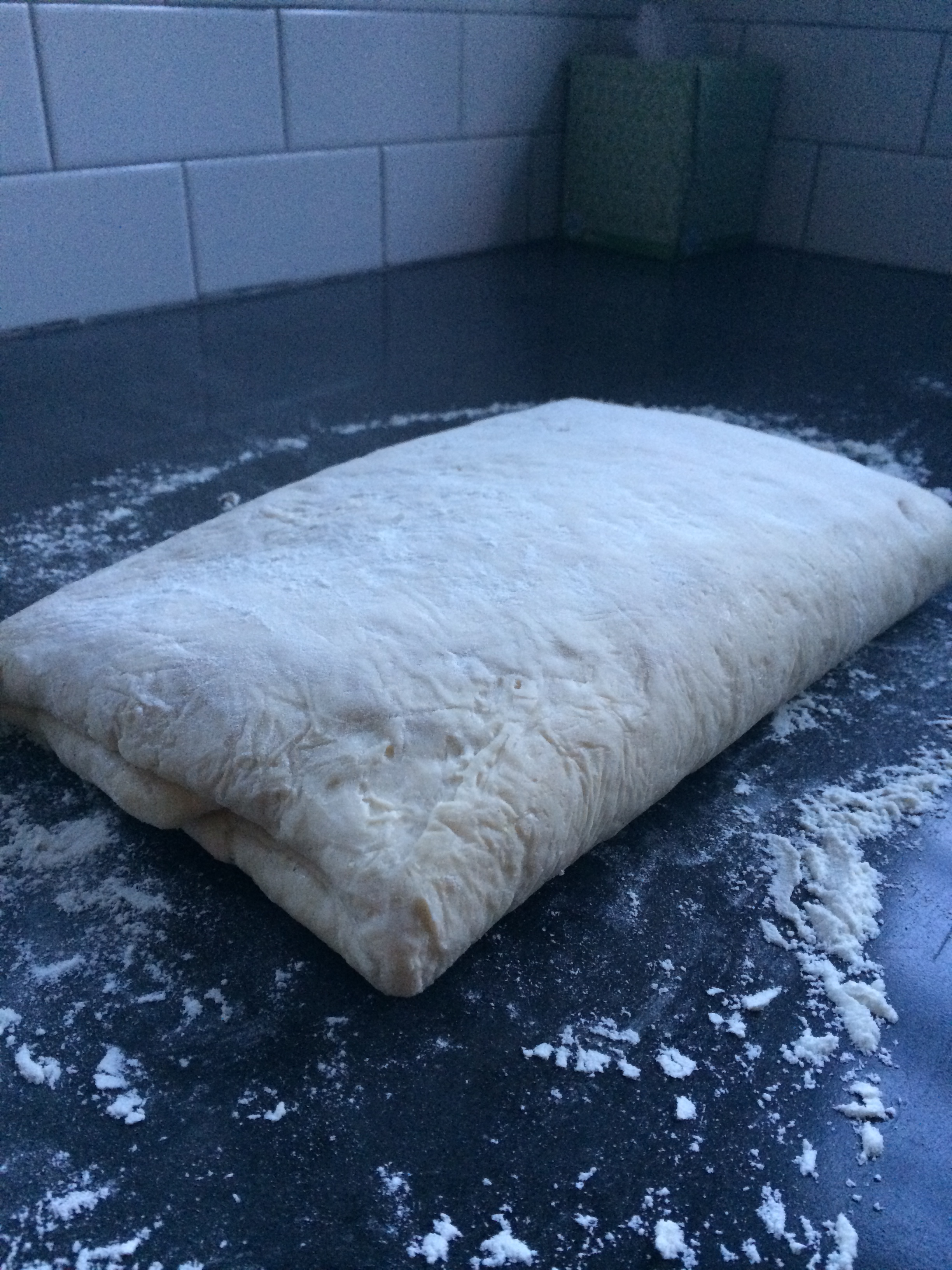
Day Two: Make “butter layer,” fold up in the dough like an envelope, and roll…

photo 5 photo 3


Day 3: Roll again, cut, form, proof…

photo 4

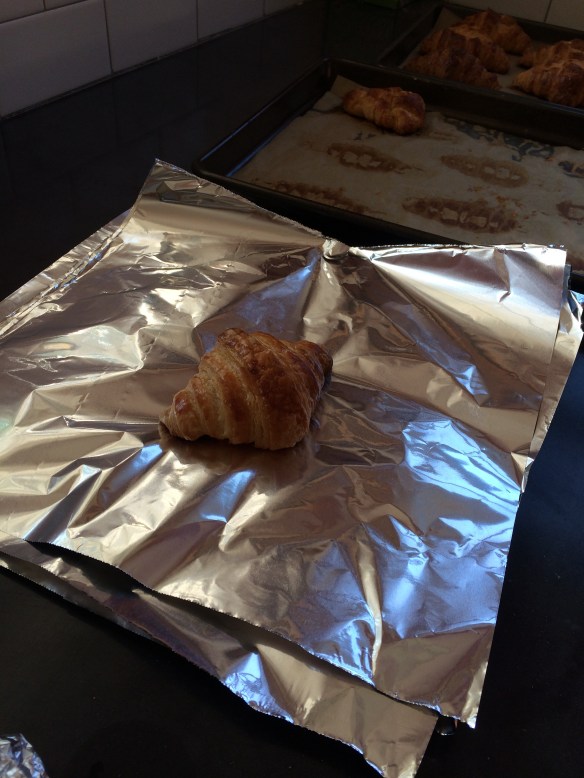
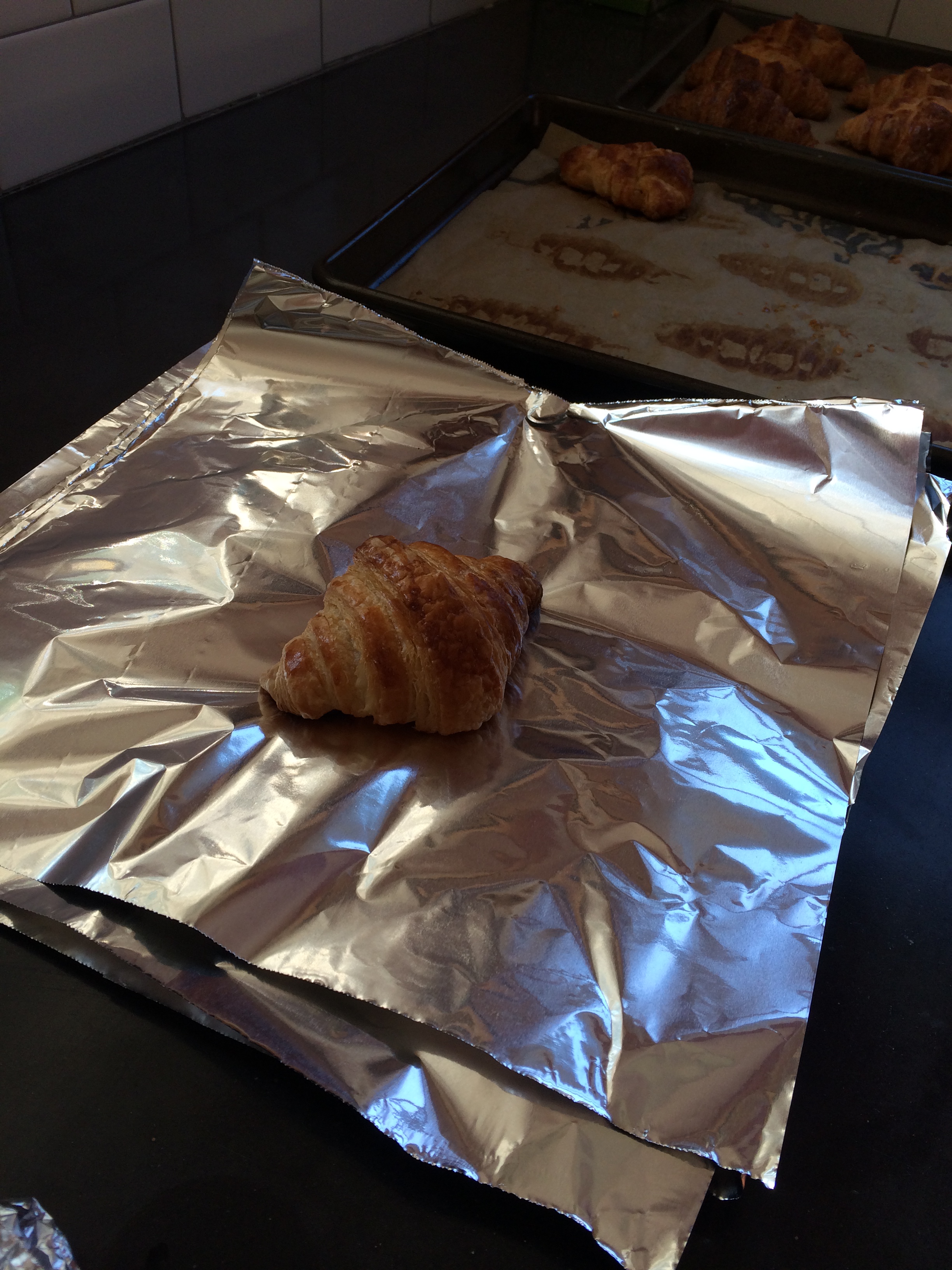
Bake–and if you’re not eating them ALL immediately, wrap ’em up in foil for the freezer (highly recommended!  Each one I’ve eaten out of the freezer–heated at 350 degrees for 10 minutes exactly–has been absolutely perfect).photo 2

writing in the walls

While in France, more than just my cell phone taught me to look up and look out.

IMG_2174

Sainte-Chappelle’s windows pointed my eyes heavenward, illustrating stories from Scripture (the very stones which line the windows are arranged in such a way as to make arrows–do you see?)

IMG_2319

Mont Saint Michel–a monastery which itself points upward, perched on a rock at the Atlantic shore–boasts a Gothic church, encouraging the pilgrim to continually remember the source of life and strength.

IMG_2420

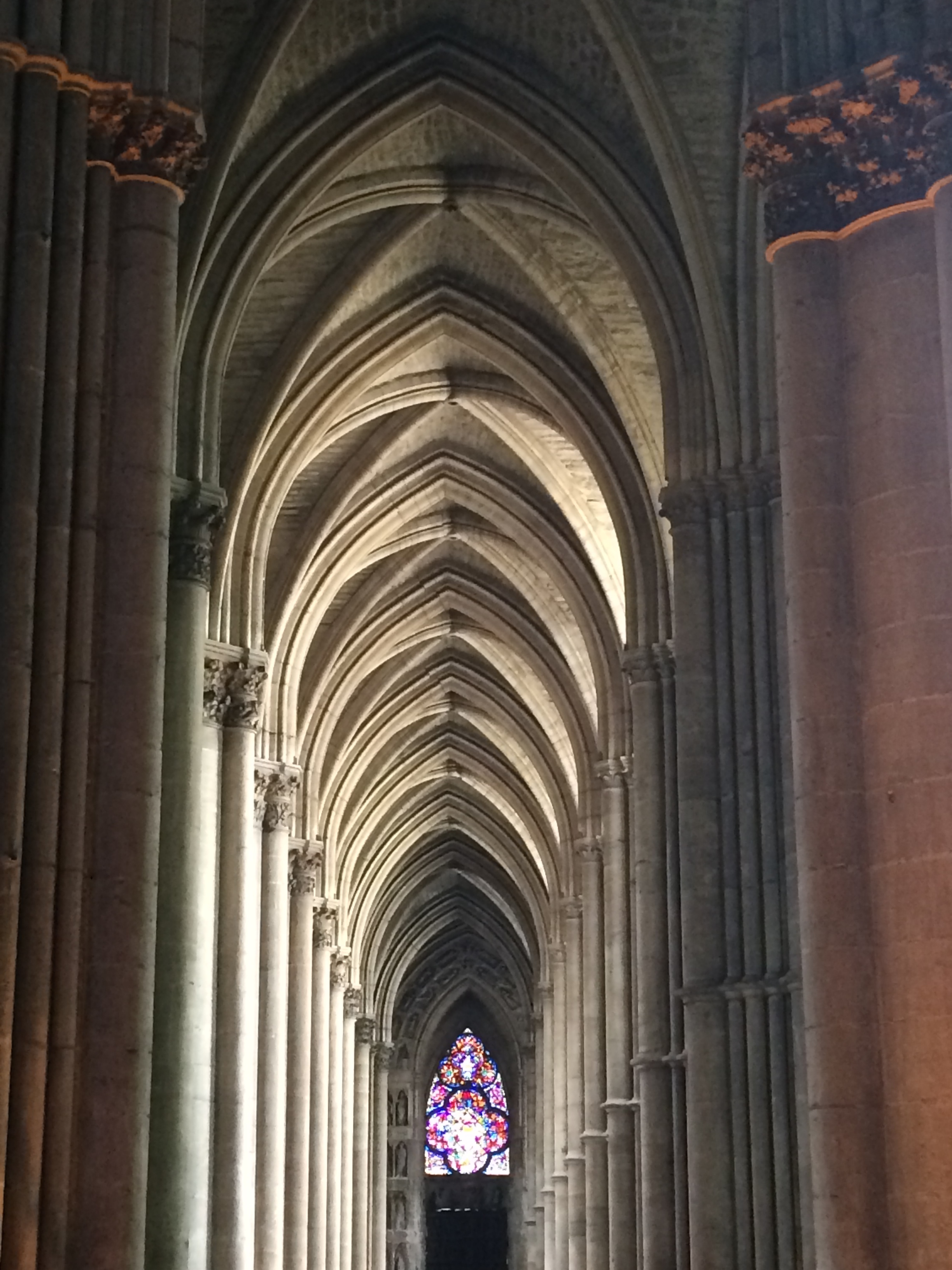
Arrows abound in the aisle at Reims.

IMG_2466

All is oriented upward on the West facade in Strasbourg.

Our necks hurt the first few days that we spent in cathedrals, but soon we got used to paying more attention to what was above and around us than what was below us or what was associated with our own individual experiences (I cannot recall which cathedrals were most-busy, or most-noisy, or too cold, or too warm, or too expensive).

I wonder if our lives should be a bit more about paying attention to who God reveals himself to be (those things, “above”), to God’s work in others’ lives and in the world (what’s around us).

This message is finding its way into all kinds of outlets recently–here are a few I’ve noticed:

Relevant Magazine

Huffington Post

What do you think?  How have sacred spaces challenged you to look differently at life?

Look up, Look out!

In preparation for my trip to France, my dad suggested we spring for an international plan–just in case we really needed to make a call or use our phones while we were abroad–it’d be better to pay a little up front instead of footing the bill if we needed the service but hadn’t paid for it beforehand.

I didn’t listen to him.

Thankfully–as you can safely assume from my recent glowing updates about my trip–we didn’t encounter any emergency that required use of our cellphones as phones (though you’ve already seen much evidence of our use of our cellphones as cameras!).  I learned something important from not having my phone’s “smart” capability accessible most of the time, though–I learned to look up.

Sitting with my husband at lunch, waiting for the food to arrive, walking down city streets, waiting in line at a museum or (yet another!) church–I had no excuse not to look up, to look out at the people passing on the street, to look at the architecture, to look at the sky.  All this looking at other things not only helped me to keep my mind attentive to what was in front of me–which was no small change!–but it also kept me from looking down, looking at myself–navel gazing.

When we look down at our phones, we’re not only missing the world around us, but we’re teaching ourselves to do something strange with our bodies.  Our necks are cranked down–not the way we’re made–and our bodies are hunched over, literally curling in ourselves.  What kind of patterns are we teaching our minds and hearts through our bodies if we’re curved in on ourselves all the time?  We’re not just missing the world around us, but we’re becoming the only thing that we see–and it’s not a particularly attractive angle at that.

When we hold our bodies so that our eyes and faces are looking out and up, do you know what happens to our hearts?  Our hearts are opened, as our backs are held up straight–as if our very souls are ready to shine and share with others.  If we look down, it’s not only ourselves who are missing something; everyone else around you can’t see you and your beautiful heart–we’re robbing ourselves, and others, of the great beauty that all the world possesses.

I got into this work (being a priest) because there’s nothing I love more than seeing God at work in people’s lives.  Sometimes I lose sight of that love, and the work gets to be onerous.  In France, I was made to look at the beauty of people, of buildings, and of nature all the time.  It helped me remember that there is beauty everywhere, all the time.  We need only to look for it–and looking out and up is one of the best ways.

(super short approximation of sermon delivered 6 July, Trinity Episcopal Cathedral.  Original version had a lot more about Gothic architecture in it; see another entry soon…)