ending busy-ness

Here’s the secret: just don’t do it.

(easier said than done? sure.)

In January, I made a decision with myself: I’m not describing myself as busy anymore.

Everyone’s busy.  Everyone’s got too much on their plates.  Many people have many more things on their plates than me.  When asked how you are, what you’re up to, or what’s new, how descriptive is “busy” anyway?

It’s been a challenge to think about how else to respond when the question comes, but it’s forced me to be more consistently reflective about how my days and weeks look.  When I can’t come up with an answer, or when the answer seems to cover much less than the time I use in a day, I’m reminded to reevaluate how I’m using my time.  What am I doing all day?  Sometimes I can’t think of an answer because I’ve spent all day responding to emails, or visiting shut-in or hospitalized parishioners–I forget how much time each of these activities can consume (though one is much more rewarding than the other–the one that includes face-to-face time).

This regular invitation to evaluate my life both helps me to be more aware of time, and allows the other person’s question to be something truly meaningful–more than just a formality two people undergo when they meet.

So, if you’re “busy,” what’s below the surface?  If you couldn’t use the word, what would you say instead?  What are YOU up to these days?

How to be Holy

“The Lord spoke to Moses, saying: Speak to all the congregation of the people of Israel and say to them: You shall be holy, for I the Lord your God am holy.” Leviticus 19:1-2

Holiness is not something that humans come by themselves; it’s something we as spiritual beings can make room for, but we can’t work up on our own.  We are holy because the Lord our God is holy–it is God’s holiness that covers us, that infuses us, and transforms us into holy people.

This week’s lectionary passage goes on (verses 9-18 of the same chapter–see below) to give some specific guidelines about what holy living looks like; each declaration is ended with the same refrain, “I am the Lord” (vs. 10, 11, 12, 14, 16, 18).  It’s a sort of short hand to remind the people at the end of every law delineated that it isn’t the peoples’ own effort that will bring such generous, respectful, strange and particular living about, but God’s grace and holiness flowing through their lives that will enable such curious actions and lifestyle.

Not just the statutes laid out in Leviticus 19, but all the 600-some laws throughout the Old Testament were established by God not to hem his people in, or to cause them to trip up, but to help the people recognize that they were different.  God had chosen them, put his mark on them, and to the world, these people, the Israelites, were supposed to be so different from all the other people that others would ask why on earth they were so strange.  They were strange–or were supposed to be–because they belonged to God; the Lord our God made them holy by his own holiness.

As we butt up against Lent, preparing to go into the desert with the Israelites and with Jesus, we consider the holiness that God graciously clothes us in through his Son, Jesus–not because of anything we do, or anything we promise that we’ll become, but just because each and every one of us is worth loving.  It’s a world full of curious, wonderful, beloved people–and you’re one!

9 When you reap the harvest of your land, you shall not reap to the very edges of your field, or gather the gleanings of your harvest. 10You shall not strip your vineyard bare, or gather the fallen grapes of your vineyard; you shall leave them for the poor and the alien: I am the Lordyour God.

11 You shall not steal; you shall not deal falsely; and you shall not lie to one another. 12And you shall not swear falsely by my name, profaning the name of your God: I am the Lord.

13 You shall not defraud your neighbour; you shall not steal; and you shall not keep for yourself the wages of a labourer until morning. 14You shall not revile the deaf or put a stumbling-block before the blind; you shall fear your God: I am the Lord.

15 You shall not render an unjust judgement; you shall not be partial to the poor or defer to the great: with justice you shall judge your neighbour. 16You shall not go around as a slanderer among your people, and you shall not profit by the blood of your neighbour: I am the Lord.

17 You shall not hate in your heart anyone of your kin; you shall reprove your neighbour, or you will incur guilt yourself. 18You shall not take vengeance or bear a grudge against any of your people, but you shall love your neighbour as yourself: I am the Lord.

giving growth

2014-02-24 15.22.50

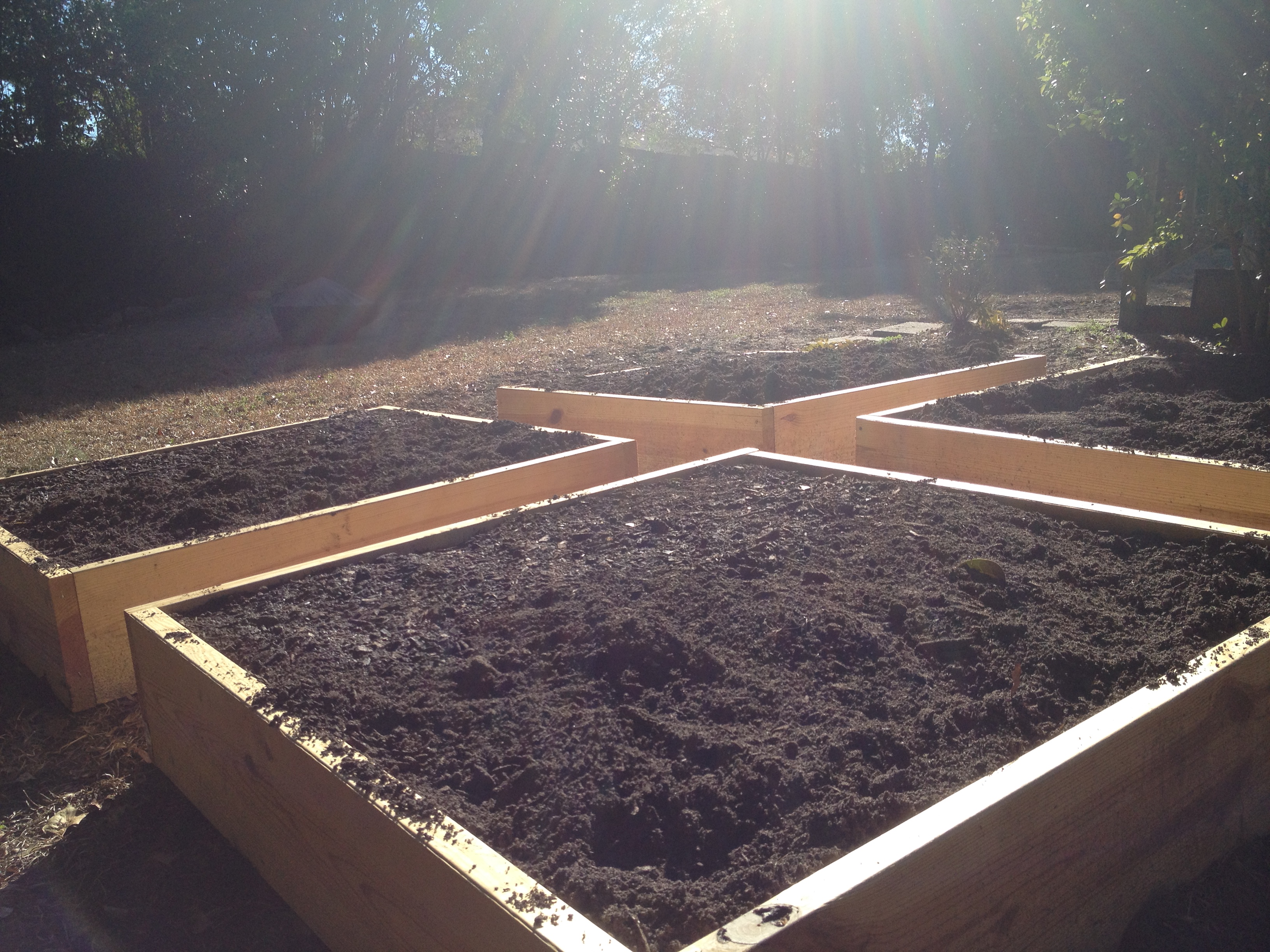
Seeds are such mysterious things.  Here in South Carolina, it’s already time to start planting the hardier stuff–greens, roots, some herbs, so I took advantage of the sunny, warm days over the weekend to fill up my boxes, sprinkle some seeds, and water the soil.  I’m always amazed when I open the little paper packets at how small and wisp-like seeds produce these (comparably) huge, delicious, totally-different-looking fruits and vegetables.  Last week’s lectionary epistle lesson has been bouncing around in my head as I’ve been working the dirt:

“You are still worldly. For since there is jealousy and quarreling among you, are you not worldly? Are you not acting like mere humans? For when one says, “I follow Paul,” and another, “I follow Apollos,” are you not mere human beings? What, after all, is Apollos? And what is Paul? Only servants, through whom you came to believe—as the Lord has assigned to each his task. I planted the seed, Apollos watered it, but God has been making it grow. So neither the one who plants nor the one who waters is anything, but only God, who makes things grow.” 1 Corinthians 3:3-7

Looking around the church (all people who call Jesus their God and Savior, believing in the triune God) these days, it’s hard to ignore the battle lines that crisscross Jesus’ body throughout the world like the scores in a ham.  Screwtape’s words, through C.S. Lewis’ voice, come to mind once more:

“We have quite removed from men’s minds what that pestilent fellow Paul used to teach about food and other unessentials–namely, that the human without scruples should always give in to the human with scruples. You would think they could not fail to see the application. You would expect to find the “low” churchman genuflecting and crossing himself lest the weak conscience of his “high” brother should be moved to irreverence, and the “high” one refraining from these exercises lest he should betray his “low” brother into idolatry. And so it would have been but for our ceaseless labour. Without that, the variety of usage within the Church of England might have become a positive hotbed of charity and humility.”

Of course, part of the trouble is discerning which things are inessential–a literally life-and-death matter which I don’t mean to downplay–but what draws me more this morning  is the solution which Paul offers: God gives the growth.

I can put good soil in my boxes, and plant the seeds, and beg the sun to come and warm up the dark dirt, but all I’m really doing is making room for growth to happen, giving the best environment possible–making room for a miracle to happen.

In our lives, we choose how to use our time–what kind of soil (habits, relationships, mental tape loops) we put in the boxes of our minds, our spirits and our bodies.  We choose the sorts of things we read, watch, eat and ingest–the seeds we plant in our boxes; and we choose how to nurture those seeds with the sunshine and water of prayer, spiritual disciplines, service, and learning.  Then we’ve done all we can–we can’t make growth happen, in our own lives or in the lives of our churches.

We cultivate, plant, and water, but the growth itself is out of our hands; we prepare and we present ourselves–make ourselves open and ready to be transformed.

God, come into the spaces we make and grow us.  Show us how to make room to be open and to be transformed.

holding breath

There’s a reason that holding your breath kills you.

Out in the garden over the weekend, I filled up boxes with compost-y soil.  It was hard work, but that was just what I needed–I’d been too static (stagnant) the last few days and needed some inner stirring up and re-settling.

Having learned in yoga practice to breath through the difficult parts, I noticed how my body hadn’t quite learned to carry that practice to yard work yet.  When I heaved a shovel full of soil into the wheel barrow, I held my breath.  My breath was shallow and short.  As I lifted my shovel and moved the wheel barrow, I constantly reminded myself to take long, deep breaths.

It’s the breath that stirs things up and helps the body re-settle anyway.  “Exercise is all about the breath,” I was told once–we don’t get the same benefit from a work out or a yoga session or yard work if we aren’t letting the breath in and out like bellows, stoking our inner fire, burning off the grumpiness that comes from stagnation.

When we hold our breath to get through a difficult moment, we’re refusing the healing and energizing power of the breath.  When we put our heads down, give up our regular prayer lives, slack on our exercise regimen, stop responding to our friends’ calls,–just to get through a week or a season of busy difficulty–we’re holding our “breath,” refusing the healing and energizing power that God offers us through the Holy Spirit in prayer, in each other, in our own bodies, and in worship.

Whatever happens–especially in difficult, put-your-head-down, hauling soil kind of times, keep breathing.