
#Magnificat, #Ferguson, and the #Savior

“My soul magnifies the Lord.”  (Luke 1:46)

Jonathan Myrick Daniels (whose life and sacrifice are remembered on August 13 in the Episcopal Church’s calendar) jumped in front of a shotgun’s discharge to shield the life of another.

He was a seminarian, an educated white man from the Northeast, who got himself to Alabama to join others fighting for civil rights in 1965.  After being released from jail with four companions, he and another white man (a Roman Catholic priest) and two black women, were prevented from entering a store to buy soda on the hot August day (the 20th) by a man with a shotgun and pistol.  When the shotgun was leveled at one of the women, Jonathan pushed her out of the way, receiving the bullets himself.

Jonathan gave up his comfortable life with the luxuries of class and status, using those tools of his gender and skin tone to draw attention to those who were stuck in social, geographical, and economic swamps.

Jesus came to the poor, lowly, voiceless.  When Jesus meets the Samaritan woman at the well, Jesus uses his status to pull her up out of the mire in which she’d been stuck.  She accepts the living water which Jesus offers, she finds new life in God’s redemption.  Jesus sees people in the shadows, people that others do not bother to notice, and he calls them into the light; Jesus gives up the riches, glory, position, and power of being the Son of God for the sake of being with us, loving us well, stepping in front of the bullets of Sin’s Death for each of us.

Part of what’s unsettling about Ferguson, I think, is that it lays bare our own situation.  Our lives are overcome with violence, chaos, disorder, fear.  The emotions and forces acting out on the streets of St. Louis mirror the condition of our own selves.

Ferguson, and all creation, wait in groaning and despair for their Savior.  As the Samaritan woman, we have met the Savior at the well; God washes us with the waters of life in Baptism, and nourishes us through his own body and blood in the Eucharist.

We are not the saviors of this age.  We are not able to do any more than to try to serve as a window, a reflection, a magnifier of God’s presence; a sign and signal of the Savior’s faithfulness.

Hear our cry, Lord; save us and heal us, for your mercy is great.

a version of a homily preached August 13th, Trinity Episcopal Cathedral.
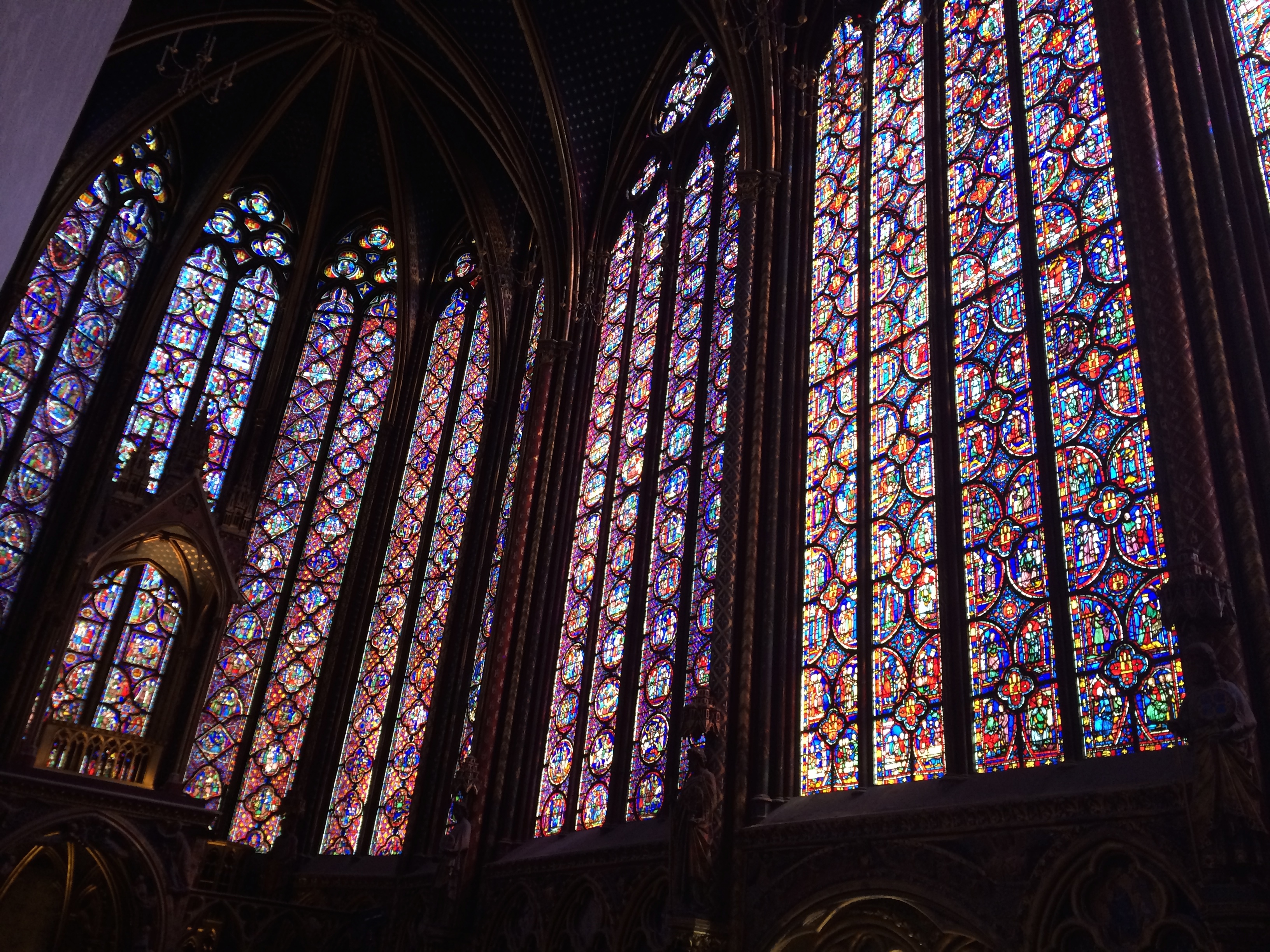
Quotations of the Day: Out of the Mouths of Babes

“We’re like stained glass windows; God shines through us, and even though we can’t see him, like we can’t see light, the windows sort of make light visible like we sort of make God visible in the world!”IMG_2174

“I hear God when other people talk to me, because God is in them.”

“I was thinking about the places where Bible stories happen–like people go away to the mountains to experience God, but then they go to the beaches and to fishing and they are with other people.  I think both are important parts, we need both of those in our lives–the quiet and the camaraderie.”

“It’s kind of like ‘newspeak’ in 1984; if we don’t use the language we have from choir and church to talk about God, then we forget the words and how to articulate who God is.”

quotations from choir camp, we’ve got theologians on this mountain top!

Drugs and the Power of Darkness

A message of hope in the darkness, offered articulately by my colleague the Rev. Canon Dane Boston.

The Rev'd Dane E. Boston's avatarThat Blessed Dependancy

“For this cause we also, since the day we heard it, do not cease to pray for you and desire that ye might be filled with the knowledge of his will in all wisdom and spiritual understanding; That ye might walk worthy of the Lord unto all pleasing, being fruitful in every good work, and increasing in the knowledge of God; Strengthened with all might, according to his glorious power, unto all patience and longsuffering with joyfulness; Giving thanks unto the Father, which hath made us meet to be partakers of the inheritance of the saints in light: Who hath delivered us from the power of darkness, and hath translated us into the kingdom of his dear Son: In whom we have redemption through his blood, even the forgiveness of sins.” -Colossians 1:9-14

Listening to NPR can be a dangerous—at least when there’s a very alert almost-four-year-old listening with…

View original post 2,004 more words

Why I am Episcopalian, Part 3; or Quotation of the Day

Ian Cron puts so many things so well; here, exactly why I wandered into a Roman Catholic Church seven years ago:

“Much of the liturgy for the mass, filled with its formularies, prayers, and creeds, is well over a thousand years old. I was moved that people were offering up the same words, giving expression to the same truths in different languages and time zones all around the globe that very day. Some were singing the liturgy in grand cathedrals in Europe, and some under a lush canopy of trees in Africa. Some were performing the liturgy in secret house churches in China, and others in prison chapels. Where or how it was said it didn’t matter. Solidarity mattered.

As I pondered the faces of saints captured in stained glass, the frescoes that adorned the walls and ceilings of the nave and apse, it dawned on me that the liturgy was connecting me to a long and ancient line of believers.  Time had become irrelevant.  We were one chorus, one communion of saints.  I was but one soul in the long procession of the faithful that wound its way down and along the hilly landscape of history.  I was appropriately small.”
Chasing Francis, pg 90