a sermon on Matthew 22:1-14
At the beginning of the parable, the passage reads, “they would not come.” Why didn’t they want to go to the banquet?
Perhaps, to figure out why someone wouldn’t want to go to the banquet, we should understand what the banquet is about–for whom it is given, where it is taking place, what is required for entrance to the event.
Who are these servants who have been sent out to compel others to come to the banquet? Why would they be killed for their message? What kind of invited guests are these who not only send their regrets with lame excuses, but then go so far as to kill the king’s help?
What is this parable about except the history of the world–the history of God’s relationship with humanity? In the beginning, when God had placed Adam and Eve in the garden they ate and then they disobeyed and they hid themselves. God came to them in the cool of the day, walking in the garden, looking for his people whom he’d created and whom he loves, wanting to feast with them.
He said, “where are you?” They had hidden themselves from him because of their shame. The king in the parable today, looking for guests with whom to share his feast, asks the same thing–“where are you?”
Later in Israel’s history, the nation suffers exile. What does God do but send prophets to them to bring God’s message of mercy and invitation and repentance? What do the people do but kill his prophets, those who have been given the task to compel the invited guests to come to the banquet, to find themselves in God’s presence, to be made whole by God’s nourishment and to be filled with joy?
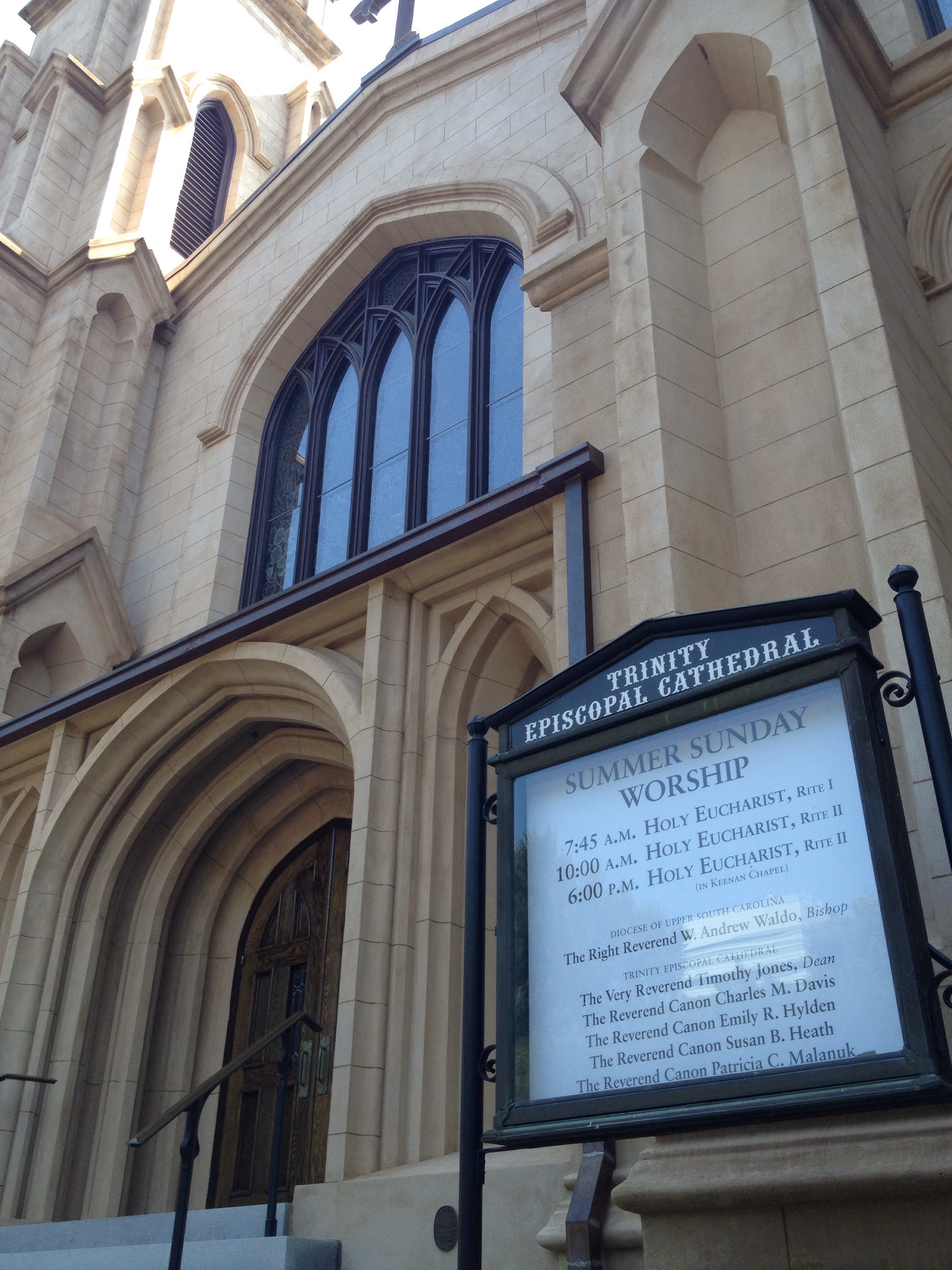
From our vantage point in history, we can see that the banquet which is prepared for the wedding of a king’s son is the Holy Eucharist–the feast which God instituted through Jesus and has prepared for everyone to enjoy. So why isn’t everyone there? What is keeping people from coming to church to experience God’s gift, the feast to nourish and give us life?
This is a question almost as old as humanity–“where are you?” In the passage just before this one, which we heard last week, we hear the parable of the vineyard. Something similar has happened in this story–the vineyard owner sets up a top-notch operation and finds some tenants to put in charge. What happens in this parable is familiar: when harvest time comes, the owner sends a servant for the rent–for his share of the profits of the land. As you may recall, or may be able to guess, the tenants aren’t particularly kind to the servants. They beat one, and killed a few more. The same thing happened to the second set he sent, and then, in a last-ditch effort, he decided to send his son to collect the rents. As you can imagine, this didn’t go well–the tenants, predictably, killed the son. Jesus asks those listening, “what do you think will happen to the tenants when the owner himself comes?” and again, predictably, you can imagine those listening, many of them pharisees, did not like what was told them (Matthew 21:33-46).
After reading these two parables together, someone asked me this week, “Is that where we are right now? The son is dead, and we’re waiting for the owner to come and make things right with us?” Praise God that this is not where we are! The son is not still dead–the Son is alive, he was raised on Easter morning, of which every Sunday is a memorial and a recreation.
There are pieces of each of our lives that are stuck there–we still see sin in our world in war, we see it closer to home in the ways our relationships with each other are broken, how we are selfish, how we are careless and let our brothers and sisters go hungry and slave away for clothes we wear.
But there is resurrection and redemption, too–we see it in love that is more powerful than counting and mounding up wrongs against me, in the beauty of music and art and reconciliation, in families that continue to show up for one another, in people who give up their lives to make others’ lives better. We live in the already and the not yet. We live in the midst of sin and darkness, and also in the middle of God’s light–the full revelation of who God is to humanity in the person of Jesus Christ.
We still sometimes choose darkness and disobedience, we sometimes fight against desires that draw us away from God and each other, but because of the freedom we have been given through Jesus, we also have the power to say no to darkness and to say yes to light–to God’s invitation, which is for us, for everyone.
At the end of this parable, there’s a sort of strange image–there’s a wedding guest there, who seems to have stumbled in and he doesn’t have the right clothes on. The king is outraged and throws the guest out–what’s up with that? If everyone’s welcome, if everyone’s invited, why on earth would the king be so petty as to care whether someone is wearing the right clothes?
But what’s going on here isn’t just about decorum or about the way that something looks. It’s not about society or about being appropriate for Page 6. Wedding clothes would have been made available for these guests as they came in–a closet near the door, or perhaps the equivalent of a dinner jacket hung up for the use of anyone who needed one. Just slipping on a jacket (or toga, or robe) would have been a way of showing honor, gratitude, and acknowledging the importance of the event to which the person was invited. The person walking around without the pro-offered jacket was a slap in the face, not just a fashion statement, even the equivalent of flipping the bird.
Being appropriately attired for this event is not something we can do on our own. Everyone’s invited, everyone’s welcome, but everyone’s got to be humble, too. This man, who refused to accept the clothing offered, in effect communicated that he thought he didn’t need any help, he was fine on his own–he was full of pride, perhaps even drunk on it. In this day and age, especially in the sorts of lives with which we’ve been blessed (as you must be reading this on a computer, with access to the internet!), it’s easy for us to believe that we’re totally self-sufficient, that we are not only welcome at the banquet, but can pay our own way in.
Deep down, we know that we’ve still got darkness tempting us, we know that we’re still living broken lifestyles, we’re still selfish and prideful. We need God to clothe us. We need God’s light to wash away our darkness and to make us fully able to enjoy the feast prepared for us. We don’t have to hide our darkness, God already knows it, as our Collect for Purity puts it (“from whom no secrets are hid”).
We are invited to the banquet, God sends his messengers to call us in, he asks us not to hide, but to come into the light and be clothed by it, by God himself.
Where are you this morning? Come out, and join the banquet!



 “Offer to God a sacrifice of thanksgiving, and make good your vows to the Most High.”
 hope of things not seen